Racks & Transport
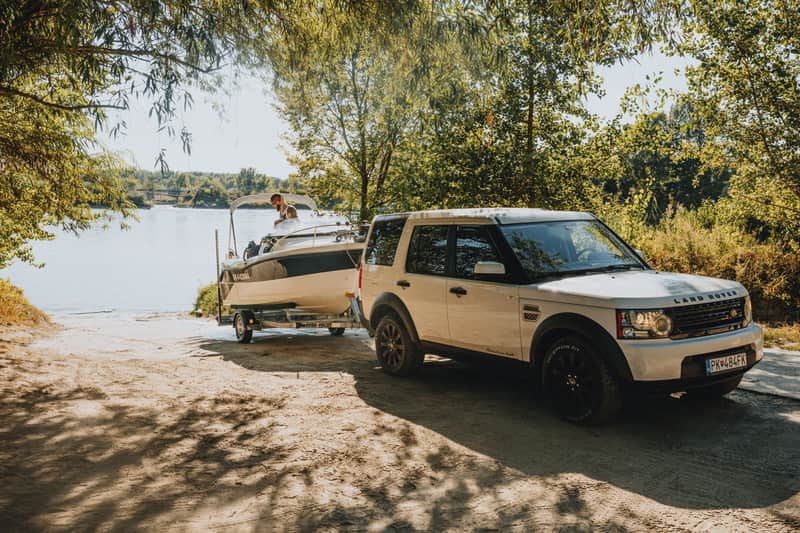
Kayak roof rack versus trailer
A trailer removes every lift and costs many times more. Two specific situations make it worth it; for everyone else the roof is the answer.
Disclosure: we earn a commission if you buy through the links on this page, at no extra cost to you. It does not change which products we pick or how we rank them. How this site is funded.
The short answer
Quick picks
Ranked for the person outfitting a used boat: what it costs, what it does, and who should skip it. 3 picks.
| # | Product | Best for | Our score | Price |
|---|---|---|---|---|
| 1 |  Malone SeaWing70 lb, boat sits flat and low. The easiest solo load on crossbars. Malone SeaWing70 lb, boat sits flat and low. The easiest solo load on crossbars. | Loading on your own | 7.8 | $161.95View on Amazon |
| 2 |  Malone Stax Pro2200 lb total, folds flat when empty. The two-kayak answer. Malone Stax Pro2200 lb total, folds flat when empty. The two-kayak answer. | Two boats on one bar | 7.6 | $54.99View on Amazon |
| 3 |  Malone Standard Kayak Foam Block Kit55 lb, straps included, works on a bare roof. The no-rack answer. Malone Standard Kayak Foam Block Kit55 lb, straps included, works on a bare roof. The no-rack answer. | No crossbars at all | 8.1 | $46.27View on Amazon |
Side by side
| Roof rack | Kayak trailer | |
|---|---|---|
| Typical outlay | Lowest in paddling — foam blocks and straps at the bottom end | Many times a rack, plus a hitch if the car has none |
| Lifting | Boat goes overhead | Waist height, no lift |
| Boats carried | One, or two on a stacker | Typically two to six |
| Storage between trips | A cupboard, or leave the bars on | Needs somewhere to park a trailer |
| Fuel and driving | Some drag, no change to handling | Reversing, parking and a longer stopping distance |
| Registration and lights | None | Lights, plate, and state registration rules |
| Ramp access | Park anywhere | Some launches cannot take a trailer at all |
The two situations where a trailer genuinely wins
1. You cannot lift the boat overhead. This is the real reason people buy trailers, and it is a good one. Age, a shoulder injury, a heavy fishing kayak, or simply paddling alone with a boat you cannot get up there on your own — a trailer removes the lift entirely. If loading is the thing stopping you going out, the trailer is not an indulgence, it is the fix.
2. Three or more boats. A family with four kayaks cannot do it on a roof. Two on a stacker is the ceiling for most cars, and Malone’s published 50 lb per boat on the Stax Pro2 is a real constraint on top of that.
Everything else — convenience, keeping the boat off the paint, not wanting to buy bars — is not enough on its own to justify the cost and the parking.
What people underestimate about trailers
Where it lives. A trailer is a permanent object that takes up a parking space year-round. In a house with a driveway that is nothing; in an apartment it can be a dealbreaker on its own.
Legal admin. Registration, lighting and licensing requirements for small trailers vary by state and they are not always trivial. Check your own state before buying, because that is the rule that gets enforced.
Reversing and parking. A small light trailer is genuinely harder to reverse than a large one, because it responds faster than you expect. Practice somewhere empty before a busy Saturday ramp.
Launch access. Some of the best kayak put-ins are exactly the ones a trailer cannot reach — narrow tracks, small car parks, spots with a walk to the water. That last case is what a cart solves, and a cart plus a roof rack together still costs a fraction of a trailer.
What people underestimate about roof racks
Height. A boat on the roof adds real height. Garage doors, drive-through canopies and low car parks all become things you have to think about, every time.
The load has to be checked. Every trip, at every stop. A trailer load can be strapped and left alone in a way a roof load cannot, particularly with foam blocks, where the foam compresses as it warms.
The lift is the whole objection. If you are on the fence, be honest about whether you will actually put the boat up there on a gray morning. A rack that never gets used is more expensive than a trailer that does.
The middle option most people should try first
Before spending trailer money, try a saddle plus a cart. The saddle removes most of the lift — bow onto the rear bar, then slide — and the cart removes the carry at the far end. Together they address the same two problems a trailer addresses, at a small fraction of the price, with nothing to park and nothing to register.
If after a season of that the loading is still the barrier, buy the trailer knowing exactly why. That is a much better basis for the decision than a comparison table.
One more middle option, for truck owners specifically: the bed is already a rack, and a hitch bed extender solves the overhang on a long boat for a fraction of what a trailer costs, with nothing to park or register. The extenders, on published capacity and height range, are on the best kayak racks for a truck.
In full
Every pick, in detail
Specs below are the manufacturer's published figures, cited per product. Where a maker does not publish a number, the row says so rather than guessing at it.
#1 · Loading on your own
Malone SeaWing
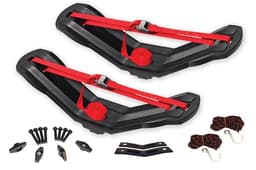
70 lb, boat sits flat and low. The easiest solo load on crossbars.
Published specs
| Capacity | 70 lb |
|---|---|
| Style | Saddle, hull carried flat |
| Requires | Crossbars |
Our score, broken out
- Capacity7.5
- Fit range6.5
- Ease of loading9.0
- Value8.0
What it gets right
- The hull sits flat and low, so you slide the boat up from the back rather than lifting it over your head.
- Least drag and least wind noise of the three Malone styles here, because the boat lies down.
What it gets wrong
- 70 lb is the lowest capacity of the three — check a loaded fishing kayak against it.
- Uses the full bar width, so nothing else shares the roof.
Who should skip it
Skip it if you need two boats up there. Saddles carry one, flat, and that is the whole design.
#2 · Two boats on one bar
Malone Stax Pro2
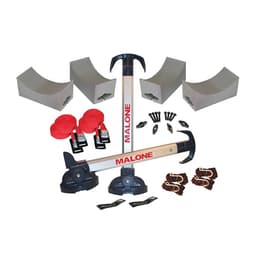
200 lb total, folds flat when empty. The two-kayak answer.
Published specs
| Capacity | 200 lb total; 50 lb per boat, two kayaks |
|---|---|
| Style | Vertical post, boats carried on edge |
| Folding | Folds down when not in use |
| Requires | Crossbars |
Our score, broken out
- Capacity8.5
- Fit range6.5
- Ease of loading7.0
- Value8.0
What it gets right
- Carrying boats on edge is the only way to fit two kayaks on a normal car roof without a wider bar.
- Folds flat, so you are not driving around all winter with posts on the roof.
What it gets wrong
- Needs crossbars. If your car has bare roof or side rails only, this is not your rack.
- 50 lb per boat is a real ceiling — a loaded fishing sit-on-top can exceed it.
Who should skip it
Skip it if you only ever carry one boat. A saddle or J-cradle loads more easily and costs less, and you are paying for a second slot you will never fill.
#3 · No crossbars at all
Malone Standard Kayak Foam Block Kit
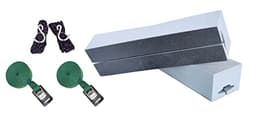
55 lb, straps included, works on a bare roof. The no-rack answer.
Published specs
| Capacity | 55 lb |
|---|---|
| Block size | 14" long × 4.75" wide × 3.75" high |
| Kit weight | 3.3 lb |
| Material | EVA closed-cell foam |
| Included | Two 15' load straps plus safety tie-downs |
| Bar profile | Universal cut-out fits round, square and oval bars |
Our score, broken out
- Capacity6.0
- Fit range9.5
- Ease of loading7.5
- Value9.5
What it gets right
- Works on a completely bare roof, which is the actual situation most people asking about crossbars are in.
- The straps are in the box. Foam blocks sold without straps are not a solution, they are half of one.
- Packs into a boot. Nothing stays on the car.
What it gets wrong
- 55 lb capacity is the lowest here — fine for a recreational kayak, not for a loaded fishing boat.
- Straps pass through the cabin on a bare roof, so the doors have to open before you can unload.
Who should skip it
Skip it for highway distance every weekend. Foam and straps are genuinely safe when rigged properly with bow and stern lines, but they need re-checking at every stop, and after a season of that most people buy bars.
FAQ
Questions people actually ask
Is a kayak trailer worth it?
In two situations, yes: if you genuinely cannot lift the boat overhead, or if you need to carry three or more kayaks. A trailer removes the lift entirely and carries far more boats than any roof can.
For everyone else the cost, the parking space, the registration and lighting requirements, and the launches a trailer cannot reach outweigh the convenience.
How many kayaks can you carry on a roof rack?
One on a saddle or J-cradle, or two on a stacker. Two is effectively the ceiling for most cars.
Check the per-boat rating rather than the total: Malone publishes 200 lb total for the Stax Pro2 but only 50 lb per boat, which is below the weight of many fishing sit-on-tops.
What is the cheapest way to avoid lifting a kayak onto the roof?
A saddle-style carrier plus a cart. The saddle lets you rest the bow on the rear crossbar and slide the boat forward, so you never lift the full weight overhead, and the cart removes the carry from car to water.
Together they address the same two problems a trailer addresses, for a small fraction of the cost, with nothing to park or register.
We have not paddled with any of this gear. Everything above comes from published specifications, cited manuals and live retailer prices. Here is exactly how we pick.
Sources
Read next
Related on Drift & Dime
Racks & Transport
Kayak J-rack versus saddleOn edge or flat: roof space, loading height and hull support compared.
Racks & Transport
The best budget kayak roof racksRacks ranked on published load capacity and whether you can load solo.
Racks & Transport
The best budget kayak cartsCarts ranked by wheel type, folded size and published capacity — pick for your launch.