Best budget paddle
The best budget kayak paddles
Paddles ranked on published weight and blade area — a 10 oz spread.
Section
Used boats arrive with no paddle, or with a bad one. Weight and length are the only two numbers that matter, and both are published.
Disclosure: we earn a commission if you buy through the links on this page, at no extra cost to you. It does not change which products we pick or how we rank them. How this site is funded.
Best budget paddle
Paddles ranked on published weight and blade area — a 10 oz spread.
Best fishing paddle
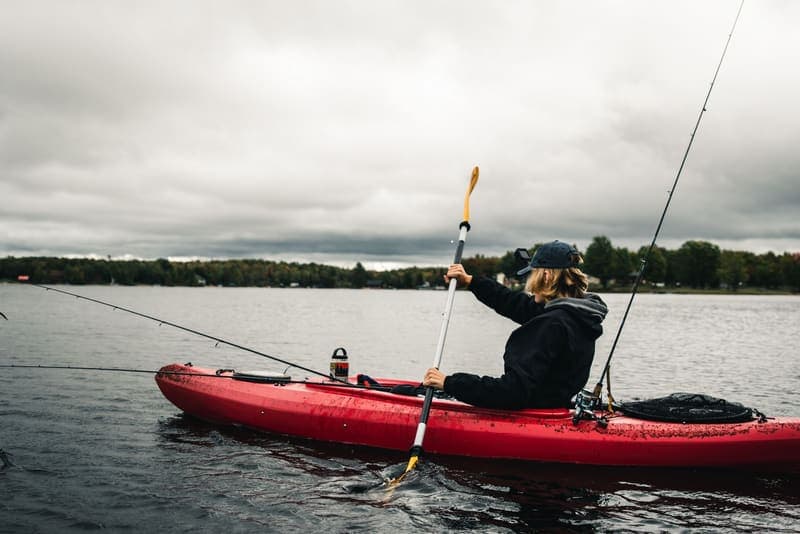
Fishing paddles ranked on published length range, blade area and weight.

Best first paddle
First paddles chosen on length and blade size, with the spec sheet decoded.
Lightest paddle
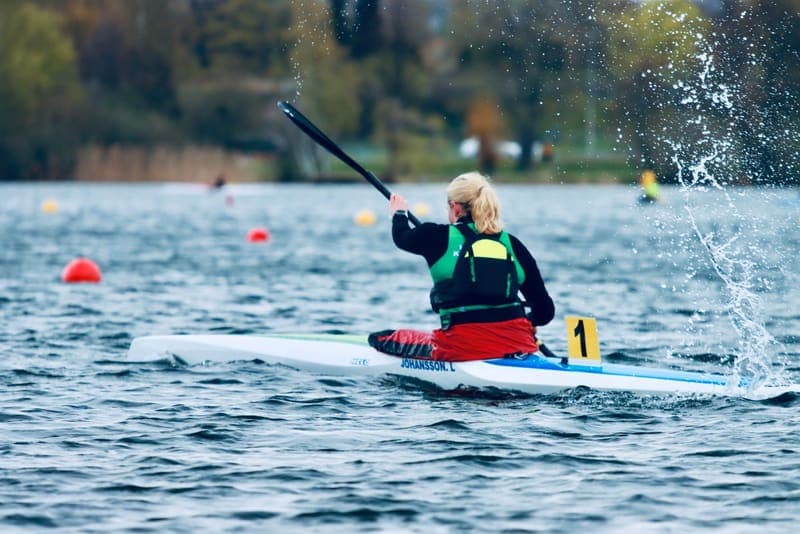
Light paddles on published weight, with the ounce-per-dollar arithmetic.
Best paddle holder
Paddle clips and track holders on grip, mounting and published fit.
Second-hand kayaks arrive one of two ways: with no paddle at all, or with the aluminum one the original owner also wanted rid of. Either way this is usually the first thing a used-boat buyer has to purchase outright, and it is the purchase where the most money gets wasted in both directions — too cheap to enjoy, or too expensive to justify against what the boat cost.
Weight. You lift a paddle roughly a thousand times an hour. A paddle is a machine you operate continuously, so the mass at the ends of your arms is not a spec-sheet detail, it is the whole experience. The published spread across the paddles here is real: the Bending Branches Whisper is 37 oz, the Carlisle Magic Plus is about 39.8 oz, and the Aqua-Bound Sting Ray Hybrid is 30 oz. That last one is not a rounding difference. Seven ounces off a 37-ounce paddle is a fifth of the weight, removed from every single stroke.
Length. Too short and you bang your knuckles on the gunwale; too long and every stroke becomes a sweep and the boat wanders. Length is set by two things: how tall you are, and how wide your boat is. Wide sit-on-tops and fishing kayaks need noticeably longer paddles than narrow touring hulls, which is why the fishing-specific paddles run to 260 cm while recreational paddles usually stop at 240. The table on what size kayak paddle you need crosses the two and gives you a number.
Everything else — blade shape, feather angle, drip rings — matters less than those two, and matters not at all until you have them right.
Paddle marketing talks about materials constantly. Here is what each one really buys you.
Shaft: aluminum, fiberglass or carbon. Aluminum is cheapest, heaviest, and conducts temperature straight into your hands — genuinely cold in April, genuinely hot in August. Fiberglass fixes the temperature problem and shaves a little weight for modest money; the Carlisle Magic Plus is the obvious example. Carbon is where the real weight savings live, and where the price goes up sharply.
Blade: polypropylene, nylon or fiberglass-reinforced. Cheap polypropylene blades flex under load, which converts some of your effort into bending the blade rather than moving the boat. It is not dramatic and you will not notice it on a first outing, but it is why a stiffer nylon or fiberglass-reinforced blade feels more direct. The Whisper uses polypropylene; the Angler Classic and the Sting Ray Hybrid both use fiberglass-reinforced nylon.
Blade area is the spec nobody explains. The Whisper publishes 89 square inches; the Angler Classic publishes 102.5. A bigger blade grabs more water per stroke, which is more acceleration and more load on your shoulders. For a beginner, or anyone paddling for hours rather than sprinting, the smaller blade is the friendlier choice, and it is cheaper. Bigger is not better here, it is just different.
There is a defensible argument that the paddle deserves more of your budget than the boat, because you interact with it constantly and any hull will float. We are not going to talk you out of that. But if you just paid a few hundred dollars for a second-hand kayak, spending the same again on a carbon paddle in week one is a decision to make deliberately in year two, not by accident on day one.
The practical sequence that works: buy a properly sized entry paddle with an asymmetrical blade, paddle a full season on it, and find out whether you are the kind of paddler who does three hours at a stretch. If you are, the weight upgrade is the best money in this hobby. If you are not, you already own the right paddle.
One accessory worth a paragraph: a paddle leash. A paddle that gets away from you on flat water in wind is genuinely hard to retrieve, because you have nothing to paddle after it with. A leash costs very little. The important caveat is that a leash is an entanglement risk in surf and moving water, and there it should come off entirely.
Fishing boats need longer paddles, and it is the hull’s width rather than your height that decides it. A 34-inch beam puts your hands a long way from the water, which is why Bending Branches publishes its angling paddle to 260 cm while the recreational one stops at 240. What else an angling paddle actually gives you — a tape measure and a hook notch, and not much more — is on the best kayak fishing paddles.
A SUP paddle is not a substitute, and neither is a kayak paddle on a board if you are standing up. The reason is not blade shape; it is that one is sized for hands five feet above the water and the other for hands about a foot above it. What convertible paddles give up, and when one paddle really is enough, is on kayak paddle versus SUP paddle.
At the two ends of the price ladder, two more. A first paddle should be chosen on length and blade size and almost nothing else, and the cheapest correct one is the right one until you know how far you paddle — the best kayak paddle for beginners decodes the spec sheet. At the other end, the lightest paddles shave ounces at a steep price per ounce, and where carbon earns its money and where it does not is on the lightest kayak paddles.
Two small parts, if the paddle came second-hand. The drip rings are almost always missing — which is why water runs down the shaft into your lap — and a padded grip fixes the hot spots a bare cold shaft causes. Both, and the shaft diameter nobody in that category publishes, are on kayak drip rings and paddle grips.
And one question that is really about the boat rather than the paddle: where the paddle goes when both hands are busy. A clip or a track-mounted holder is decided by what your deck already has, and the one spec that decides fit — shaft diameter — is published by exactly one maker. That comparison is on the kayak paddle holder roundup.

Head to head
Seven ounces, several times the price — when the carbon upgrade pays off.
Head to head
Double blade or single, and why the boat decides rather than you.
Guide
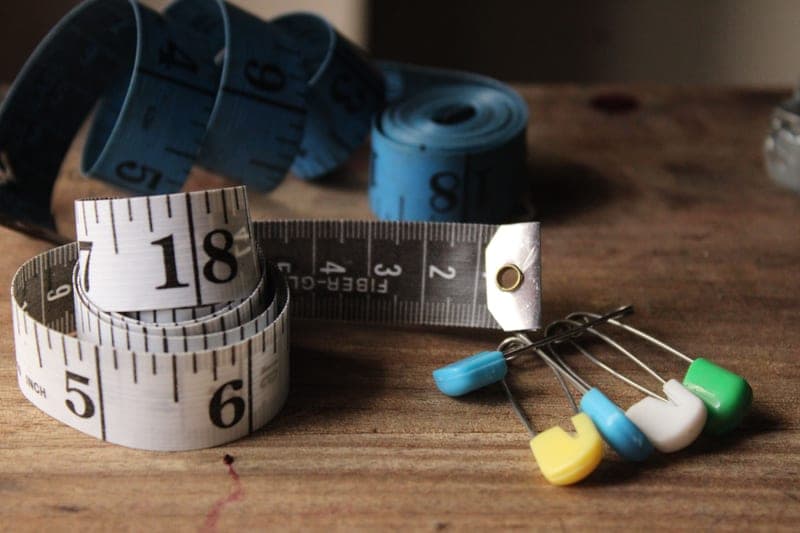
Height crossed with boat width — the sizing table, in inches and centimeters.
Guide
What package paddles are worth, and using a missing one to negotiate.
Guide
Cheap insurance on flat water, a hazard in current — when to use one.
Head to head
Why the two are not interchangeable, and when a convertible is worth it.

Guide
Drip rings and grips for a used paddle: what fits and what to check first.
FAQ
Length is set by your height and by how wide your boat is, and the boat width matters more than most people expect. A wide sit-on-top or fishing kayak needs a noticeably longer paddle than a narrow touring hull for the same paddler.
As a rough map: most recreational paddlers on boats under 30 inches wide land between 220 and 230 cm, and wide fishing hulls commonly need 240 to 260 cm. Bending Branches sells the Whisper in 210 to 240 cm and the Angler Classic in 220 to 260 cm for exactly this reason.
New kayaks sometimes do, usually as part of a package, and the included paddle is almost always the cheapest one the manufacturer could put in the box.
Used kayaks frequently do not. A paddle is the single most common thing missing from a second-hand boat, so budget for one before you agree a price.
Over a short paddle, no. Over a long one, yes — you lift a paddle roughly a thousand times an hour, so the difference compounds in a way a spec sheet does not convey.
The published spread is meaningful: 30 oz for the Aqua-Bound Sting Ray Hybrid against 37 oz for the Bending Branches Whisper and about 39.8 oz for the Carlisle Magic Plus. That is a fifth of the weight, on every stroke.
We have not tested any of this gear, and we say so on every page. What is here is compiled specifications, cited sources and live prices. Read the method.