Kits
What kayak accessories do I need?
Three things are required by law. Five more decide whether you keep going out. Everything else is optional, and most lists do not tell you which is which.
Disclosure: we earn a commission if you buy through the links on this page, at no extra cost to you. It does not change which products we pick or how we rank them. How this site is funded.

The bill of materials
What is in this kit
| # | Item | Why it is on the list | Price |
|---|---|---|---|
| 1 | 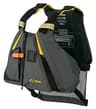 Onyx MoveVent Dynamicfrom our best budget kayak life jackets pick Onyx MoveVent Dynamicfrom our best budget kayak life jackets pick | Legally required. One approved wearable per person, and the mesh back is what makes it wearable on a kayak seat. | $66.32View on Amazon |
| 2 |  Bending Branches Whisperfrom our best budget kayak paddles pick Bending Branches Whisperfrom our best budget kayak paddles pick | Used boats usually arrive without one. Get the length right before anything else. | $79.95View on Amazon |
| 3 |  Malone Standard Kayak Foam Block Kitfrom our best budget kayak roof racks pick Malone Standard Kayak Foam Block Kitfrom our best budget kayak roof racks pick | You cannot use the boat until you can carry it. Works on a bare roof, straps included. | $46.27View on Amazon |
| 4 |  Earth Pak Waterproof Dry Bagfrom our best budget kayak dry bags pick Earth Pak Waterproof Dry Bagfrom our best budget kayak dry bags pick | Your phone is your rescue device. It has to stay dry and stay on you. | $23.99View on Amazon |
| 5 | Malone Clipper TRXfrom our best budget kayak carts pick | The carry from the car park is what quietly stops people going out. | Check price on Amazon |
| 6 | Skwoosh Paddling Cushionfrom our best kayak seat upgrades pick | Numbness after 45 minutes ends more trips than weather does. | Check price on Amazon |
| Partial total | $216.53 | ||
The short list, in plain order
Most “kayak accessories” articles are a list of thirty items with no prices and no ranking. Here is the honest version.
Required by law:
- A wearable Coast Guard-approved PFD, correctly sized, for every person aboard
- A sound-producing device — a whistle is enough
- A white light available to show, if you might be out between sunset and sunrise
Not required, but they decide whether you keep paddling:
- A correctly sized paddle
- A way to get the boat onto the car
- A way to get it from the car to the water
- Dry storage for a phone and keys
- Something to sit on that does not go numb
That is the whole list. Eight things, three of which are law. The bill of materials above prices the ones you buy rather than the ones you already have.
Why the legal list is so short
People are consistently surprised by this. Under 33 CFR 175.15, a recreational vessel must carry one wearable approved PFD per person, in the right size, readily accessible. A kayak is a vessel. Add a sound-producing device on most waters, and a white light after dark.
No flares are required for a paddle craft on inland water. No first aid kit is mandated. No registration for a non-motorized kayak in most states. The legal bar is genuinely low, which is why the legal minimum kit is the cheapest page on this site.
Low legal bar, though, is not the same as adequate. The three things above will not make a cold-water paddle safe, and they will not stop you giving up after two outings because the boat is a pain to transport.
The five that actually change things, and why
The paddle. Used boats arrive without one, or with a bad one. Length matters more than material — a perfectly specified paddle in the wrong length is worse than a cheap one in the right length. Work it out on what size kayak paddle you need before you spend anything.
Getting it on the car. The single most common post-purchase surprise for used-boat buyers. If your car has no crossbars, a foam block kit does this for very little — Malone publishes a 55 lb rating and includes the straps.
Getting it to the water. Carrying a 60-pound hull across a car park is the thing that quietly ends the hobby. A cart is the cheapest large improvement in paddling.
Dry storage. Not for convenience. Your phone is the most effective rescue device you will ever carry, and it needs to be waterproofed and on your body, not in a hatch.
Something to sit on. A numb backside after 45 minutes is what turns a three-hour plan into a one-hour one. A gel pad is the cheap fix; a seat with a back is the expensive one, and they solve different complaints.
What this kit deliberately leaves out
Stating omissions is the point of a kit page, so:
- A bilge pump. Genuinely important on a sit-in kayak, unnecessary on a sit-on-top with working scuppers. It depends on your boat, so it is not on a universal list — see the bilge pump guide.
- A crate, rod holders and an anchor. Fishing gear, not paddling gear. That list is on the fishing checklist, and the priced bill of materials is the used fishing kayak kit.
- A spray skirt. Sea kayaking and whitewater equipment. A recreational paddler on a lake does not need one, and a sit-on-top cannot use one.
- A wetsuit or drysuit. The single most important thing for cold water, and entirely dependent on your water temperature and season. Too variable to price on a general list, and too important to hide inside one.
- A whistle and a headlamp as separate lines — because the vest above includes a whistle, and most people already own a headlamp. They are on the legal minimum kit where they are priced properly.
The order to buy in
If you cannot buy it all at once — almost nobody does — buy in the order things stop you going out:
- The PFD. It is the law and it is the point.
- The paddle. Without it you are not going anywhere.
- Transport. Both halves: onto the car, and to the water.
- Dry storage.
- Comfort.
Priced out as three complete kits, for three different situations, on the kits hub.
FAQ
Questions people actually ask
What kayak accessories do I need?
Legally, three things: a wearable Coast Guard-approved PFD in the correct size for every person aboard, a sound-producing device such as a whistle, and a white light available to show if you may be out after sunset.
Practically, five more decide whether you keep paddling: a correctly sized paddle, a way to get the boat onto the car, a way to get it from the car to the water, dry storage for a phone, and something to sit on that does not go numb.
What is the first accessory to buy for a kayak?
The PFD, because it is legally required and because it is the one that matters. After that, a correctly sized paddle — without one you are not going anywhere, and used boats usually arrive without.
Then transport, in both halves: getting the boat onto the car, and getting it from the car park to the water. Those two are what quietly stop people going out.
Do I need a bilge pump for my kayak?
It depends on the boat, which is why it is not on the universal list. A sit-in kayak has a cockpit with no drainage, so water stays in until you remove it and a pump is genuinely important.
A sit-on-top drains continuously through its scuppers and does not need one on flat water, unless the hull itself has taken on water — and that is a fault to fix rather than to pump.
We have not paddled with any of this gear. Everything above comes from published specifications, cited manuals and live retailer prices. Here is exactly how we pick.
Sources
Read next
Related on Drift & Dime
Kits
The legal minimum kayak kitThe three items federal rules require, priced — and nothing else.
Kits
The first season kayak kitLegal minimum plus what keeps you paddling — eight lines, priced.
PFDs & Safety
Are life jackets required on kayaks?The federal rule, what 'readily accessible' means on a kayak, and where wear is mandatory.
Paddles
What size kayak paddle do I need?Height crossed with boat width — the sizing table, in inches and centimeters.