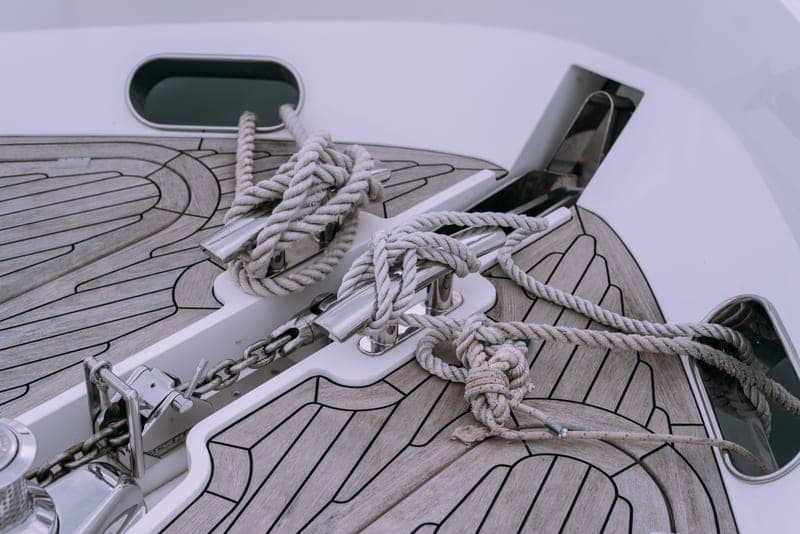
Best budget anchor
The best budget kayak anchors
Anchor kits compared on rope length and contents — buy scope, not weight.
Section
Anchors, rod holders and a milk crate. The cheap way to turn a second-hand kayak into a fishing platform without drilling holes you regret.
Disclosure: we earn a commission if you buy through the links on this page, at no extra cost to you. It does not change which products we pick or how we rank them. How this site is funded.
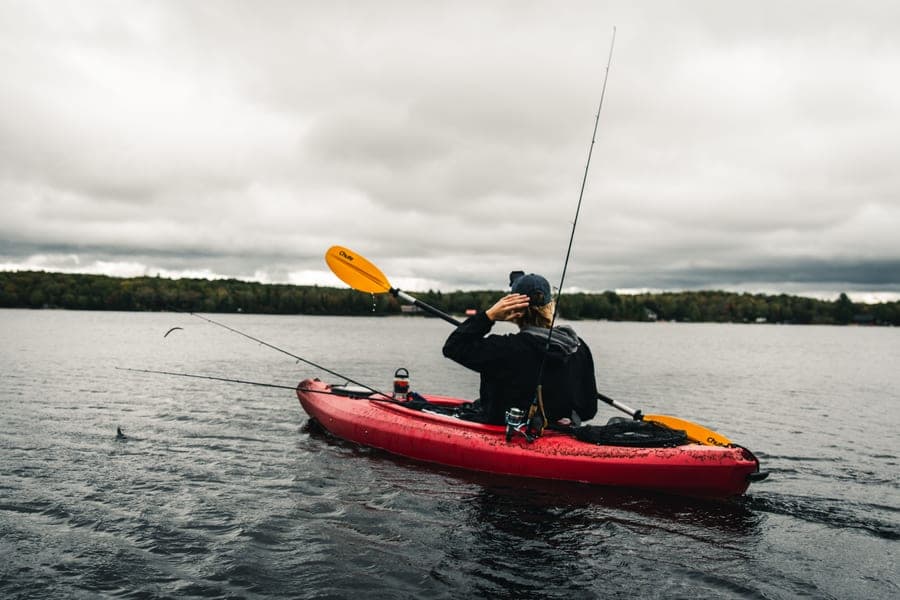
Best budget anchor
Anchor kits compared on rope length and contents — buy scope, not weight.
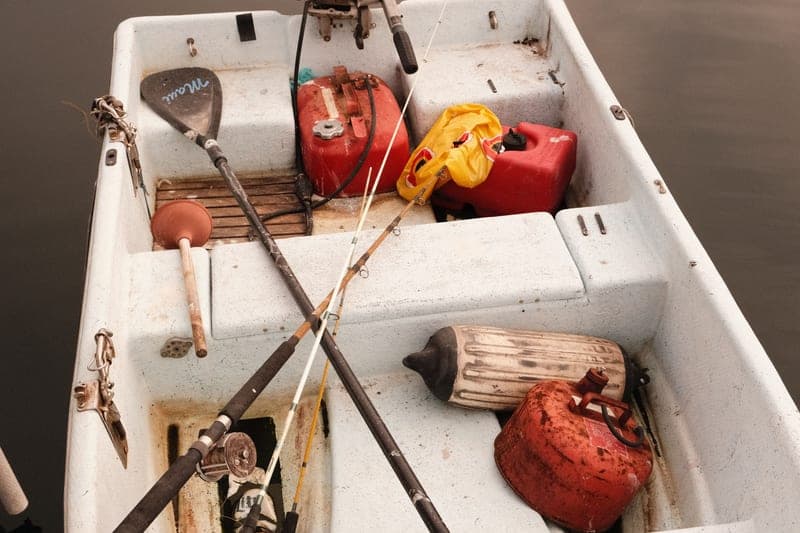
Best budget rod holder
Holders compared on locking ring, published bolt pattern and mounting.
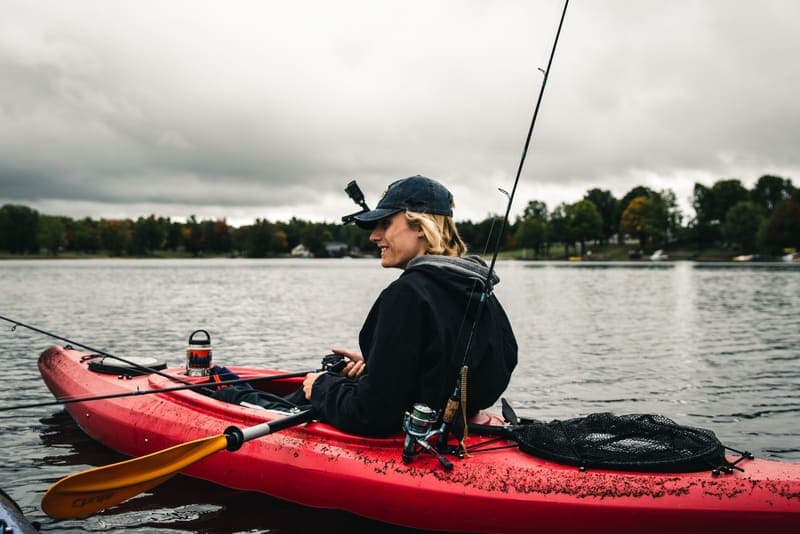
Best budget fish finder
Finders compared on published sonar and the true cost of installing one.
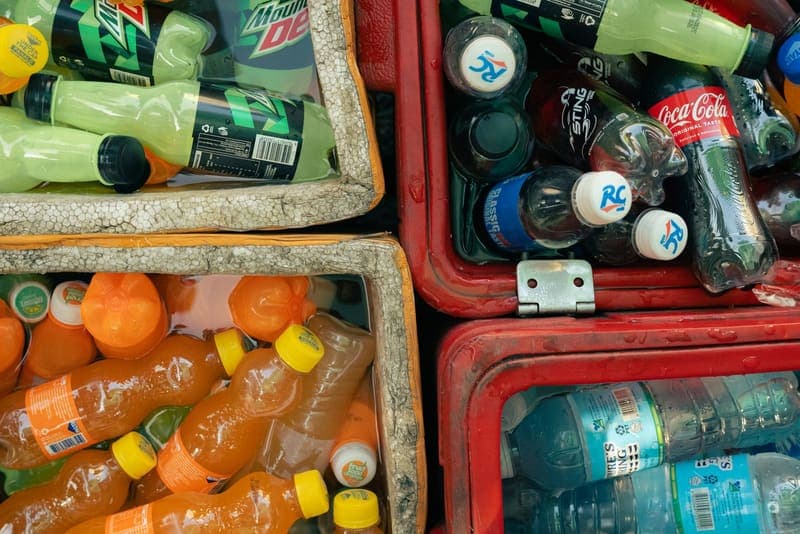
Best kayak cooler
Soft coolers ranked on tankwell fit, zipper sealing and published insulation.
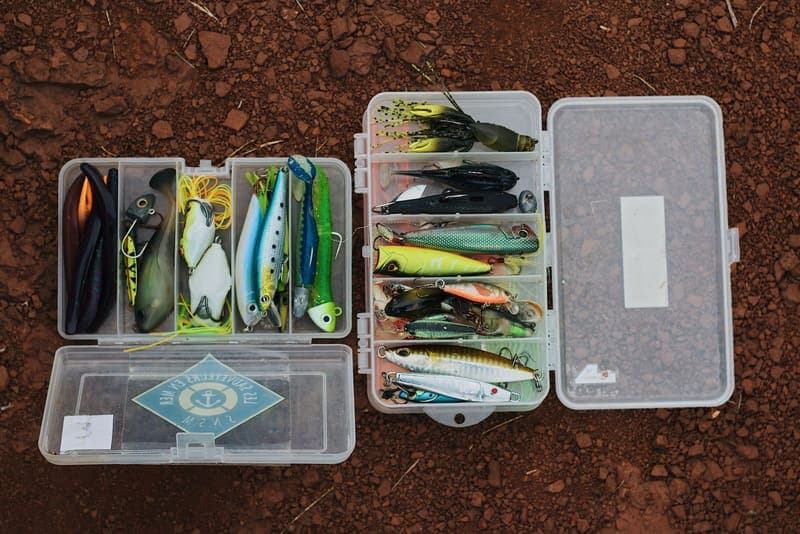
Best kayak tackle box
Trays ranked on sealing, the standard footprint and what belongs in each.

Best stakeout pole
Poles on published length and weight, and the depth where an anchor wins.
Best fish finder battery
12V 9Ah sealed batteries on published size and weight, plus the box and fuse.
Best drift sock
Drift socks on published size, plus kayak sizing and how to rig the bridle.
Fishing kayaks sell used for a fraction of new, and they usually sell stripped: the previous owner took the rod holders, the fish finder and the crate with them. What you have bought is a hull with some holes in it. This section is about filling that back in cheaply and without making the boat worse.
Every hole in a kayak deck is a potential leak and a permanent decision. On a used boat you are usually inheriting somebody else’s holes already, so the instinct to add more should be resisted until you know how you actually fish.
Three ways to mount things without drilling, in order of preference:
Open-style rod holders come in two kinds: the ones with a front locking ring and the ones that launch your rod into the lake. The Scotty 230 Powerlock has one, publishes a 1.95-inch interior diameter that takes essentially any reel, and rotates a full 360 degrees horizontally. Its mount is in the box, which is worth checking on any Scotty product because several are sold as the holder alone.
The alternative philosophy is the RAM ball-and-socket system, where one knob repositions the entire assembly. It costs more, because you buy a holder, an arm and a base, and it is worth it if you fish actively from the seat and want to aim the rod rather than store it.
A flush-mount holder set into the deck behind you is the cheapest option and the one that requires the biggest hole. If you are keeping the boat for a decade, fine. If you might sell it in two years, use the crate.
Almost every kayak anchor sold is a 1.5 to 3.5 pound folding grapnel, and at that end of the market the anchors are more similar than different. What varies, and what actually decides whether the kit works for you, is how much rope is in the box.
The reason is scope. An anchor holds by lying flat and dragging its flukes into the bottom, and it can only do that if the rope runs out at a shallow angle. Rope equal to the water depth pulls the anchor straight up and it skips. You want several times the depth. So the Gradient Fitness kit’s published 25 feet of rope is comfortable in six feet of water and useless in fifteen, regardless of how good the anchor is.
Buy the kit that includes a buoy. When a grapnel wedges under a rock — and it will — a buoy lets you clip off, float the line, drift away, and come back to retrieve it from a different angle. Without one, your options are snapping the line or pulling yourself down to the anchor, and one of those is how kayaks get swamped. The Gradient kit publishes a PVC float and a stainless snap hook as standard.
Anchors are also not the only answer. In shallow water a stakeout pole is faster, quieter and cannot snag; in wind, a drift sock slows you without stopping you. We put the three side by side on anchor versus pole versus drift sock.
If you are starting from a stripped hull, this order wastes the least money: crate first, because it holds everything and costs almost nothing. Then a rod holder, because hands-free paddling is the point. Then anchoring, once you know whether you fish moving water or still. A fish finder last, or never — it is the most expensive item in kayak fishing and the least necessary on water you know.
The priced version of all of this is on the kayak fishing accessories checklist.
Never anchor a kayak from the side in current. Held at the side, the boat turns broadside, the current pushes the upstream gunwale down, water comes over it, and the water inside lowers that gunwale further. An anchor trolley moves the pull point to the bow or the stern so the boat lines up with the flow instead — what a kit contains, and whether the holes are justified, is on the anchor trolley guide.
On fish finders, the screen is the cheap part. A kayak has no battery, no transom for a transducer and nowhere flat to bolt a bracket, and those three routinely cost as much again as the unit. That is also why a castable sonar — nothing to install, nothing to undo before you sell the boat — is a serious answer rather than a toy. The costs are laid out on the budget fish finder roundup.
A cooler and a tackle box are the two things most likely to ride in the well, and both are bought wrong in the same way: on capacity rather than on whether they fit and whether they seal. A cooler that sits on top of the tankwell instead of in it raises twenty pounds of ice a foot higher than the boat was designed for, and a tackle box that lets water in is a box of rust by the following weekend. Fit and sealing, in that order, on the best kayak coolers and the best kayak tackle boxes.
Three more that come up once the boat is rigged. In water shallow enough to touch bottom, a stakeout pole beats an anchor outright — published lengths and weights are on the stakeout pole roundup. When the wind is doing the work, a drift sock sized for a kayak rather than a bass boat is the tool, on the drift sock roundup. And if you added a fish finder, the battery, box and fuse that make it safe are on the fish finder battery guide. The two Garmin units most kayak anglers choose between get a closer look on the STRIKER 4 review and the STRIKER Cast review.
Head to head
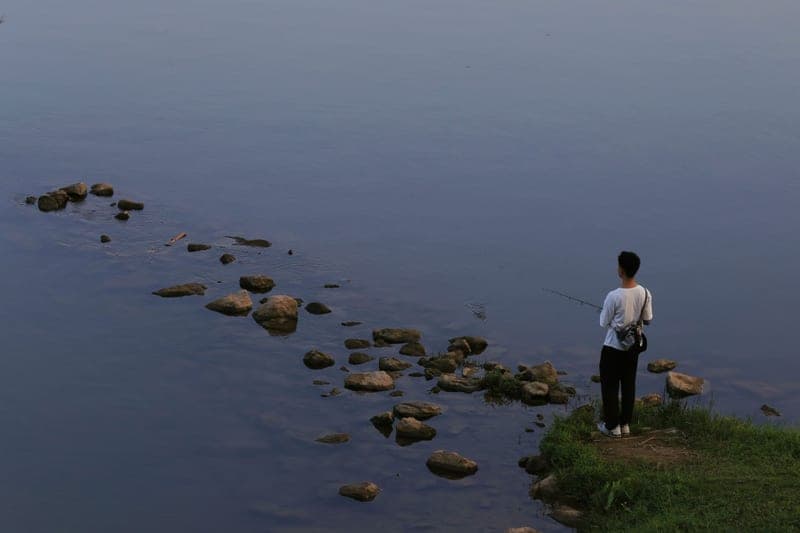
Three ways to control drift, and which one your depth and wind call for.
Guide
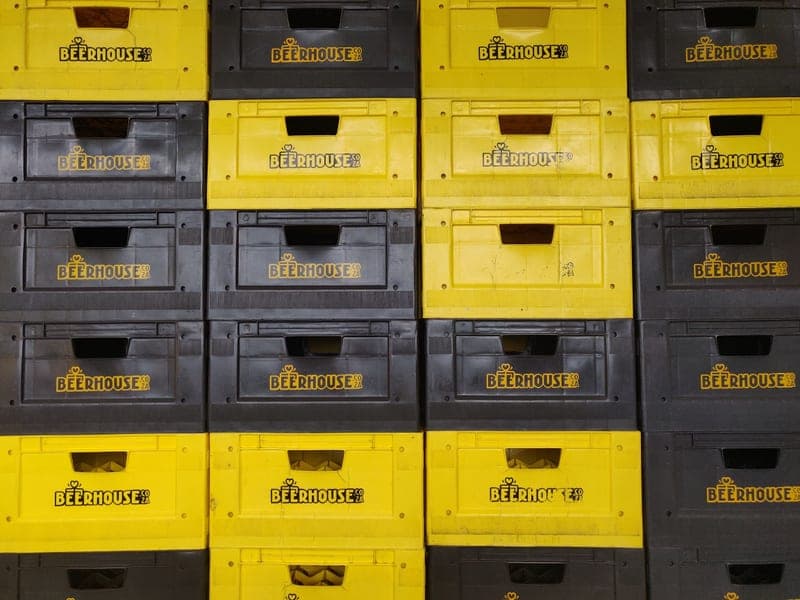
Building a crate: rod tubes, tackle, strapping — and no holes in the hull.
Guide
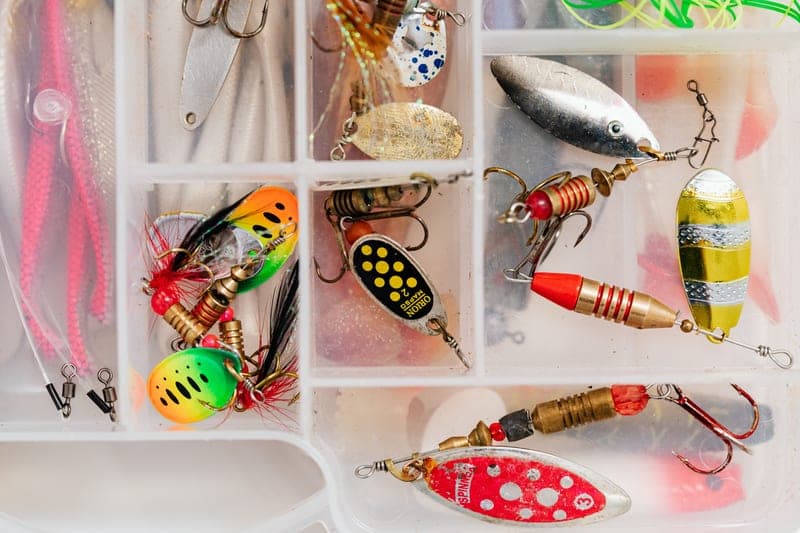
What to buy to fish from a kayak, in the order that wastes least money.
Guide
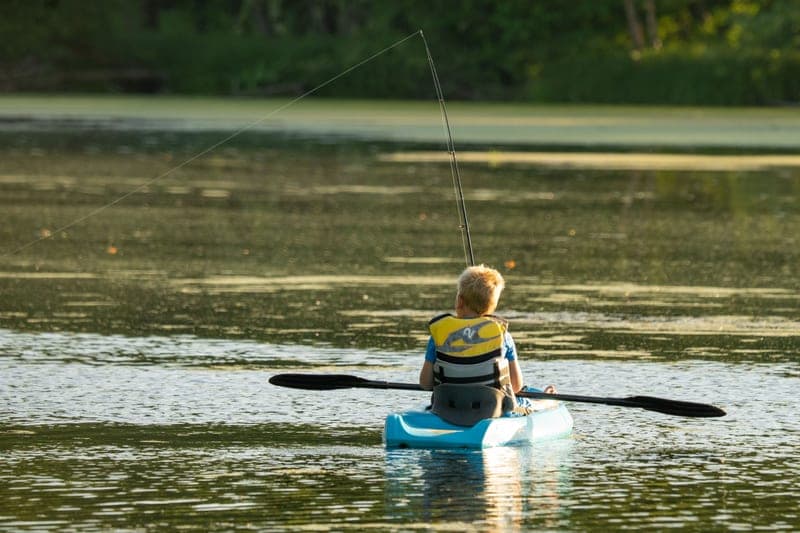
Sealing inherited holes, reusing bolt patterns, and no-drill rigging.
Guide
Why side anchoring rolls a kayak, and what a trolley costs in holes.
Guide
The classic first kayak fish finder, and the install it actually requires.
Guide
Castable sonar for a kayak: no install at all, and what that costs you.
FAQ
A folding grapnel anchor holds by lying over on the bottom and dragging its flukes into sand, mud or rock until they catch. It does not hold by weight — a 3.5 lb anchor is far too light to hold a boat by mass alone.
That is why rope length matters more than anchor weight. The line has to run out at a shallow angle for the flukes to bite, so you want several times the water depth in rope, not an amount equal to it.
Yes, and in still or slow water it is straightforward with a 1.5 to 3.5 lb folding grapnel and enough rope.
In current, anchor from the bow or stern rather than the side. A kayak anchored from its side in moving water can be turned broadside and rolled, which is the single most dangerous thing in this section. Use an anchor trolley or a bow cleat, and carry a knife you can reach.
No. If the boat has a factory gear track, track-mounted holders slide on with no holes at all and move between boats.
If it does not, a milk crate behind the seat with rod tubes attached to it does the same job for less money and leaves the hull untouched. On a used boat that you may resell, that matters.
We have not tested any of this gear, and we say so on every page. What is here is compiled specifications, cited sources and live prices. Read the method.