Fishing Rigging
The kayak crate setup
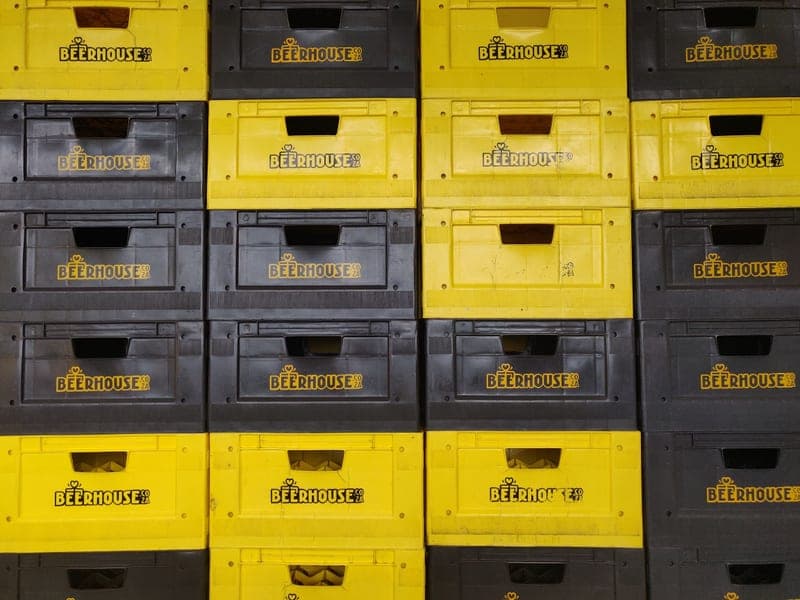
A milk crate behind the seat is the cheapest rigging in kayak fishing, and on a second-hand boat it is also the smartest, because it puts no holes in anything.
Disclosure: we earn a commission if you buy through the links on this page, at no extra cost to you. It does not change which products we pick or how we rank them. How this site is funded.
The short answer
Quick picks
Ranked for the person outfitting a used boat: what it costs, what it does, and who should skip it. 3 picks.
| # | Product | Best for | Our score | Price |
|---|---|---|---|---|
| 1 |  Scotty 230 Powerlock1.95" interior, 360° rotation, locking ring. The default holder. Scotty 230 Powerlock1.95" interior, 360° rotation, locking ring. The default holder. | Most rods | 8.6 | $24.95View on Amazon |
| 2 | SealLine Baja Dry Bag19 oz vinyl sides, 30 oz bottom. Built to be dragged. | Abuse | 8.1 | Check price on Amazon |
| 3 | Gradient Fitness Anchor Kit3.5 lb folding grapnel, 25 ft of rope, buoy and hook in the box. | A complete kit | 8.6 | Check price on Amazon |
Why a crate before anything else
A purpose-built kayak fishing crate costs real money. A milk crate costs almost nothing and does about ninety percent of the same job.
More importantly for anyone with a used boat: it requires no holes. Every drilled hole in a kayak deck is a potential leak and a permanent decision. A crate sits in the tankwell, straps down to fittings that already exist, and comes out entirely when you sell the boat.
It also consolidates. Rods, tackle, a dry bag, the anchor, a pump — all in one thing you carry from the car in one trip instead of five.
Choosing the crate
Measure the tankwell first. The well behind the seat is a molded shape and crates are rigid; a crate an inch too wide simply does not go in.
A standard 13-inch milk crate fits most fishing sit-on-tops. Some narrower recreational boats need a smaller storage box, and there is no shame in that — the principle is the same.
Look for a crate with square lattice sides rather than solid ones. The holes are what everything zip-ties to, and they are the reason a milk crate works better for this than a solid plastic tub.
Where the paddle goes while you fish
The crate solves rods and tackle. The paddle is the other long object on the deck, and it is the one that ends up across your lap or sliding into the water while your hands are busy.
A blade tucked under the deck bungee works, and a dedicated clip or track-mounted holder works better because it is one-handed. Which to buy depends on what your deck already has — the comparison is on the kayak paddle holder roundup.
Rod tubes
The classic approach, and it costs very little: lengths of PVC pipe, roughly 2 inches internal diameter and 16 to 20 inches long, zip-tied upright to the outside corners of the crate.
Three details that make the difference between a good version and a frustrating one:
- Cap the bottom. An open tube fills with water and grit, and the butt of your rod sits in it all day. A PVC end cap costs pennies. Drill one small hole in the cap so it drains rather than filling.
- Angle them outward slightly. Vertical tubes put rod tips directly overhead where they catch on branches and each other. Ten or fifteen degrees out solves it.
- Two zip ties per tube, spread apart. One tie is a pivot. Two, several inches apart, is rigid.
If you would rather buy than build, a proper holder like the Scotty 230 can be bolted through the crate wall rather than through the hull — same holder, same locking ring, no holes in the boat. That is the best of both, and it is what we would do.
What goes in it
The crate is the boat’s hold. A sensible loadout:
- A small dry bag for phone, keys and wallet — though the one thing that should not live in the crate is your phone, which belongs on your body. Crates go over the side with the boat.
- Two tackle trays, laid flat. Trays stack; loose boxes tip. The 3600 footprint is the one crates are sized around, and which tray should be the sealed one is on the tackle box roundup.
- A soft cooler that fits inside, if the well has no room for a separate one. Measure first — the fit arithmetic is on the kayak cooler roundup.
- The anchor in its bag, flukes contained so they do not catch line.
- Pliers and a line cutter — though the best place for these is a PFD pocket, where you can reach them without turning round.
- Water, and a bag for rubbish.
Strapping it down properly
An unsecured crate leaves the boat in a capsize, taking your tackle with it. Strap it to two separate fittings, not one.
Use the tankwell bungees if the boat has them, plus a cam strap through the crate and around a padeye. Cam straps rather than bungees for the main restraint — bungee is elastic, and elastic is exactly what you do not want holding a heavy object in a boat that just turned over.
Leash anything expensive inside the crate that would sink. Pliers, a fish grip, a camera. A short cord from the item to the crate lattice costs nothing.
Weight, and where it goes
A loaded crate is heavier than people expect, and it sits behind you at the stern.
Too much weight back there lifts the bow, which makes the boat wander in wind and slower to paddle. If the kayak feels twitchy after you add a crate, move the heaviest items — usually the anchor — forward into a hatch or between your feet instead.
There is also a scupper consequence. A heavily loaded boat sits lower, which puts the scuppers below the waterline and pushes water up onto the deck. If you were dry before adding the crate and are wet after, that is the cause, and scupper plugs are the answer on flat water.
The upgrade path
Fish the milk crate for a season. You will learn exactly what you reach for and what never comes out of the bag.
If you then want a purpose-built crate, you will buy the right one rather than the one with the most features. And plenty of people never bother, because the milk crate keeps working.
The crate is also where a battery lives if you later fit electronics, which is worth knowing before you fill it with tackle. A traditional fish finder needs a sealed battery in a fused box — the sizes, the box and the fuse are on the fish finder battery guide — and the crate is the only enclosed, strapped-down volume most fishing kayaks have — that constraint, and the no-install alternative to it, is on the budget fish finder roundup.
In full
Every pick, in detail
Specs below are the manufacturer's published figures, cited per product. Where a maker does not publish a number, the row says so rather than guessing at it.
#1 · Most rods
Scotty 230 Powerlock
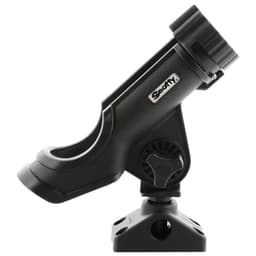
1.95" interior, 360° rotation, locking ring. The default holder.
Published specs
| Interior diameter | 1.95" |
|---|---|
| Mount dimensions | 4" × 2" × 2" |
| Bolt pattern | 1 5/16" × 3 3/16" |
| Rotation | 360° horizontal, adjustable up and down |
| Material | Fiber-reinforced engineering-grade nylon |
| Included | #241 side/deck mount |
Our score, broken out
- Mount8.0
- Adjustability9.5
- Build8.5
- Value8.5
What it gets right
- The front locking ring is the difference between a rod holder and a rod launcher. Open-style holders without one lose rods.
- Publishes its bolt pattern, so you can check it against your existing holes before you drill new ones.
- The mount is in the box. Scotty holders sold without a mount are a common and annoying surprise.
What it gets wrong
- Mounting means drilling the deck, and every hole is a potential leak.
- The open cradle collects grit; it needs rinsing.
Who should skip it
Skip it if your kayak has a factory gear track. A track-mounted holder gives you the same function with zero holes in the hull, and holes in a used boat are the thing you are trying to stop, not start.
#2 · Abuse
SealLine Baja Dry Bag
19 oz vinyl sides, 30 oz bottom. Built to be dragged.
Published specs
| Sizes | 5 L to 55 L |
|---|---|
| Body | 19 oz vinyl sides |
| Base | Heavy-duty 30 oz bottom |
| Closure | Dry Seal roll-top |
| Attachment | D-ring |
| IP rating | Manufacturer does not publish this |
Our score, broken out
- Waterproofing8.5
- Durability9.5
- Carry7.0
- Value7.0
What it gets right
- The heavier base is where dry bags fail first — they get dragged across a concrete ramp, not submerged.
- A published size ladder from 5 L to 55 L means you can buy the size you need rather than the size sold.
What it gets wrong
- Vinyl is stiff in cold weather and does not pack down small when empty.
- No published IP rating to compare against bags that quote one.
Who should skip it
Skip it if you want a bag that stuffs into a hatch when empty. Vinyl holds its shape, which is exactly what makes it tough and exactly what makes it bulky.
#3 · A complete kit
Gradient Fitness Anchor Kit
3.5 lb folding grapnel, 25 ft of rope, buoy and hook in the box.
Published specs
| Anchor | 3.5 lb, 4-fluke folding grapnel, rust resistant |
|---|---|
| Rope | 25 ft marine-grade, 7 mm |
| Included | PVC flotation buoy and stainless steel snap hook |
| Folded size | 12" × 3" |
Our score, broken out
- Hold7.5
- Kit completeness9.5
- Stowage9.0
- Value9.0
What it gets right
- A complete kit. Buying an anchor without rope, a buoy and a clip means three more orders and the same money.
- Folds to 12" × 3", which fits a milk crate alongside everything else.
- The buoy is what lets you cut loose from a snagged anchor and come back for it — worth having before you need it.
What it gets wrong
- 25 ft of rope limits you to shallow water. The working rule is several times the depth, not equal to it.
- 3.5 lb holds a kayak in modest current and not much more.
Who should skip it
Skip it if you fish water deeper than about 8 feet. 25 ft of rode is not enough scope out there, and you will be buying a longer line immediately.
FAQ
Questions people actually ask
What size milk crate fits a kayak?
A standard 13-inch milk crate fits the tankwell of most fishing sit-on-tops. Measure your well first, because it is a molded shape and a rigid crate an inch too wide simply will not go in.
Choose one with square lattice sides rather than solid ones — the holes are what rod tubes and accessories zip-tie to, and that is why a milk crate works better here than a solid tub.
How do you make rod holders for a kayak crate?
Lengths of PVC pipe around 2 inches internal diameter and 16 to 20 inches long, zip-tied upright to the outside corners of the crate.
Cap the bottom of each tube with a PVC end cap and drill one small drain hole in it, angle the tubes ten to fifteen degrees outward so rod tips are not directly overhead, and use two zip ties per tube spread several inches apart so it cannot pivot.
How do you secure a crate in a kayak?
To two separate fittings, not one, and with a cam strap rather than bungee as the main restraint. Bungee is elastic, and elastic is the wrong thing holding a heavy object in a boat that has just turned over.
Leash anything inside that would sink — pliers, a fish grip, a camera — with a short cord to the crate lattice.
We have not paddled with any of this gear. Everything above comes from published specifications, cited manuals and live retailer prices. Here is exactly how we pick.
Sources
- Scotty — 230 Powerlock published dimensions and bolt pattern
- Gradient Fitness — anchor kit contents and folded dimensions, as published on the retailer product listing
Read next
Related on Drift & Dime
Fishing Rigging
Rigging a used fishing kayakSealing inherited holes, reusing bolt patterns, and no-drill rigging.
Fishing Rigging
The best budget kayak rod holdersHolders compared on locking ring, published bolt pattern and mounting.
Fishing Rigging
The kayak fishing accessories checklistWhat to buy to fish from a kayak, in the order that wastes least money.
Outfitting
The best budget kayak dry bagsDry bags compared on published ratings and construction, not adjectives.