Fishing Rigging
The best kayak stakeout poles
In water shallow enough to reach the bottom, a pole holds you better than an anchor and costs you nothing in retrieval. Past that depth it is eight feet of dead weight.
Disclosure: we earn a commission if you buy through the links on this page, at no extra cost to you. It does not change which products we pick or how we rank them. How this site is funded.

The short answer
Quick picks
Ranked for the person outfitting a used boat: what it costs, what it does, and who should skip it. 3 picks.
| # | Product | Best for | Our score | Price |
|---|---|---|---|---|
| 1 |  Pelican Anchor and Push PoleEight feet of two-piece fiberglass with an anodized anchor pick and a foam handle, at a fraction of the premium price. Pelican Anchor and Push PoleEight feet of two-piece fiberglass with an anodized anchor pick and a foam handle, at a fraction of the premium price. | The same job for much less | 8.3 | $65.99View on Amazon |
| 2 |  YakAttack ParkNPole LinkEight feet of UV-stabilized fiberglass that breaks into two pieces and weighs 1.8 lb. The standard, and it stores inside most hulls. YakAttack ParkNPole LinkEight feet of UV-stabilized fiberglass that breaks into two pieces and weighs 1.8 lb. The standard, and it stores inside most hulls. | Staking out and pushing off | 8.0 | $132.95View on Amazon |
| 3 |  YakAttack ParkNPole RotoGripA track-mounted grip that holds the pole where you can reach it. The accessory that makes a pole usable rather than awkward. YakAttack ParkNPole RotoGripA track-mounted grip that holds the pole where you can reach it. The accessory that makes a pole usable rather than awkward. | Keeping the pole on the boat | 7.3 | $25.48View on Amazon |
The depth question decides this before anything else
A stakeout pole works by touching the bottom. Push it through the deck or over the side, into mud or sand, and the boat stops. There is no rode to pay out, nothing to haul back up, and no chance of the anchor fouling on the way home.
That is a genuinely better way to hold position than an anchor, and it applies in exactly one situation: water shallow enough that a pole reaches bottom with enough left above the waterline to hold on to. Both poles here are eight feet. In four feet of water that is comfortable. In six it is marginal. In eight it is a boat hook.
So the honest ranking order for holding a kayak still is: a pole in skinny water, an anchor past that, and a drift sock when you want to slow down rather than stop. We lay the three approaches side by side on anchor versus pole versus drift sock, and this page is only about the poles.
How we ranked these
Four criteria, weighted equally and published on how we pick:
- Reach. Published length, which sets the depth you can actually fish.
- Portability. Published weight and whether it breaks down. An eight-foot pole that does not come apart travels badly on a car and worse on a small deck.
- Build. Material, and what the maker is willing to state about it.
- Value. Against an anchor kit, which is the alternative purchase.
What the published numbers actually say
The two poles here are closer than their prices suggest, and it is worth putting the figures next to each other.
| Spec | YakAttack ParkNPole Link | Pelican Anchor and Push Pole |
|---|---|---|
| Length | 8 ft | 8 ft (244 cm) |
| Weight | 1.8 lb | 1.9 lb (870 g) |
| Sections | Two-piece | Two-piece |
| Shaft | Fiberglass, UV stabilized | Fiberglass, 0.9 in diameter |
| Point | Maker does not publish a figure | Anodized metal anchor pick |
A tenth of a pound apart, same length, same number of pieces, same material family. The difference you are paying for is not on the spec sheet: it is stiffness under load, finish, and the fact that YakAttack builds an ecosystem of mounts around its pole and backs it with a lifetime warranty.
Why two pieces matters more than it sounds
An eight-foot pole that does not come apart is a problem all day. It will not fit inside a hull, it will not fit in most cars, and on the deck it is a lever waiting to catch a branch.
Both poles here break into two. YakAttack states its Link version stores inside the hull of most fishing kayaks, which is the difference between a pole you bring and a pole you leave in the garage. If you are choosing between a cheaper one-piece pole and either of these, that is the spec to buy on.
The pole has to live somewhere
This is the part people discover on the water. A loose pole rolls off a sloped deck, floats away behind you, or ends up under your legs where it interferes with the paddle.
The tidy answer is a track-mounted grip, which is why the RotoGrip is on this page at all. It clips the pole to the deck where you can reach it one-handed, and on a boat that already has a factory track it costs nothing in holes. Two of them hold a pole properly; one holds it approximately.
The free answer is the deck bungees you already have, and on a lot of boats that is genuinely enough. If your boat has no track and you are weighing whether to add one, the standards and what each accepts are on the gear track and accessory rail roundup.
Through the scupper, or over the side?
Two ways to use a pole, and they suit different boats.
Through a scupper hole. On a sit-on-top with a scupper in the right place, the pole goes down through the deck and into the bottom, and the hull holds it upright for you. It is the tidiest method and the one that leaves your hands free to fish. The catch is that the scupper has to be somewhere useful — usually behind the seat — and the pole has to be thin enough to pass through it. Both poles here are around an inch in diameter, which clears most scuppers, but measure yours before assuming.
Over the side, into a grip or held. Works on any boat including sit-ins. The pole goes down beside the hull and either sits in a track-mounted grip or you hold it. Held is fine for a few minutes in calm conditions and tiring after that, which is the argument for the grip.
Either way, push the pole in at a slight angle away from the boat rather than straight down. A vertical pole in soft mud slides; an angled one loads against the bottom and holds. Do not drive it so deep that you cannot get it back — a pole stuck in heavy clay with a kayak attached is a genuinely awkward position.
Wind is what decides whether it holds
A pole resists the boat sliding. It does not stop the boat pivoting around the pole, and in a crosswind that is exactly what happens: the hull swings downwind until it sits broadside, with the pole at one end.
Two fixes. Stake out from the end of the boat rather than the middle, so the hull weathervanes behind the pole instead of across it. Or use two poles, one at each end, which is what anglers fishing a specific piece of structure in wind end up doing.
If you are regularly fighting wind rather than depth, you may be looking at the wrong tool entirely — a drift sock that slows you to a fishable pace is often the better answer, and that is on the drift sock roundup.
Bottom type changes everything
A pole holds by friction and by penetration, and neither works everywhere.
- Soft mud and sand. Ideal. The pick sinks, the boat stops, and it pulls out clean.
- Grass and weed. Good — the pole often holds better here than a grapnel, which fouls.
- Hard sand and shell. Workable, but expect to lean on it and expect the point to wear.
- Rock and gravel. Poor. The pick skates, and you are holding a spring-loaded lever.
- Current over any bottom. Treat with care. A pole holding a boat sideways in current is a capsize mechanism, which is the same physics that makes side-anchoring dangerous — see the anchor trolley guide.
One pole or two?
One pole holds a boat in calm conditions. Two poles, one near each end, hold a boat where you want it and stop it pivoting, which is what anglers working a specific piece of structure in wind end up doing.
That doubles the cost and the clutter, so it is worth being clear about when it is warranted: shallow flats with a crosswind, sight-fishing where boat angle matters, or any situation where you need the same casting lane for an hour. For drifting a shoreline and stopping occasionally, one is plenty.
Salt, sand and the care nobody mentions
A stakeout pole spends its life being pushed into abrasive ground and then left wet on a deck. Three things follow from that.
Rinse the joint. On a two-piece pole, the ferrule is where grit collects. A pole that will not come apart in October is one that was put away salty in August.
Expect the point to wear. Pelican publishes an anodized metal anchor pick, which is the part that meets shell and gravel. Anodizing is a surface treatment, not armor; check it for burrs, because a burr on a pole point tears a hull when the pole is stowed next to it.
Store it out of the sun. Fiberglass is UV-stabilized on the YakAttack pole by the maker's own statement, which slows the damage rather than preventing it. A pole strapped to a roof rack all summer ages faster than the boat it is strapped to.
Does a pole float?
Neither maker publishes a buoyancy claim, and that matters more than it sounds. A pole that sinks is a pole you lose once, in water you cannot see into.
The fix costs almost nothing: a short leash from the pole to a deck fitting, or a length of pool noodle on the top end. Do that before the first trip rather than after the first swim. The same logic applies to every loose item on a kayak deck, which is the argument behind the kayak crate setup.
What a pole replaces, and what it does not
A pole replaces an anchor in shallow water and improves on it in three ways: it deploys instantly, it never fouls, and there is no rope in the boat. For sight-fishing flats, working a shoreline, or holding on one spot in a creek, it is simply the better tool.
It does not replace an anchor for depth, for holding in a real blow, or for staying put while you rig and eat lunch. It also does not hold a boat that a strong crosswind is working on — a pole stuck in mud resists the boat sliding, not the boat pivoting around it. Our published anchor picks, and the rope length that actually decides holding, are on the budget kayak anchor roundup.
The second job: poling
Both of these are sold as push poles as well as stakeout poles, and on shallow flats that is the more interesting use.
Paddling makes noise and movement above the waterline. Poling — pushing off the bottom with the pole while sitting still and low — moves the boat quietly and without the flash of a blade coming out of the water. In clear shallow water where fish spook from a moving silhouette, that difference is the whole trip.
It is also genuinely awkward from a seated position, which is worth saying plainly. Poling is easy standing on a wide fishing platform and fiddly sitting in a recreational kayak. Try it before you buy a pole specifically for it.
Pelican publishes an ergonomic foam-lined handle with an integrated hook and states the pole doubles as a push pole; YakAttack states the Link version helps with anchoring in deeper water as well. Either way, push against the bottom with the shaft angled back, and let the boat glide rather than lunging at it.
What we would buy
If you want the numbers for the least money, the Pelican. Within a tenth of a pound of the premium pole on published weight, same length, same two-piece shaft, with an anodized pick and a hooked handle.
If you fish from a rigged kayak with a track, the ParkNPole Link and one or two RotoGrips. You are buying stiffness, a lifetime warranty and a mounting system that actually keeps the pole where you can reach it.
If your water is deeper than about waist height, buy neither. A pole that does not touch bottom is decoration, and an anchor kit costs less than both of these.
In full
Every pick, in detail
Specs below are the manufacturer's published figures, cited per product. Where a maker does not publish a number, the row says so rather than guessing at it.
#1 · The same job for much less
Pelican Anchor and Push Pole
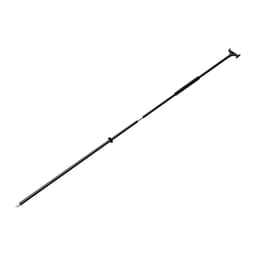
Eight feet of two-piece fiberglass with an anodized anchor pick and a foam handle, at a fraction of the premium price.
Published specs
| Length | 8 ft (244 cm) |
|---|---|
| Diameter | 0.9 in (2.3 cm) |
| Weight | 1.9 lb (870 g) |
| Shaft | Two-piece fiberglass |
| Handle | Ergonomic foam-lined handle with integrated hook |
| Point | Anodized metal anchor pick |
| Detail | Rubber ring stops the rope sliding down the shaft |
Our score, broken out
- Reach8.5
- Portability8.5
- Build7.0
- Value9.0
What it gets right
- Within 0.1 lb of the premium pole's published weight, at a much lower price, and it breaks down into two pieces the same way.
- The integrated hook on the handle earns its place — retrieving a dropped line or a stuck anchor rope is the second job a pole does.
- An anodized pick rather than a bare metal spike, which is the part that sits in mud and salt all season.
What it gets wrong
- Pelican publishes no load or flex figures, so how it behaves when you lean on it hard is unknown until you do.
- Stock is thinner than the YakAttack, and it is not sold with a mount or a grip of any kind.
- A foam-lined handle is a wear part. It is the bit that goes first on a pole that lives in the sun.
Who should skip it
Skip it if you want the pole to double as a serious push pole for a heavy loaded boat. The premium pole is stiffer and better supported.
#2 · Staking out and pushing off
YakAttack ParkNPole Link
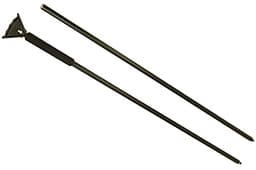
Eight feet of UV-stabilized fiberglass that breaks into two pieces and weighs 1.8 lb. The standard, and it stores inside most hulls.
Published specs
| Length | 8 ft |
|---|---|
| Sections | Two-piece |
| Material | Specially formed fiberglass, UV stabilized |
| Weight | 1.8 lb |
| Also does | Push pole; helps anchoring in deeper water |
Our score, broken out
- Reach8.5
- Portability9.0
- Build9.0
- Value5.5
What it gets right
- Two pieces means it travels in the boat rather than strapped across the deck, and YakAttack says it stores inside the hull of most fishing kayaks.
- 1.8 lb is light enough that you will actually pick it up to move three feet, which is the whole point of a stakeout pole.
- UV-stabilized fiberglass is the right material here — it does not corrode like aluminum in salt and it does not go brittle in a season on a roof rack.
What it gets wrong
- It is the most expensive pole on this page, at a price that reads oddly next to a used kayak.
- Eight feet is a lot of pole for shallow ponds; in two feet of water you are holding six feet of lever in the wind.
- Nothing holds it to the boat. A track-mounted grip is a separate purchase, and without one the pole rolls off the deck.
Who should skip it
Skip it if you fish water deeper than about waist height. A pole only works where it reaches bottom, and an anchor is the tool past that.
#3 · Keeping the pole on the boat
YakAttack ParkNPole RotoGrip
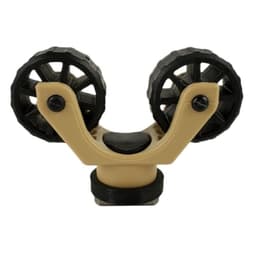
A track-mounted grip that holds the pole where you can reach it. The accessory that makes a pole usable rather than awkward.
Published specs
| Mounting | Kayak track, using a MightyBolt |
|---|---|
| Height | 2.4 in |
| Not included | GearTrac |
| Quantity | One unit |
| Origin | Manufactured in the USA |
| Warranty | YakAttack lifetime warranty |
Our score, broken out
- Reach5.0
- Portability8.0
- Build8.5
- Value7.5
What it gets right
- It solves the actual problem with stakeout poles, which is that a loose eight-foot pole on a small deck is a hazard and a nuisance.
- Track mounted, so on a boat that already has a factory track it costs no holes at all.
- A lifetime warranty on a small plastic grip is a signal about how the maker expects it to be used.
What it gets wrong
- One unit. A pole wants two grips to sit properly, which doubles the real cost.
- Track not supplied. On a boat without a factory track, add a track and its holes to the bill.
- It is one more thing bolted to a deck that is probably already crowded.
Who should skip it
Skip it if your deck bungees already hold the pole where you can reach it. This is a tidiness upgrade, not a necessity.
FAQ
Questions people actually ask
What is a kayak stakeout pole for?
Holding position in shallow water. You push it into mud, sand or grass and the boat stops — no rope to pay out, nothing to haul back, and nothing to foul on the bottom.
It only works where the pole reaches bottom with enough left above water to hold. The poles here are 8 feet, which is comfortable in about four feet of water and marginal in six.
Is a stakeout pole better than an anchor for a kayak?
In skinny water, yes. It deploys instantly, never fouls on rock or weed, and keeps a wet rope out of the boat.
Past the pole's reach an anchor wins, and in a strong crosswind an anchor holds a boat that a pole only pivots. Many kayak anglers carry both, because they solve different depths.
How long should a kayak stakeout pole be?
Long enough to reach bottom with a foot or two to spare in the water you actually fish. Eight feet is the common size and both poles on this page are 8 ft.
Going longer sounds safer but costs you: a longer pole is heavier, harder to stow and more awkward in wind. If most of your fishing is in two or three feet of water, 8 ft is already generous.
How do you carry a stakeout pole on a kayak?
Under deck bungees works, and costs nothing. A track-mounted grip like YakAttack's RotoGrip is tidier and lets you grab the pole one-handed; two grips hold a pole properly and one holds it approximately.
What matters is that it cannot roll off. A loose 8-foot pole on a sloped deck goes overboard eventually, and fiberglass poles do not all float well enough to catch.
We have not paddled with any of this gear. Everything above comes from published specifications, cited manuals and live retailer prices. Here is exactly how we pick.
Sources
Read next
Related on Drift & Dime
Fishing Rigging
Kayak anchor versus stakeout pole versus drift sockThree ways to control drift, and which one your depth and wind call for.
Fishing Rigging
The best budget kayak anchorsAnchor kits compared on rope length and contents — buy scope, not weight.
Fishing Rigging
The kayak anchor trolley guideWhy side anchoring rolls a kayak, and what a trolley costs in holes.
Outfitting
The best kayak gear tracks and accessory railsTracks and rails compared on the hardware standard they accept, not the marketing.