Kits
The legal minimum kayak kit
The shortest list on this site: what you must have aboard to be legal, and nothing you do not. Most people are surprised by how little it is.
Disclosure: we earn a commission if you buy through the links on this page, at no extra cost to you. It does not change which products we pick or how we rank them. How this site is funded.
The bill of materials
What is in this kit
| # | Item | Why it is on the list | Price |
|---|---|---|---|
| 1 | 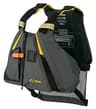 Onyx MoveVent Dynamicfrom our best budget kayak life jackets pick Onyx MoveVent Dynamicfrom our best budget kayak life jackets pick | The required wearable approved PFD. A marine whistle is included, which also covers the sound-producing device. | $66.32View on Amazon |
| 2 | 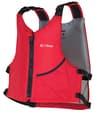 Onyx Universal Paddle Life Jacketfrom our best budget kayak life jackets pick Onyx Universal Paddle Life Jacketfrom our best budget kayak life jackets pick | A second approved vest, because the requirement is per person and passengers are the usual gap. | $65.56View on Amazon |
| Kit total | $131.88 | ||
What the law actually asks for
Three items. That is the whole federal picture for a recreational kayak on most waters.
1. One wearable Coast Guard-approved PFD per person. Correct size, good and serviceable condition, readily accessible. This is 33 CFR 175.15. On a kayak, “readily accessible” effectively means worn or on the deck within reach — not sealed in a hatch.
2. A sound-producing device. A whistle satisfies this. Several paddle vests include one; Onyx publishes a marine whistle with the MoveVent Dynamic, which is why the kit above does not carry a separate line for it. Attach it to the jacket, not to the boat.
3. A white light, between sunset and sunrise. A paddle craft needs, at minimum, a white light available to show in time to prevent a collision. A headlamp meets this in practice, and most people already own one, which is why it is not priced above. What the rule’s other options look like, and why a light on a mast beats one on the deck, is on the best kayak lights.
That is it. No flares required for a paddle craft on inland water. No fire extinguisher. No first aid kit. No registration in most states for a non-motorized kayak.
Why this kit prices two vests
The requirement is per person, and the most common way people fall foul of it is taking a friend out.
A tandem, or a second boat, or a passenger on a sit-on-top — each person needs their own correctly sized approved jacket. A spare vest in the garage costs very little and covers the situation that actually catches people out. That is the second line in the kit.
It is also why the cheap Onyx Universal is here rather than a second good vest: as a spare for guests it is exactly right, and as your own everyday jacket it is a false economy. That distinction is on the budget PFD roundup.
Where the states add to it
Federal law sets the floor for carriage. States add wear requirements on top, and they vary in three predictable ways:
- Children. Almost every state requires wear for children under about 12 or 13. This is the most consistent state rule in the country.
- Cold-water seasons. Several states require everyone aboard a small vessel to wear a PFD between fixed dates in fall and spring.
- Specific waters. Individual rivers, reservoirs and managed areas can carry year-round wear rules.
We are deliberately not publishing a state table. Those rules change, and a stale table is worse than none. Check your own state boating agency before the season, because the state rule is what gets enforced. This page is not legal advice.
Legal is not the same as adequate
This needs saying plainly, because the point of publishing a legal minimum is not to suggest you should stop there.
The legal minimum will not keep you warm in 50-degree water. It will not get water out of a swamped sit-in kayak. It will not stop your paddle blowing away, and it will not tell anyone where you are.
The Coast Guard’s own boating safety material makes the same point every year: in most fatal recreational boating accidents where the victim drowned, a life jacket was aboard and not being worn. Carriage is the legal question; wear is the one that matters. That is why the rest of this site cares so much about fit, ventilation and mesh back panels — those decide whether the jacket is on you.
What to add next, in order
The four cheapest items that add the most, none of which is required:
- A phone in a waterproof pouch, on your body. The most effective rescue device most paddlers will ever carry, and useless in a bag that floated away.
- A dry layer in a dry bag. Cold is the real risk on most inland water.
- A knife on the PFD, if you carry any line at all.
- Telling someone where you are going. Free, and more useful than most equipment.
Priced out in full on the first season kit, and reasoned through on the safety kit checklist.
What this kit deliberately leaves out
Everything that is not legally required, on purpose. No pump, no leash, no light beyond what you own, no first aid kit. The value of this page is that it is exactly the legal line and nothing else — the moment it starts including good ideas it becomes the first season kit, which is a different page.
FAQ
Questions people actually ask
Do you need a life vest for kayaking?
Yes. 33 CFR 175.15 requires one wearable Coast Guard-approved PFD in the correct size for every person aboard any recreational vessel, and a kayak is a vessel. It must be in serviceable condition and readily accessible.
On a kayak that effectively means worn or lying on the deck within reach, not sealed in a hatch. Many states additionally require it to be worn.
What is legally required on a kayak?
Three things federally: a wearable approved PFD per person, a sound-producing device such as a whistle, and a white light available to show if you are out between sunset and sunrise.
No flares for a paddle craft on inland water, no fire extinguisher, no mandated first aid kit, and no registration in most states for a non-motorized kayak.
Does a whistle count as a sound-producing device?
Yes, on most waters a whistle satisfies the requirement. Several paddle vests include one — Onyx ships a marine whistle with the MoveVent Dynamic.
Attach it to the jacket rather than to the boat. A whistle in a hatch during a capsize is not a signaling device.
Do kayaks need to be registered?
In most states a non-motorized kayak does not need registration, but this is a state matter and a handful do require it — sometimes only for boats over a certain length, sometimes for all paddle craft.
Check your own state boating agency rather than assuming. This is not legal advice.
We have not paddled with any of this gear. Everything above comes from published specifications, cited manuals and live retailer prices. Here is exactly how we pick.
Sources
Read next
Related on Drift & Dime
PFDs & Safety
Are life jackets required on kayaks?The federal rule, what 'readily accessible' means on a kayak, and where wear is mandatory.
PFDs & Safety
The kayak safety kit checklistThe required items, the genuinely useful ones, and the padding to skip.
Kits
The first season kayak kitLegal minimum plus what keeps you paddling — eight lines, priced.
Kits
What kayak accessories do I need?The required three and the useful five, each with a live price beside it.