Paddles
Kayak drip rings and paddle grips
A used paddle usually arrives with the drip rings missing and the shaft bare. Both are a few dollars to fix, and both change how a cold day feels.
Disclosure: we earn a commission if you buy through the links on this page, at no extra cost to you. It does not change which products we pick or how we rank them. How this site is funded.

The short answer
Quick picks
Ranked for the person outfitting a used boat: what it costs, what it does, and who should skip it. 2 picks.
| # | Product | Best for | Our score | Price |
|---|---|---|---|---|
| 1 |  Lorsum Kayak Paddle Drip RingsSix rubber rings for less than a sandwich, and the listing actually prints the diameters. The cheapest thing on this site that measurably changes how dry you stay. Lorsum Kayak Paddle Drip RingsSix rubber rings for less than a sandwich, and the listing actually prints the diameters. The cheapest thing on this site that measurably changes how dry you stay. | Replacing the ones that perished | 7.6 | $6.59View on Amazon |
| 2 |  Yakgrips Paddle GripsPatented cushioned wraps that close with hook and loop, so they go on a paddle you already own without dismantling anything. Yakgrips Paddle GripsPatented cushioned wraps that close with hook and loop, so they go on a paddle you already own without dismantling anything. | Blisters and a cold shaft | 6.5 | $16.95View on Amazon |
Two small parts, one cold problem
Every stroke lifts a blade out of the water, and the water on that blade runs somewhere. With drip rings fitted it runs off the shaft outboard of your hands and back into the lake. Without them it runs down the shaft, along your forearm, and into your lap.
In July that is trivial. In October it is the reason a two-hour paddle becomes a one-hour paddle. Drip rings are the cheapest thing on this entire site and the one most often missing from a second-hand paddle, because they perish, stretch and slide off.
Grips solve the other hand problem: a bare aluminum or fiberglass shaft is cold, slick when wet, and unforgiving over a long day. A padded wrap fixes hot spots and insulates.
Neither part will make a bad paddle good. If the paddle itself is the problem, start with the budget paddle roundup instead — and if you are not sure the length is right, that is a bigger fix than either of these, on what size kayak paddle you need.
How drip rings actually work
A drip ring is a rubber collar that sits on the shaft between your hand and the blade. Water running down the shaft hits the ring, collects, and falls off.
Two details decide whether they do anything:
- Position. Outboard of where your hands sit, but not so close to the blade that they are underwater on a deep stroke. A few inches in from the blade throat is the usual answer, and it is worth adjusting once on the water rather than guessing in the garage.
- Fit. They should need a shove to move. A ring that slides freely migrates toward your hands and stops working within twenty minutes.
On a feathered paddle, set them symmetrically — the blade angles differ but the drip position should not.
Feather angle changes how much water you take
Drip rings deal with water running down the shaft. Feather angle decides how much water gets onto the shaft in the first place.
A feathered paddle — blades offset from each other — lifts the recovering blade at an angle that sheds water outboard. An unfeathered paddle brings the blade up flatter, and more of what is on it runs inboard toward your hands. Neither is wrong, and most modern paddles let you choose at the ferrule.
This is why two paddlers can disagree completely about whether drip rings matter. If you paddle unfeathered with a high stroke in cold weather, they matter a great deal. If you paddle feathered with a relaxed low stroke in July, you may genuinely never notice.
If you have never set your feather deliberately, that is worth doing before buying anything — the ferrule adjustment and what the angle actually does are covered on what size kayak paddle you need.
The honest gap in this category
The rings on this page do print their numbers: a 1.18 in (3 cm) inner diameter, a 2.28 in (5.8 cm) outer, in rubber. That is more than Aqua-Bound ever published for its own two-pack, which gave a pack size and nothing else before it stopped being available. Cascade Creek publishes rather more about Yakgrips — a patented cushioned design, a hook-and-loop closure on the Surfgrip model, washable — but not a shaft diameter range.
What still nobody prints is a fit range. A single nominal inner diameter tells you whether a ring suits a standard shaft, not how far from standard it will still seat, and on the grips side there is no published shaft diameter at all. So the practical approach is: measure your shaft, buy the part from the company that made your paddle if they sell one, and otherwise accept that a ring or a wrap may be snug or loose and plan to adjust.
That is unsatisfying, and it is what the manufacturers actually publish. We are not going to invent a fit chart that does not exist.
Getting rings onto an assembled paddle
Two-piece paddles are easy: split the paddle, slide the ring on from the cut end, reassemble.
One-piece paddles are the awkward case, because the ring has to go over the blade. Warm the ring in hot water first — not boiling — and it will stretch enough to pass most blade shapes. Work it slowly and support the blade; forcing a cold ring over a sharp blade edge is how they tear.
If the ring is too loose once fitted, a single wrap of grip tape under it gives the rubber something to bite.
Grips: what they fix and what they cost you
A padded wrap does three things. It insulates a cold shaft, it spreads pressure across the hand, and it marks a consistent hand position.
The third is worth thinking about. Fixed grips are helpful if your hand spacing is settled, and a nuisance if you move your hands for different strokes or share the paddle. They also add diameter, and a shaft that is already too thick for small hands gets worse — which is the one case where a grip makes the paddle harder to use rather than easier.
Cascade Creek's hook-and-loop version is the practical choice for a paddle you already own, because it wraps around the shaft rather than sliding over a blade.
What drip rings cannot do
Two honest limits, because drip rings get blamed for things they were never going to solve.
They do not keep you dry in wind. Spray off the blade and chop over the bow put far more water on you than shaft drip ever will. That is a clothing problem, not an accessory one.
They do not fix a sloppy stroke. Lifting the blade high and dragging it across the boat brings water inboard regardless of what is on the shaft. A lower, cleaner recovery does more than any ring.
Cold hands are a different problem
A grip insulates your palm from the shaft. It does nothing about wind on wet skin, which is what actually makes hands hurt in cold weather.
The paddling answer to that is pogies — fabric sleeves that attach around the shaft, into which you put your hands. Your skin stays in contact with the paddle, so you keep the feel that gloves cost you, and your hands are out of the wind. They are the reason experienced cold water paddlers rarely wear thick gloves.
Gloves work too and cost you grip feel and dexterity. Whichever you choose, note that both interact with grips: a padded wrap plus a thick glove makes an already-thick shaft much thicker, which is the combination that causes forearm fatigue.
On a used paddle, check whether the shaft is aluminum before you spend anything. Aluminum is the coldest shaft material in common use, and a wrap on an aluminum shaft is a bigger improvement than a wrap on fiberglass or carbon.
Shaft diameter, hand size and why it matters
Paddle shafts come in standard and small diameters, and the difference matters more to comfort than almost anything else on the shaft.
A shaft that is too fat for your hand forces you to grip harder to keep control, and gripping harder is what produces sore forearms and blisters on a long day. Smaller-handed paddlers often find a standard shaft tiring for exactly this reason.
The problem for this page is that adding a grip adds diameter. If a shaft already feels too thick, a padded wrap makes the underlying problem worse while fixing the symptom, and the real answer is a small-diameter shaft on your next paddle rather than a wrap on this one.
Nobody in this accessory category publishes a shaft diameter range, which is the single most useful spec they could print. Where a maker does not publish it, we say so rather than guessing.
The free fixes first
Before buying either part, two things cost nothing.
Check your grip pressure. Most hand pain on the water is a death-grip problem rather than a shaft problem. The blade does the work; your hands only need to guide it. Consciously relaxing the lower hand on the recovery stroke fixes more blisters than any product.
Check your paddle length and feather. A paddle that is too long makes you overreach, which loads the hands and drips more water down the shaft in the first place.
And if you have lost a drip ring on the water, an elastic band wrapped several times around the shaft is a genuinely serviceable field repair.
Buying rings for a paddle you do not know
If the paddle came with the boat and has no brand on it, the shaft is almost certainly a common round aluminum or fiberglass tube, and generic rings usually fit.
Order two pairs rather than one. They cost very little, the second pair covers the one that goes missing, and having a spare is how you avoid paddling a season without them because a replacement never got ordered.
Keeping the ferrule working, while you are at it
The other small part that ruins a second-hand paddle is the joint, and it costs nothing to look after.
Rinse the ferrule after salt water and dry it before the paddle goes away. Grit in a ferrule is what turns a smooth adjustment into a seized one, and a paddle that will not come apart does not fit in the car.
Never store a two-piece paddle assembled and wet for months. If it is already stiff, warm water and patience usually beat force; twisting hard on a fiberglass shaft is how ferrules crack.
A leash is the other cheap thing worth adding at the same time, especially on a fishing boat where you put the paddle down constantly — when it helps and when it is a hazard is on the kayak paddle leash guide.
Fitting grips without getting it wrong
Two things decide whether a wrap helps or annoys.
Find your hand position before you stick anything down. Hold the paddle overhead with your elbows at right angles: that is roughly where your hands belong, and it is where the grips go. Marking it with tape and paddling once before committing is worth the extra trip.
Leave room to move. Grips that exactly fill your hand position lock you into one grip. A little clearance at each end lets you slide your hands for a sweep stroke or a brace without leaving the padding entirely.
On a take-apart paddle, remember the ferrule is in the middle: set the grips symmetrically about it, and check the paddle still comes apart with the wraps fitted.
What we would buy
Drip rings, if yours are missing. It is the cheapest purchase on this site and it measurably changes how wet you get. Buy the Aqua-Bound pair if you own an Aqua-Bound paddle; otherwise buy whatever fits your shaft and accept that nobody publishes a diameter.
Grips, if your hands blister or the shaft is cold. The hook-and-loop wrap suits a paddle you already own and will not fit over a one-piece blade.
Neither, if the paddle is the problem. A heavy aluminum paddle with a bad blade shape is not rescued by accessories, and the money is better spent on the paddle itself.
In full
Every pick, in detail
Specs below are the manufacturer's published figures, cited per product. Where a maker does not publish a number, the row says so rather than guessing at it.
#1 · Replacing the ones that perished
Lorsum Kayak Paddle Drip Rings
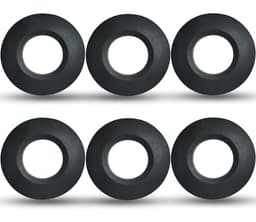
Six rubber rings for less than a sandwich, and the listing actually prints the diameters. The cheapest thing on this site that measurably changes how dry you stay.
Published specs
| Sold as | 6 pack |
|---|---|
| Inner diameter | 1.18 in (3 cm) |
| Outer diameter | 2.28 in (5.8 cm) |
| Material | Rubber |
Our score, broken out
- Fit range6.5
- Published specs6.5
- Effect8.0
- Value9.5
What it gets right
- The listing prints both diameters and the material, so you can measure your shaft and know before you buy. Aqua-Bound, whose two-pack this replaces, published a pack size and nothing else.
- Drip rings are the difference between water running down the shaft into your lap and water leaving the blade — on a cold day that is the whole trip.
- Six in a pack. A paddle needs two, so one order covers three paddles, or the one that walks off every season for the next three years.
What it gets wrong
- A generic rubber ring, not the part the company that made your paddle would sell you. It is cut to a nominal 1.18 in shaft rather than matched to any particular paddle.
- One published inner diameter and no fit range, so a shaft much over 1.18 in may not seat.
- Rings stretch over time and slide down the shaft. These are a consumable, not a fix.
- On an oval or ergonomic shaft, a round ring may not seat properly.
Who should skip it
Skip it if your paddle has a bent shaft with integrated drip control, or if you paddle warm water and genuinely do not care.
#2 · Blisters and a cold shaft
Yakgrips Paddle Grips
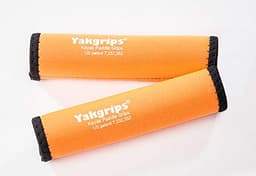
Patented cushioned wraps that close with hook and loop, so they go on a paddle you already own without dismantling anything.
Published specs
| Fits | Solid-shaft kayak paddles (take-apart version sold separately) |
|---|---|
| Closure | Hook and loop on the Surfgrip model |
| Design | Patented cushioned grip that conforms to the hand |
| Care | Washable |
| Shaft diameter range | Manufacturer does not publish this |
Our score, broken out
- Fit range6.0
- Published specs4.0
- Effect8.5
- Value7.5
What it gets right
- Hook and loop means they fit a paddle that is already assembled — no sliding anything over a blade.
- Padding between hand and shaft is the cheapest answer to hot spots on a long day, and it insulates a cold aluminum shaft.
- Washable, which matters for something your hands are on for hours.
What it gets wrong
- Cascade Creek publishes no shaft diameter range, so fit on a very thin or very fat shaft is a gamble.
- Grips fix the hand position. If you move your hands around for different strokes, they can get in the way.
- They add bulk, and a shaft that is already too fat for small hands gets worse.
Who should skip it
Skip it if your hands are small and the shaft already feels thick. Bulk is the last thing that grip needs.
FAQ
Questions people actually ask
What do drip rings do on a kayak paddle?
They stop water running down the shaft into your lap. Each stroke lifts a wet blade, and the water on it runs toward your hands unless a rubber collar catches it and drips it back into the water.
In warm weather it is a minor annoyance. In cold weather it is the difference between a comfortable paddle and a cold, wet one.
Where should drip rings sit on the shaft?
Outboard of your hands, a few inches in from the blade throat — far enough out to catch the water, not so far that the ring goes underwater on a deep stroke.
They should also be tight enough to need a shove to move. A ring that slides freely migrates toward your hands and stops doing anything within twenty minutes.
How do you put drip rings on a one-piece paddle?
Warm them first. Hot tap water — not boiling — makes the rubber stretch enough to pass over most blade shapes.
Work slowly and support the blade rather than forcing a cold ring over a sharp edge, which is how they tear. A two-piece paddle avoids the problem entirely: split it and slide the ring on from the cut end.
Are kayak paddle grips worth it?
If your hands blister or the shaft is cold, yes — padding spreads pressure and insulates, and a hook-and-loop wrap fits a paddle you already own.
Two caveats. They add diameter, which makes a thick shaft worse for small hands, and they fix your hand position, which is unhelpful if you move your hands for different strokes. Try relaxing your grip pressure first; most hand pain is a death grip rather than the shaft.
We have not paddled with any of this gear. Everything above comes from published specifications, cited manuals and live retailer prices. Here is exactly how we pick.
Sources
Read next
Related on Drift & Dime
Paddles
The best budget kayak paddlesPaddles ranked on published weight and blade area — a 10 oz spread.
Paddles
What size kayak paddle do I need?Height crossed with boat width — the sizing table, in inches and centimeters.
Paddles
The kayak paddle leash guideCheap insurance on flat water, a hazard in current — when to use one.
Outfitting
The best kayak seat upgradesSeats and cushions matched to the actual complaint — pressure or support.