Outfitting
Kayak replacement parts
Handles, drain plugs and hatch covers are the three parts a used boat is missing or about to lose. All three are cheap, and all three are sized.
Disclosure: we earn a commission if you buy through the links on this page, at no extra cost to you. It does not change which products we pick or how we rank them. How this site is funded.
The short answer
Quick picks
Ranked for the person outfitting a used boat: what it costs, what it does, and who should skip it. 3 picks.
| # | Product | Best for | Our score | Price |
|---|---|---|---|---|
| 1 |  Harmony Gear Kayak Carry HandlesA published 9.5-inch OEM-style replacement pair for the handles that go brittle first. Hardware is not in the bag. Harmony Gear Kayak Carry HandlesA published 9.5-inch OEM-style replacement pair for the handles that go brittle first. Hardware is not in the bag. | Perished grab handles | 7.9 | $11.99View on Amazon |
| 2 |  Pelican Kayak Drain Plug (PS0145-2)A 3/4-inch flip-top plug that seals by expanding, and needs no ring on the outside of the hull. Pelican Kayak Drain Plug (PS0145-2)A 3/4-inch flip-top plug that seals by expanding, and needs no ring on the outside of the hull. | A missing stern drain plug | 8.3 | $8.99View on Amazon |
| 3 |  Sea-Lect Designs Performance Hatch CoverAn 8-inch round replacement for a VCP-style day hatch, in a polymer that floats. Cover only — the ring is a separate part. Sea-Lect Designs Performance Hatch CoverAn 8-inch round replacement for a VCP-style day hatch, in a polymer that floats. Cover only — the ring is a separate part. | A perished sea-kayak hatch | 6.9 | $47.19View on Amazon |
The three parts that go first
Polyethylene hulls outlast almost everything attached to them. The plastic on a fifteen-year-old kayak is usually fine; the rubber, the webbing and the small molded parts are usually not.
On a second-hand boat, three parts account for most of what is missing or perished: the carry handles, the drain plug, and any hatch cover. None is expensive. All three are sized, which is the only difficulty, and the reason people order the wrong one twice.
This is the shopping list that follows what to fix on a used kayak, which is where to start if you have not yet worked out what is actually wrong with the boat.
How we ranked these
Four criteria, weighted equally and published on how we pick:
- Fit range. How many boats the part genuinely fits.
- Published specs. Whether the maker gives you the measurement you need to check before ordering.
- Install. Tools, holes and sealant.
- Value.
Carry handles: measure the hole spacing
Handles fail from UV and from being used to drag a loaded boat up a ramp. The strap goes hard, cracks at the fold, and eventually lets go — usually while you are carrying the boat.
The number that matters is the distance between the attachment points, not the overall length. Harmony publishes both for its replacement handles: 9.5 inches full length and 8.5 inches between attachment points, sold as a pair, fitting a list of Perception and Wilderness Systems models.
Two practical notes. Hardware is not included, so buy stainless machine screws, large washers and well nuts rather than reusing corroded originals. And replace both handles even if only one has failed: they are the same age, and the second one is next.
Drain plugs: 3/4 inch or 1/2 inch, and never guess
The drain plug is the cheapest part on a kayak and the one whose absence ruins a day. Water gets into the hull through scupper cracks and fittings, and the plug is how it gets back out.
There are two common patterns and they are not interchangeable. Pelican publishes a 3/4-inch flip-top plug that seals by expanding a rubber body when you flip the lever, in molded nylon, and states it needs no ring on the outside of the hull. Harmony sells a threaded kit instead, which includes the fitting and hardware and requires drilling three holes.
Which you want depends on what the boat already has. If there is a usable hole, measure it and buy the matching plug. If there is no drain at all, the threaded kit adds one — and that is a hole in a hull, so read the sealing method in the deck rigging guide before you drill.
A drain plug is not the same thing as a scupper plug, and the two get confused constantly. Scuppers are the through-holes that drain the deck of a sit-on-top; whether to block them at all is covered on the kayak scupper plug guide.
The hardware is the part people get wrong
Almost every part on this page attaches with fasteners that are not in the bag, and the wrong fastener is how a good part becomes a leak.
Stainless, always. Plated steel screws in a wet boat rust into the plastic and then round off when you try to remove them.
Big washers, or a backing plate. Polyethylene is soft. A washer spreads the load so the fastener does not pull through the deck the first time someone drags the boat by that handle.
Well nuts where you cannot reach inside. A rubber well nut expands as you tighten it, sealing and gripping from one side, which is the whole answer for a sealed hull.
Marine sealant on everything. Every fastener through a hull is a hole. Bed it.
The method, including how to get a backing washer into a space you cannot see, is on the deck rigging guide.
Deck rigging and bungee: the other consumable
Shock cord is on this list in spirit even though it is not a molded part. It is the thing most reliably dead on a used boat, and it is the cheapest fix on the whole hull.
Elastic dies in UV. Ten-year-old cord has no stretch left, which means the pump, the paddle float and anything else under the deck lines is being held by habit rather than by tension. Replacing it is an afternoon with a lighter to seal the ends.
While you are there, check the pad eyes the cord runs through. A fitting that moves under a fingernail is one that will pull out the first time it is loaded, and it is far easier to fix with the deck already stripped.
Hatch covers: the expensive one, and the pattern problem
Hatch covers perish in UV, go brittle, and then blow off the deck on the drive home. They are also the part where “universal” is least true.
Sea-Lect Designs publishes a replacement for the VCP-style day hatch: 8-inch round, lightweight polymer that floats, satin finish, made in Everett, Washington. Crucially it is the cover only — the mounting ring is a separate part — and it is a sea-kayak pattern.
Most recreational sit-on-tops use proprietary hatches instead, where the only reliable source is the boat’s own manufacturer. Before ordering anything, measure the outside diameter of the rim, the inside diameter of the opening, and photograph the way the existing cover attaches. Hatch covers that nearly fit leak, and a leaking hatch is how water gets into the hull in the first place.
The floats-or-sinks question is not trivial either. A cover that sinks the first time it blows off is a part you buy twice.
Where to find parts for a boat nobody makes any more
A lot of used kayaks are models that have been out of production for a decade. That is less hopeless than it sounds.
Start with the manufacturer. The major brands still sell seat parts, hatch covers and handles for boats they discontinued years ago, and their parts catalogs are searchable by model.
Then try the pattern, not the brand. Hatches especially are often an industry pattern rather than a proprietary one — the VCP-style day hatch that Sea-Lect replaces appears on boats from several builders.
Then measure and buy generic. Handles, drain plugs, pad eyes and bungee are all generic parts once you know the dimensions. This is exactly why the measuring matters more than the brand name.
And accept substitution where it is honest. A different handle that fits the existing holes is a fine repair. A hatch cover that nearly fits is not, because it leaks.
Buy the cheap parts in one order
Shipping is the hidden cost here. Three parts that each cost a few dollars can easily attract three separate shipping charges if you order them as you notice them.
Walk the boat once with a notepad, list everything perished or missing, then order in one go with the hardware and the sealant. It is the difference between one afternoon of work and three weekends of waiting for small packages.
What a missing part tells you about the boat
Worth a moment before you order anything: missing small parts are information.
A boat with perished handles, dead bungee and no drain plug has lived outside, uncovered, for years. That does not make it a bad buy — the hull usually outlasts all of it — but it does mean checking the things UV damages that you cannot simply replace, especially brittleness around fittings and heavy fade.
A boat with intact rigging but one broken handle has probably been dropped or dragged. That is a different history, and the thing to check is the hull under the seat and at the stern rather than the fittings.
The order to do this in
If a used boat needs several of these, do them in the order that protects the boat and your day.
- Anything that lets water into the hull. Drain plug, hatch covers, loose fittings. Water inside is the fault that gets worse on its own.
- Anything load-bearing. Handles and the fittings you will tie the boat to on a car roof.
- Deck rigging. Cheap, quick, and it makes everything else stay where you put it.
- Comfort. Seat and padding last, because none of it matters if the boat is taking on water.
The parts worth buying before you need them
Three cheap spares that turn a ruined trip into an inconvenience:
- A spare drain plug. They are a few dollars and they vanish. Keep one in the car.
- Stainless hardware in the right sizes. Machine screws, washers and well nuts, so a loose fitting gets fixed at the launch rather than at home.
- Marine sealant. The small tube. Every fitting you re-seat wants it, and it is the difference between a repair and a slow leak.
What is not worth replacing
Three parts people try to replace that are usually the wrong project.
Footpegs and rails, on a cheap boat. Replacement rails are often model-specific, expensive, and fitted through the hull. Straightening a bent peg or replacing a screw is usually the better answer; a full rail swap on an inexpensive used boat rarely is.
Rudder systems. Cables, housings and blades are proprietary, and the labor is real. If a used boat has a broken rudder and you do not need it, removing it and sealing the holes is a legitimate decision.
Scupper plugs bought blind. They are sized to your scupper and they are not universal — and whether you want them in at all is a genuine question, covered on the scupper plug guide.
What these parts do to resale
More than they cost. A boat with both handles, a plug in the drain and intact hatch covers reads as looked-after; the same hull with a missing handle and a taped-over hatch reads as neglected, and the discount a buyer asks for is far more than the parts.
It cuts the other way when you are buying. Missing small parts are a legitimate negotiating point and an easy fix, which is exactly the kind of gap worth finding — the full argument is on what a used kayak is worth.
What we would buy
Handles, almost always. Harmony publishes the two lengths you need to check, they come as a pair, and a failed handle mid-carry is how boats get dropped.
A drain plug that matches the hole you actually have. Measure first. The Pelican flip-top is the simplest answer for a 3/4-inch hole and needs no outer ring.
A hatch cover only after measuring three things — rim outside diameter, opening inside diameter, and how the existing one attaches. On a recreational sit-on-top, try the boat’s own manufacturer first.
In full
Every pick, in detail
Specs below are the manufacturer's published figures, cited per product. Where a maker does not publish a number, the row says so rather than guessing at it.
#1 · Perished grab handles
Harmony Gear Kayak Carry Handles
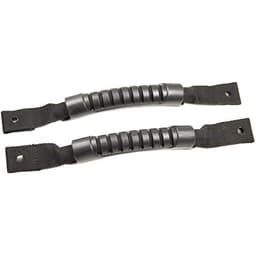
A published 9.5-inch OEM-style replacement pair for the handles that go brittle first. Hardware is not in the bag.
Published specs
| Full length | 9.5 in |
|---|---|
| Between attachment points | 8.5 in |
| Sold as | A pair |
| Hardware | Not included |
| Fits | Perception models including Hi-Life, Pescador Pro and Pilot, plus many Wilderness Systems Tarpon and Pungo models |
Our score, broken out
- Fit range7.0
- Published specs8.5
- Install7.0
- Value9.0
What it gets right
- Published lengths, which is the whole game with handles — you are matching an existing hole spacing, not choosing a style.
- It is the OEM-style part for two of the most common used-boat brands in the US, so the odds of a match are good.
- A pair, which is what you need, because the handle that has not failed yet is the same age as the one that has.
What it gets wrong
- Hardware not included. Budget stainless machine screws, washers and well nuts, and do not reuse corroded originals.
- 8.5 inches between attachment points is a fixed number. Measure yours before ordering.
- It is a flexible strap handle. If your boat had rigid molded handles, this changes how it carries.
Who should skip it
Skip it if your hole spacing does not match. A handle that nearly fits puts its load on the wrong part of the deck.
#2 · A missing stern drain plug
Pelican Kayak Drain Plug (PS0145-2)
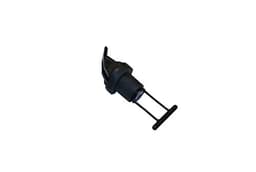
A 3/4-inch flip-top plug that seals by expanding, and needs no ring on the outside of the hull.
Published specs
| Diameter | 3/4 in |
|---|---|
| Action | Flip-top expands the rubber plug to seal the hole |
| Material | Molded nylon |
| Install | No outer ring required; needs a 3/4 in hole |
| Fits | Stated to fit most kayak brands |
Our score, broken out
- Fit range7.0
- Published specs7.5
- Install9.0
- Value9.5
What it gets right
- The expanding flip-top is the right mechanism for a hull that flexes — a threaded plug in soft polyethylene works loose over a season.
- No outside ring means nothing proud of the hull to catch on a ramp, which is the opposite of how most plug kits work.
- It is the cheapest part on this page and it fixes the one fault that actually sinks the day: water in the hull.
What it gets wrong
- 3/4 inch or nothing. Measure the hole you already have before ordering, because kayak drain holes are not standardized.
- Nylon and rubber are consumables in UV. Expect to replace it every few seasons rather than once.
- It does not fix the reason water got in. A plug seals a drain, not a cracked scupper tube or a leaking fitting.
Who should skip it
Skip it if your hole is 1/2 inch or the boat uses a threaded fitting. The wrong plug is a slow leak with extra steps.
#3 · A perished sea-kayak hatch
Sea-Lect Designs Performance Hatch Cover
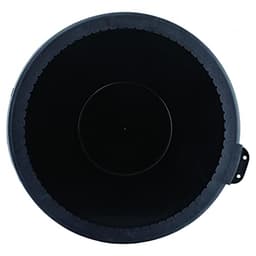
An 8-inch round replacement for a VCP-style day hatch, in a polymer that floats. Cover only — the ring is a separate part.
Published specs
| Size | 8" round, VCP day hatch pattern |
|---|---|
| Material | Lightweight polymer, floats, satin finish |
| In the box | Hatch cover only; mounting ring sold separately |
| Origin | Made in Everett, Washington |
Our score, broken out
- Fit range5.0
- Published specs8.0
- Install8.0
- Value6.5
What it gets right
- It floats. A hatch cover that sinks the first time it blows off the deck is a part you buy twice.
- A named pattern — the VCP day hatch — rather than a vague 'universal' claim, so you can check yours against it before buying.
- Made in the US by a company that supplies kayak builders, which is why the pattern actually matches rather than nearly matching.
What it gets wrong
- Cover only. If your mounting ring is cracked or the rim is deformed, this does not fix the leak and the ring is another purchase.
- It is the most expensive part on this page, and it is one hatch.
- The VCP pattern is a sea-kayak standard. Most recreational sit-on-tops use a different, often proprietary, hatch entirely.
Who should skip it
Skip it if your boat is a recreational sit-on-top. Those hatches are usually brand-specific, and the maker's own part is the only reliable match.
FAQ
Questions people actually ask
What parts are usually missing on a used kayak?
Carry handles, the drain plug and hatch covers. The hull normally outlasts all three — it is the rubber, webbing and small molded parts that perish in UV.
All three are cheap. The difficulty is that each is sized, so measure before ordering rather than buying something described as universal.
How do I know which kayak drain plug to buy?
Measure the hole. The two common sizes are 3/4 inch and 1/2 inch and they are not interchangeable.
Pelican's 3/4-inch flip-top expands a rubber body to seal and needs no ring on the outside of the hull. If the boat has no drain at all, a threaded kit adds one — Harmony's requires drilling three holes, so treat it as a hull modification rather than a part swap.
Are kayak hatch covers universal?
No, and this is where 'universal' is least true. Sea-Lect's replacement fits the VCP-style day hatch pattern used on many sea kayaks and is sold as the cover only, with the mounting ring separate.
Most recreational sit-on-tops use proprietary hatches, where the boat's own manufacturer is the reliable source. Measure the rim outside diameter, the opening inside diameter, and photograph how the existing cover attaches before ordering.
Can I replace kayak carry handles myself?
Yes, and it is a ten-minute job. Match the distance between attachment points — Harmony publishes 8.5 inches between points and 9.5 inches overall for its replacement pair.
Hardware is not included, so use new stainless machine screws with large backing washers, or well nuts where you cannot reach inside. Replace both handles at once: they are the same age.
We have not paddled with any of this gear. Everything above comes from published specifications, cited manuals and live retailer prices. Here is exactly how we pick.
Sources
Read next
Related on Drift & Dime
Outfitting
What to fix on a used kayakWhat matters on a second-hand hull, what is cosmetic, and what to walk away from.
Outfitting
Kayak deck rigging on a used boatReplacing sun-dead deck cord and pad eyes, and sealing the holes correctly.
Outfitting
Kayak scupper plugs, and when not to use themSizing, fitting, and the conditions where plugs become a hazard.
Kits
What a used kayak is worthValuing a second-hand hull, and using what is missing to negotiate.