PFDs & Safety
The best kayak PFDs for bigger paddlers
Most budget vests stop at 52 inches and do not say so clearly. Here are the ones that publish a bigger range, and what changes when they do.
Disclosure: we earn a commission if you buy through the links on this page, at no extra cost to you. It does not change which products we pick or how we rank them. How this site is funded.

The short answer
Quick picks
Ranked for the person outfitting a used boat: what it costs, what it does, and who should skip it. 4 picks.
| # | Product | Best for | Our score | Price |
|---|---|---|---|---|
| 1 | Stohlquist Fit OversizeThe published 48–60" range, with the buoyancy figure to match. | Chests to 60" | 8.3 | Check price on Amazon |
| 2 |  Stohlquist Fit16 lb of published buoyancy and a 30–52" range on one jacket. Stohlquist Fit16 lb of published buoyancy and a 30–52" range on one jacket. | Sharing one vest | 8.2 | $49.99View on Amazon |
| 3 | 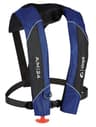 Onyx A/M-2422.5 lb inflated — and explicitly not approved for whitewater. Onyx A/M-2422.5 lb inflated — and explicitly not approved for whitewater. | Flat water, warm days | 8.0 | $124.99View on Amazon |
| 4 | 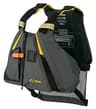 Onyx MoveVent DynamicMesh back panel clears a kayak seat, which is the whole job. Onyx MoveVent DynamicMesh back panel clears a kayak seat, which is the whole job. | Most used boats | 8.4 | $66.32View on Amazon |
The problem with this category
Search for a plus-size kayak PFD and you will find plenty of listings using the word “oversize” and very few publishing a number. That is the actual difficulty here: not that the products do not exist, but that the specification you need is frequently missing.
So this list is built on one filter before anything else — does the manufacturer publish a chest range, and does it go past 48 inches? Everything that fails that test is off the page, however good it might be.
What changes on an oversize vest, and what does not
An oversize PFD is not simply a bigger version of the same jacket. Two things change.
More foam, more buoyancy. Stohlquist publishes 16 pounds for the Fit Universal and 18 pounds for the Fit Oversize. That is the point: buoyancy has to scale with the mass it is holding up. A large adult in a jacket sized for a small one is under-floated even if the buckles close.
More adjustment travel, not more panels. The Fit Oversize is the same three-buckle front-entry design with longer straps. That matters because it means the fit behaves the same way — tighten waist first, then sides, then shoulders last.
What does not change is the approval standard. A Type III is a Type III at any size.
Where the sizes actually run
Worth having the published numbers side by side, because the marketing copy blurs them:
- Stohlquist Fit Universal — 30–52 inches, in three bands, 16 lb buoyancy.
- Stohlquist Fit Oversize — 48–60 inches, 18 lb buoyancy.
- Onyx MoveVent Dynamic — 28–56 inches across three bands, no published buoyancy figure.
- Onyx A/M-24 inflatable — universal, 30–52 inches, 22.5 lb when inflated.
Note the overlap at 48–52 inches, where you have a real choice between the top of the Universal range and the bottom of the Oversize. Take the Oversize. A jacket at the very top of its band is a jacket with no adjustment left, and you want slack for a fleece in April.
The inflatable question
The Onyx A/M-24 publishes 22.5 pounds of buoyancy inflated — substantially more than any foam vest here — on a universal 30–52 inch fit, with almost nothing on your torso until it fires. For a larger paddler on flat water in summer heat, that combination is genuinely attractive.
Read the published limitations before you decide. Onyx states it is not approved for whitewater paddling, personal watercraft, water skiing or similar towed activities, and requires the wearer to be over 16 and over 80 pounds. It also only works if it inflates, which means a cylinder to check and a bobbin to replace on a schedule. We compare the two approaches properly on inflatable versus foam.
Fitting advice that is specific to this size range
Two adjustments people get backwards.
First, a jacket that closes is not automatically a jacket that fits. The test is the lift test: have someone pull hard up on the shoulder straps. If the vest rises past your ears, it will do the same in the water, when you need it least. Fix that with the side straps, not by cranking the shoulders down.
Second, if the vest closes but the armholes bind, you have the wrong cut rather than the wrong size. Paddling is rotational, and a vest that restricts the shoulder will be uncomfortable no matter how much waist adjustment is left. That is a return, not something to adjust around.
The full sequence is on how to fit a kayak PFD.
In full
Every pick, in detail
Specs below are the manufacturer's published figures, cited per product. Where a maker does not publish a number, the row says so rather than guessing at it.
#1 · Chests to 60"
Stohlquist Fit Oversize
The published 48–60" range, with the buoyancy figure to match.
Published specs
| Approval | USCG approved Type III |
|---|---|
| Chest range | 48–60" |
| Buoyancy | 18 lb |
| Shell | 200-denier nylon outer shell and liner |
| Flotation | Polyethylene foam |
Our score, broken out
- Fit range9.5
- Mobility8.0
- Ventilation7.0
- Value8.0
What it gets right
- One of the few budget-market vests that publishes both a 60" chest ceiling and a buoyancy figure, so you can check the fit before you buy rather than after.
- 18 lb of buoyancy rather than the 16 lb Universal — the extra foam is where the extra size goes.
What it gets wrong
- Sold as a separate size line, so stock is thinner than the Universal.
- Front-entry buckles, same as the standard Fit.
Who should skip it
Skip it if your chest is under 48". You will be swimming in it, and a loose PFD is a PFD that rides up.
#2 · Sharing one vest
Stohlquist Fit
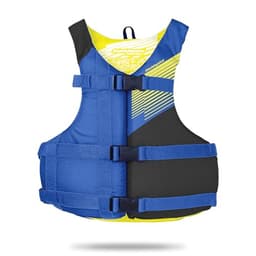
16 lb of published buoyancy and a 30–52" range on one jacket.
Published specs
| Approval | USCG approved Type III |
|---|---|
| Buoyancy | 16 lb (Universal); 18 lb (Oversize) |
| Chest range | 30–52" (Universal); 48–60" (Oversize) |
| Weight | 1.6 lb |
| Shell | 200-denier nylon outer shell and liner |
| Flotation | Polyethylene foam |
Our score, broken out
- Fit range9.5
- Mobility8.0
- Ventilation7.0
- Value8.0
What it gets right
- Stohlquist publishes the buoyancy figure, which most budget vests do not. 16 lb is comfortably above the 15.5 lb Type III minimum.
- A single Universal jacket covers 30–52", so one vest genuinely fits most adults who might borrow your boat.
- Sculpted front and back foam panels rather than one slab, so it does not fight a seat back.
What it gets wrong
- Front-entry three-buckle design takes longer to put on than a side-entry vest.
- Pocket layout is not published, so plan to carry a whistle on a lanyard rather than in the jacket.
Who should skip it
Skip it if you want a vest that is easy to shrug on and off at the ramp. Three buckles is three buckles, every single time.
#3 · Flat water, warm days
Onyx A/M-24
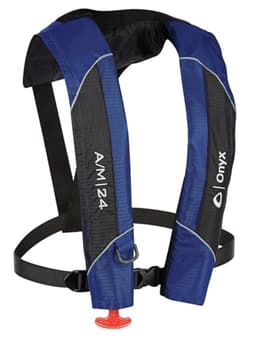
22.5 lb inflated — and explicitly not approved for whitewater.
Published specs
| Approval | USCG approved Type V with Type III performance |
|---|---|
| Buoyancy | 22.5 lb when fully inflated |
| User limits | Over 16 years of age and over 80 lb |
| Chest range | 30–52", universal |
| Inflation | Water-activated or pull cord; convertible to manual only; oral backup tube |
| Shell | 200D nylon ripstop and 200D nylon oxford |
| Not approved for | Personal watercraft, whitewater paddling, water skiing, kneeboarding or similar towed activities |
Our score, broken out
- Fit range8.0
- Mobility9.5
- Ventilation9.5
- Value6.0
What it gets right
- 22.5 lb inflated is more buoyancy than any foam vest on this page, and Onyx publishes the number.
- Almost nothing on your torso until it fires, which is why people who refuse to wear a PFD will actually wear this one.
What it gets wrong
- It only works if it inflates. That means a cylinder to check, a bobbin to replace, and a jacket to re-arm after every deployment.
- It does nothing at all for an unconscious paddler until it fires.
Who should skip it
Skip it for whitewater — Onyx's own published limitations exclude it — and skip it for anyone under 16 or under 80 lb, which is also in the approval. On moving water, wear foam.
#4 · Most used boats
Onyx MoveVent Dynamic
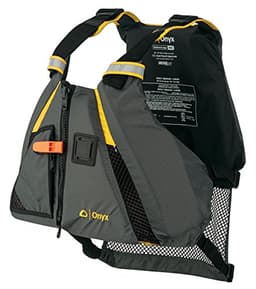
Mesh back panel clears a kayak seat, which is the whole job.
Published specs
| Approval | USCG approved; Transport Canada approved |
|---|---|
| Chest range | 28–56" across three sizes |
| Shell | Nylon ripstop outer shell |
| Back panel | Mesh, to sit above a kayak seat back |
| Expandable zippered pocket with mesh drainage | |
| Reflective | SOLAS grade |
| Buoyancy | Manufacturer does not publish this |
Our score, broken out
- Fit range7.5
- Mobility9.0
- Ventilation8.5
- Value8.5
What it gets right
- The lower-back mesh is the feature that matters on a sit-in kayak — solid foam there fights the seat back and pushes you forward all day.
- Shoulder and side adjustment plus neoprene shoulder pads, which is more adjustment than the cheapest approved vests offer.
- A whistle is included, and a sound-producing device is separately required by the USCG on most waters.
What it gets wrong
- Onyx does not publish a buoyancy figure, so you cannot compare it numerically against vests that do.
- Three broad sizes rather than fine-grained sizing — the fit is good, not tailored.
Who should skip it
Skip it if your chest is at the very top of a size band. The three-size split means you land between sizes more often than with a vest sold in five, and a loose PFD rides up over your ears in the water.
FAQ
Questions people actually ask
What size kayak life jacket do I need for a 55 inch chest?
You need a jacket that publishes a range covering it, which rules out most budget vests. The Stohlquist Fit Oversize publishes 48 to 60 inches, and the Onyx MoveVent Dynamic publishes up to 56 inches across its largest band.
Avoid buying at the absolute top of a size band. A jacket with no adjustment travel left has no room for a fleece underneath in cold weather.
Do oversize life jackets have more buoyancy?
The good ones do, and they publish it. Stohlquist lists 16 lb for the Fit Universal and 18 lb for the Fit Oversize.
That scaling is the point rather than a bonus: buoyancy has to rise with the mass it supports. A large adult in a jacket sized for a smaller one is under-floated even if the buckles close.
Is an inflatable PFD a good option for a larger paddler?
On flat water in warm weather it is a reasonable choice — the Onyx A/M-24 publishes 22.5 lb of buoyancy inflated on a universal 30 to 52 inch fit, and it puts almost nothing on your torso until it fires.
Check the published limitations first. Onyx states it is not approved for whitewater paddling or towed sports, and requires the wearer to be over 16 and over 80 lb. It also needs its cylinder and bobbin maintained.
We have not paddled with any of this gear. Everything above comes from published specifications, cited manuals and live retailer prices. Here is exactly how we pick.
Sources
Read next
Related on Drift & Dime
PFDs & Safety
The best budget kayak life jacketsSix approved vests ranked on fit, mesh back panels and published buoyancy figures.
PFDs & Safety
How to fit a kayak PFDThe strap order, the lift test, and what to do when you fall between sizes.
PFDs & Safety
Inflatable versus foam kayak PFDsMore buoyancy, less bulk, and published limits that exclude moving water.