Outfitting
The best kayak keel guards
A used hull almost always arrives with a worn stern. Most of that wear does not matter, and the cheapest way to stop the rest of it is not a product at all.
Disclosure: we earn a commission if you buy through the links on this page, at no extra cost to you. It does not change which products we pick or how we rank them. How this site is funded.

The short answer
Quick picks
Ranked for the person outfitting a used boat: what it costs, what it does, and who should skip it. 3 picks.
| # | Product | Best for | Our score | Price |
|---|---|---|---|---|
| 1 |  Gator Patch Kayak Keel GuardA fiberglass patch that cures in sunlight in under an hour, and the only pick here that repairs the wear as well as covering it. Gator Patch Kayak Keel GuardA fiberglass patch that cures in sunlight in under an hour, and the only pick here that repairs the wear as well as covering it. | A stern that is already worn | 7.5 | $40.00View on Amazon |
| 2 | BerleyPro Bumper BroA molded 3 mm ABS bumper shaped to one specific hull. The best protection here if your boat is on the list, and useless if it is not. | Boats on BerleyPro's model list | 7.0 | Check price on Amazon |
| 3 |  The Felt Store Kevlar Felt Skid PlatesThe traditional canoe fix: two 30-inch aramid felt plates you bed in epoxy. Cheapest per inch covered, and the messiest job here. The Felt Store Kevlar Felt Skid PlatesThe traditional canoe fix: two 30-inch aramid felt plates you bed in epoxy. Cheapest per inch covered, and the messiest job here. | Covering a long run cheaply | 6.9 | $18.99View on Amazon |
Most of that wear does not matter
Before you spend anything: the scratches on a second-hand hull are almost always cosmetic. Years of being dragged up concrete ramps leave a stern that looks chewed and is structurally fine. It has no effect on strength and essentially none on speed at the pace any of us actually paddle. That is the same verdict as what to fix on a used kayak, and it has not changed.
A keel guard is worth buying in three situations, and only three:
- The wear is getting thin rather than just ugly. Run a fingernail along the keel line at the stern. If the plastic has gone from a rounded edge to a flat, and the flat is getting wider each season, you are removing material that is not coming back.
- Your launch is the problem, not your technique. Oyster shell, riprap, a gravel bar you have to cross every trip. Some launches simply eat hulls.
- You are selling it eventually and want the end tidy. A defensible reason, though a smaller one than sellers think — see what a used kayak is worth.
If none of those is you, close the tab. The rest of this page is for the boat that is genuinely wearing through.
The free fix first: stop dragging it
Every keel guard on this page is a second-best answer to a habit. The hull wears because the boat gets dragged across something hard, and the cheapest way to stop that is to stop dragging it.
A cart is the real fix, and it is the cheapest big upgrade in paddling for other reasons too — it is what keeps a heavy boat from quietly ending your season. Which wheels to buy is decided by the ground at your own launch rather than by the spec sheet, and that is on the budget kayak cart roundup.
Two other habits cost nothing. Carry the boat the last few yards to the water rather than skidding it over the ramp lip, which is where most of the damage happens. And keep an offcut of carpet or an old bath mat in the car: laid over the ramp edge or the tailgate, it takes the abrasion instead of the hull, and it weighs nothing.
How we ranked these
Four criteria, weighted equally and published on how we pick:
- Protection. What the material actually is, and how much abuse it stands between the rock and your hull.
- Fit. What hull shapes and hull materials it works on, and whether your boat is eligible at all.
- Install. Prep, cure time, mess, and whether you can undo it.
- Value. Cost against the amount of keel it covers.
The real problem is polyethylene
Most cheap second-hand kayaks are rotomolded polyethylene, and polyethylene is notoriously difficult to bond to. It is the reason our repair guide sends a through-crack in a poly hull to plastic welding rather than to glue, and it is the reason this whole category is fussier than it looks.
What that means in practice:
- Surface prep is the product. Gator Guards spells out the sequence for its patch — sand and etch the surface, clean it with isopropyl alcohol, then peel and stick. Skipping the sanding is the usual reason a guard lifts at one corner in a month.
- Clean and dry beats warm and convenient. Any adhesive is being asked to hold on a surface that spends its life wet, sandy and flexing.
- Edges are where failure starts. BerleyPro tells you to seal the edges of its bumper with adhesive so grit cannot work underneath, and that advice applies to everything here.
If your boat is composite or thermoform rather than poly, you have more options and better odds — including the felt-and-epoxy route, which is genuinely traditional on canoes and genuinely awkward on polyethylene.
Three kinds of keel guard, and which problem each solves
A cured patch. Gator Guards' Gator Patch is a fiberglass and polyester patch with a UV activator: you stick it on, leave the boat in sunlight, and under an hour later it has cured into a hard shell that can be sanded or painted. It is the only option here that repairs worn material as well as covering it, which matters because most people go looking for a keel guard after the damage rather than before.
A molded bumper. BerleyPro's Bumper Bro is thermoformed 3 mm ABS shaped to one specific hull, stuck on with plastic-safe adhesive or 3M VHB and no drilling. It is the most protective thing on this page by a distance — 3 mm of hard plastic taking the ramp instead of your boat — and it only exists for the models BerleyPro has molded.
A felt skid plate. The Felt Store's kit is two para-aramid felt plates, 1/8 inch thick, tapered 2.5 to 4 inches wide and 30 inches long, bedded in epoxy you buy separately. It is the canoe tradition, it covers the longest run of keel for the least money, and it is the messiest job of the three.
And a fourth, if you can find it in stock. An adhesive PVC strip is the tidiest answer for a long keel line: KeelEazy publishes a 1/32-inch thick PVC strip in 2, 3 and 4 inch widths, sold by the foot, that adheres to polyethylene and thermoform ABS and peels off again with a hairdryer. We are not recommending it this run for one reason: every width and the kayak kits were marked sold out on KeelEazy's own store when we checked, and it is not carried on Amazon. Worth knowing it exists, and worth checking back.
Measure the wear before you buy anything
The three picks cover very different amounts of boat, and this is the step people skip.
Turn the kayak over and look at where the scuffing actually is. On most sit-on-tops that have been dragged, it is the last 12 to 18 inches of the stern and a patch under the seat where the hull touches down. On a sea kayak that gets landed bow-first on shingle, it is the bow. Very few boats need the entire keel line covered, and covering it anyway is how a cheap fix turns expensive.
Then match it. One Gator Patch strip is a wear patch, not a keel line. The felt kit is two 30-inch plates, which is a lot of coverage if your wear is spread out and wasteful if it is concentrated at one end. A Bumper Bro covers one end, and the other end is a second purchase.
Does a keel guard slow the boat down?
Less than the internet suggests, and it depends on how proud of the hull it sits.
A molded bumper is shaped to the hull and BerleyPro publishes 100 to 200 grams for it, so both the weight and the disturbance are small. A thin adhesive strip is thinner still. A 1/8-inch felt plate is the one you would actually notice, because it is a raised, fuzzy patch sitting in the water — on a canoe at canoe speeds that has always been an accepted trade, and on a fast sea kayak it is a real one.
Set against that: a hull with a flat worn into the keel is already not the shape the designer drew. At recreational pace neither effect is worth losing sleep over.
When it is too late for a guard
A keel guard covers wear. It does not fix a hole, and it is not a structural repair.
Hold the boat up and look for light through the hull at the bow, the stern and around the scupper tubes. If you can see light, or if the boat takes on water, you are past the point where a stick-on product is the answer — that is the plastic-welding conversation in what to fix on a used kayak. Gator Patch is the one pick here with a genuine repair claim, and even that is for worn and gouged material rather than for a hole in a hull you are about to sit in.
The same goes for scupper tubes. A worn or cracked tube is a leak path into the hull, and it is fixed on its own terms rather than with a keel strip — the detail is on kayak scupper plugs.
The tape and paint shortcuts
Every thread on this subject brings out the same three alternatives, and they are worth addressing honestly rather than ignoring.
Heavy cloth tape. Cheap, instant, and genuinely useful as a stopgap before a trip. It is also an adhesive film on the hardest plastic in the world to stick to, in the wettest place you could choose, and it will lift at an edge. Treat it as a patch for the weekend, not as a keel guard.
Bed-liner and rubberized coatings. The spray products sold for truck beds are tough, but they face the same polyethylene bonding problem as everything else here, without the surface prep instructions that a purpose-made guard ships with. If you try it, you are running your own adhesion experiment on the underside of your boat.
A strip of HDPE screwed on. This does work, and it is what some outfitters do. It also puts fasteners through the one part of the hull that is guaranteed to hit rocks, on a boat where every hole is a decision. If you go this way, seal and back every fastener properly, the same way you would for any deck fitting.
Check the edges once a season
Whatever you fit, the failure mode is the same and it always starts at an edge. Grit works under a lifted corner, water follows, and the guard peels rather than wears.
So make it a two-minute check when you wash the boat. Run a thumbnail around the perimeter of the guard. If a corner has started to lift, clean under it, dry it and re-bond or re-seal that edge now rather than at the end of the season, when half the strip has gone.
Replace it when the guard itself is worn through to the hull. The whole point is that the guard is the sacrificial layer, and a sacrificial layer that has done its job has stopped protecting anything. A guard that needs replacing every season is also telling you something useful: the launch or the habit, not the product, is the problem.
What this costs
In relative terms, and against a boat that probably cost a few hundred dollars second-hand: the felt kit is the cheapest thing here and covers the most keel, before you add the epoxy it does not include. The Gator Patch strip sits in the middle. The Bumper Bro is the most expensive, and it is one end of one specific boat.
All three are cheap next to a hull. None of them is cheaper than not dragging the boat.
What we would buy
If the stern is already worn thin, the Gator Patch strip. It is the only one that rebuilds material as well as covering it, and a sunny afternoon is the whole job.
If your boat is on BerleyPro's list, the Bumper Bro, and check that list first because it is the entire product. Molded ABS shaped to your hull is better protection than anything you can stick on flat.
If you have a composite or thermoform boat and a long run to cover, the felt plates, with good epoxy and a free day.
And if you have not bought a cart yet, buy the cart first. It solves the cause instead of the symptom, and it is the purchase you will still be glad of in five years.
In full
Every pick, in detail
Specs below are the manufacturer's published figures, cited per product. Where a maker does not publish a number, the row says so rather than guessing at it.
#1 · A stern that is already worn
Gator Patch Kayak Keel Guard
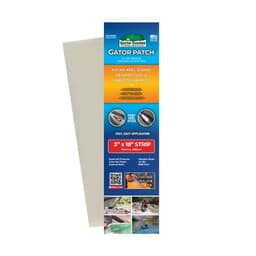
A fiberglass patch that cures in sunlight in under an hour, and the only pick here that repairs the wear as well as covering it.
Published specs
| Form | Strip, the 3 × 18 in size in the Gator Patch range |
|---|---|
| Material | Polyester resin and fiberglass with a UV light activator |
| Cure | Cures in UV sunlight in under an hour |
| Bonds to | Metal, fiberglass, wood and plastic |
| After curing | Can be drilled, tapped, sanded or painted within an hour |
| Prep | Sand and etch, clean with isopropyl alcohol, then peel and stick |
| Origin | Made in the USA |
| Thickness | Manufacturer does not publish this |
Our score, broken out
- Protection8.5
- Fit7.0
- Install7.0
- Value7.5
What it gets right
- It is a repair patch first, so it suits the common case on a used boat: a stern that has already worn thin rather than one you are protecting in advance.
- No mixing and no clamps. You prep the surface, stick it on and leave the boat in the sun for an hour.
- Gator Guards states it can be sanded and painted once cured, so it does not have to stay an obvious patch.
What it gets wrong
- It is cured fiberglass, not a removable strip. Getting it off again is a sanding job, so put it where you want it the first time.
- It needs UV. On an overcast week or in a garage, you are waiting for weather that a stick-on strip would not need.
- One strip covers one wear patch. A full keel line from bow to stern takes several, which changes the arithmetic against a cheaper roll.
Who should skip it
Skip it if the hull is not worn yet and you only want abrasion cover. A molded bumper or a felt plate protects without committing you to a cured patch.
#2 · Boats on BerleyPro's model list
BerleyPro Bumper Bro
A molded 3 mm ABS bumper shaped to one specific hull. The best protection here if your boat is on the list, and useless if it is not.
Published specs
| Material | Thermoformed 3 mm ABS |
|---|---|
| Fit | Model-specific, custom-molded to a named hull |
| Weight | 100–200 g |
| Attachment | Plastic-safe marine adhesive or 3M VHB tape; no drilling |
| Coverage | Bow and stern versions, sold separately |
| Models named | Hobie, Bonafide, Native Watercraft, Old Town, NuCanoe, Vibe, Crescent, FeelFree, Wilderness Systems and others |
Our score, broken out
- Protection9.0
- Fit5.0
- Install8.0
- Value6.0
What it gets right
- Molded to the hull rather than bent around it, so it sits flush and the edges are far less likely to lift than a strip wrapped over a curve.
- 3 mm of ABS is a genuine bumper. It takes the ramp instead of the hull, which no adhesive film can claim.
- No drilling, and BerleyPro publishes 100 to 200 grams, so it is not weight you will notice.
What it gets wrong
- It only exists for boats on BerleyPro's list. A generic second-hand recreational hull is very unlikely to be covered, and there is no universal version.
- Bow and stern are separate purchases, so protecting both ends doubles the price of the most expensive option here.
- Adhesive only means surface prep is the whole job, and BerleyPro tells you to seal the edges so grit cannot work underneath.
Who should skip it
Skip it if your kayak is not on the model list — and check that list before anything else, because the fit is the entire product.
#3 · Covering a long run cheaply
The Felt Store Kevlar Felt Skid Plates
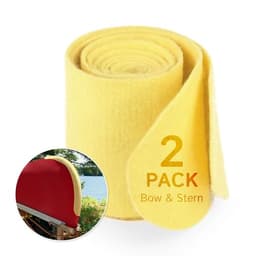
The traditional canoe fix: two 30-inch aramid felt plates you bed in epoxy. Cheapest per inch covered, and the messiest job here.
Published specs
| Content | 100% para-aramid (Kevlar) needle felt, woven scrim on one side |
|---|---|
| Thickness | 1/8 in |
| Size | 2.5 to 4 in tapered × 30 in, each plate |
| Quantity | 2 plates per kit |
| Resin | Epoxy recommended by the maker, not included |
| Install | Scrim (mesh) side against the hull |
Our score, broken out
- Protection7.5
- Fit6.0
- Install5.0
- Value9.0
What it gets right
- Two 30-inch plates cover far more of a keel line than any other option here, for the lowest price on the page.
- Aramid felt is the long-standing answer for canoe bows and sterns, and The Felt Store publishes the content and thickness rather than a marketing adjective.
- The taper means the leading edge is thin, so there is less for a rock to catch and peel.
What it gets wrong
- Epoxy is not included, and the resin is the part that decides whether this works — budget for it and for a day of curing.
- It is a canoe product. The Felt Store describes it for canoe bows and sterns, and epoxy is a poor match for polyethylene, which is what most cheap used kayaks are made of.
- 1/8 inch of felt is a raised patch, not a flush one. It is the most visible and draggiest option on this page.
Who should skip it
Skip it if your kayak is polyethylene and you are not prepared to test the bond first. It belongs on composite and thermoform hulls.
FAQ
Questions people actually ask
Do kayak scratches matter?
Almost never. Years of dragging a polyethylene hull up ramps leaves scratches that have no effect on strength and essentially none on speed at recreational pace.
What matters is material loss: run a fingernail along the keel at the stern, and if the rounded edge has gone flat and the flat is widening each season, that is wear worth stopping. Light visible through the hull is a different problem again, and a keel guard is not the answer to it.
What is the best keel guard for a kayak?
It depends on which problem you have. For a stern that is already worn, Gator Guards' Gator Patch is a fiberglass and polyester patch that cures in sunlight in under an hour and can be sanded or painted afterward — it repairs as well as covers.
For prevention on a boat BerleyPro has molded for, its Bumper Bro is thermoformed 3 mm ABS that sticks on with no drilling. For a long run of keel on a composite or thermoform hull, aramid felt skid plates bedded in epoxy cover the most for the least.
Will a keel guard stick to a polyethylene kayak?
It can, but polyethylene is hard to bond to, which is why a through-crack in a poly hull wants plastic welding rather than glue. Surface prep is most of the job: sand and etch the area, clean it with isopropyl alcohol, then apply firm pressure.
Seal the edges too. Grit working under a lifted edge is how these fail, and it is the first thing BerleyPro tells you to prevent. Epoxy-bonded felt plates are the weakest match for polyethylene — they belong on composite and thermoform hulls.
Does a keel guard slow a kayak down?
Only slightly, and it depends on thickness. A molded bumper published at 100 to 200 grams, or a thin adhesive strip, disturbs very little water.
A 1/8-inch felt skid plate is the one you might notice, because it is a raised patch sitting in the flow. On a canoe that has always been an accepted trade; on a fast sea kayak it is a real one. For context, a hull with a flat worn into its keel is already off its designed shape.
How do I stop my kayak keel from wearing?
Stop dragging it. A cart is the actual fix, and it costs less than most gear on this site — buy the wheels for the ground at your launch rather than for the capacity number.
Two free habits help as much: carry the boat the last few yards rather than skidding it over the ramp lip, and keep an offcut of carpet or an old bath mat in the car to lay over the ramp edge or tailgate so it takes the abrasion instead of the hull.
We have not paddled with any of this gear. Everything above comes from published specifications, cited manuals and live retailer prices. Here is exactly how we pick.
Sources
Read next
Related on Drift & Dime
Outfitting
What to fix on a used kayakWhat matters on a second-hand hull, what is cosmetic, and what to walk away from.
Racks & Transport
The best budget kayak cartsCarts ranked by wheel type, folded size and published capacity — pick for your launch.
Kits
What a used kayak is worthValuing a second-hand hull, and using what is missing to negotiate.
Outfitting
Kayak scupper plugs, and when not to use themSizing, fitting, and the conditions where plugs become a hazard.