Racks & Transport
How to transport a kayak on a sedan
A sedan roof is short, which means the boat overhangs at both ends and the bow and stern lines stop being optional. Here is the method that works.
Disclosure: we earn a commission if you buy through the links on this page, at no extra cost to you. It does not change which products we pick or how we rank them. How this site is funded.
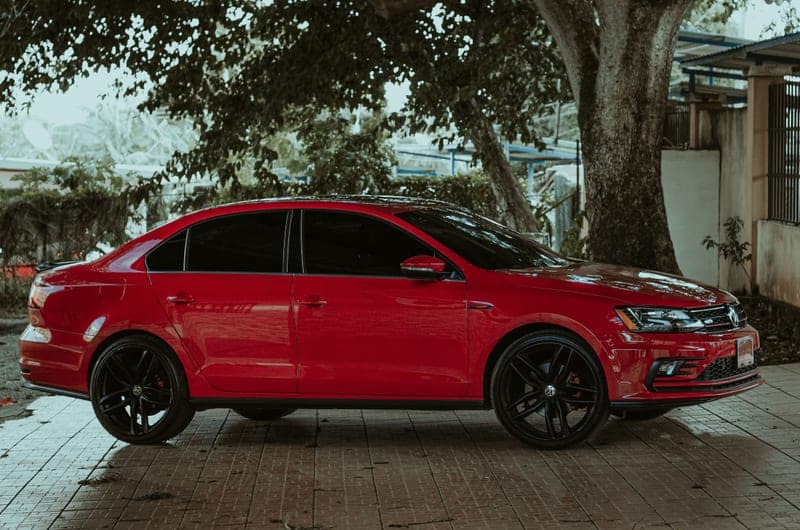
The short answer
Quick picks
Ranked for the person outfitting a used boat: what it costs, what it does, and who should skip it. 3 picks.
| # | Product | Best for | Our score | Price |
|---|---|---|---|---|
| 1 |  Malone Standard Kayak Foam Block Kit55 lb, straps included, works on a bare roof. The no-rack answer. Malone Standard Kayak Foam Block Kit55 lb, straps included, works on a bare roof. The no-rack answer. | No crossbars at all | 8.1 | $46.27View on Amazon |
| 2 | Rightline Gear Foam Block Kayak CarrierOne kit that works with bars or without. Car clips included. | Rack or no rack | 7.8 | Check price on Amazon |
| 3 |  NRS 1" HD Tie-Down Straps1,500 lb breaking strength, 500 lb working load, published. NRS 1" HD Tie-Down Straps1,500 lb breaking strength, 500 lb working load, published. | The strap you buy once | 8.4 | $21.95View on Amazon |
Yes, a sedan carries a kayak. The difficulty is not weight — a car roof handles a kayak easily — it is that the roof is short, so the boat overhangs at both ends and the bow and stern lines are doing real structural work rather than acting as a backup.
Why a short roof changes the problem
On an estate or SUV you get maybe five or six feet of roof under a twelve-foot boat. On a sedan you get about three, and the two support points are close together.
Two consequences. First, the boat becomes a see-saw: any lift at one end levers against a short base. Second, a long overhang at the front catches air, and at highway speed the bow wants to rise.
Both are solved by the same thing — a properly tensioned bow line. On a sedan this is not a “should”, it is the part holding the system together.
The method
- Blocks as wide apart as the roof allows. Every inch of separation reduces the leverage. Push them right to the front and rear edges of the usable roof.
- Boat upside down, centered front to back. Balance the overhang rather than letting it all hang off the back — that keeps weight over the supports.
- Straps over the hull, through the cabin, buckled at the side. Same as any bare-roof setup.
- Bow line to a front tow point. Most sedans have a screw-in tow eye behind a small cover in the bumper, or a metal recovery loop under the front valance. Not the bumper skin.
- Stern line to a rear tow point. Same idea at the back.
- Shove test, then a ten-minute re-check.
Loading it alone off a low car
The one genuine advantage of a sedan: the roof is low. Solo loading is easier here than on any SUV, where the same method starts with a much higher first lean — which is why kayak racks for an SUV are mostly about loaders rather than carriers.
Stand the boat on its stern at the back of the car, walk your hands up the hull, lean the bow onto the rear edge of the roof, then lift the stern and push the boat forward. You never carry the full weight above your head. A towel or an offcut of carpet over the boot lid stops the hull scratching the paint on the way up.
Where sedans catch people out
Rear visibility. A boat centered on a short roof overhangs the back window significantly. Check your mirrors before you drive off, not at the first junction.
The boot is now unusable. The stern sits over it. Load the car completely before the boat — a lesson everyone learns exactly once, in a car park, in the rain.
Panoramic and glass roofs. A large glass panel is not a load-bearing roof. If your sedan has one, foam blocks on the glass are a bad idea. You need crossbars mounted to the actual roof structure, and their published load limit is the one that counts. Check the vehicle handbook.
Door frame straps and hardtops. The through-cabin strap route depends on having door openings you can pass a strap through. That is fine on any normal sedan and a problem on some coupes with frameless windows, where the strap fouls the glass seal.
Is it worth buying bars for a sedan?
Often yes, and for a different reason than on a big car. Crossbars fix the short-roof problem directly: bar spread is usually wider than two foam blocks can be, and the boat sits on a rigid base rather than on compressible foam.
Fitting is the catch. A sedan with no rails and no fixed points needs a clamp-on system that grips the door frame, and those are more expensive and more model-specific than the equivalent for a car with rails. Check that bars exist for your specific model before you commit to the idea.
If they do not, foam blocks rigged as above are a perfectly good long-term answer, and the money is better spent on a cart anyway.
In full
Every pick, in detail
Specs below are the manufacturer's published figures, cited per product. Where a maker does not publish a number, the row says so rather than guessing at it.
#1 · No crossbars at all
Malone Standard Kayak Foam Block Kit
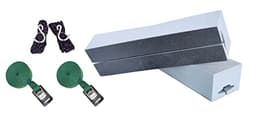
55 lb, straps included, works on a bare roof. The no-rack answer.
Published specs
| Capacity | 55 lb |
|---|---|
| Block size | 14" long × 4.75" wide × 3.75" high |
| Kit weight | 3.3 lb |
| Material | EVA closed-cell foam |
| Included | Two 15' load straps plus safety tie-downs |
| Bar profile | Universal cut-out fits round, square and oval bars |
Our score, broken out
- Capacity6.0
- Fit range9.5
- Ease of loading7.5
- Value9.5
What it gets right
- Works on a completely bare roof, which is the actual situation most people asking about crossbars are in.
- The straps are in the box. Foam blocks sold without straps are not a solution, they are half of one.
- Packs into a boot. Nothing stays on the car.
What it gets wrong
- 55 lb capacity is the lowest here — fine for a recreational kayak, not for a loaded fishing boat.
- Straps pass through the cabin on a bare roof, so the doors have to open before you can unload.
Who should skip it
Skip it for highway distance every weekend. Foam and straps are genuinely safe when rigged properly with bow and stern lines, but they need re-checking at every stop, and after a season of that most people buy bars.
#2 · Rack or no rack
Rightline Gear Foam Block Kayak Carrier
One kit that works with bars or without. Car clips included.
Published specs
| Capacity | 1 kayak |
|---|---|
| Block size | 14.75" × 4.0" × 3.75" |
| Included | 2 foam blocks, 2 dual-lock straps, 4 car clips, 2 kayak end straps, mesh carry bag, setup guide |
| Fits | Vehicles with or without a roof rack |
| Weight limit | Manufacturer does not publish this |
Our score, broken out
- Capacity5.5
- Fit range9.5
- Ease of loading7.5
- Value9.0
What it gets right
- The four car clips give the straps something to hook to inside the door frame, which is the part people improvise badly.
- Bow and stern end straps are included rather than sold separately.
What it gets wrong
- No published load rating, so you cannot check a heavy boat against a number.
- Single boat only.
Who should skip it
Skip it if you want a published weight limit before you put a boat on your roof. The Malone kit publishes 55 lb; this one does not publish anything.
#3 · The strap you buy once
NRS 1" HD Tie-Down Straps
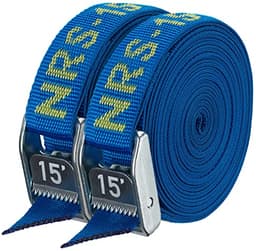
1,500 lb breaking strength, 500 lb working load, published.
Published specs
| Minimum breaking strength | 1,500 lb |
|---|---|
| Working load limit | 500 lb |
| Width | 1" |
| Length | Sold in fixed lengths including 9 ft |
| Buckle | Cam |
Our score, broken out
- Strength9.5
- Hardware9.0
- Length options7.5
- Value7.0
What it gets right
- NRS publishes both MBS and WLL. Most straps sold for kayaks publish neither, and the ones that do usually quote only the number that flatters them.
- Cam buckle, not ratchet — you physically cannot over-tension a plastic hull with a cam.
What it gets wrong
- Costs several times what a supermarket strap costs.
- 9 ft is short for a tall vehicle plus a wide boat; measure before you order a length.
Who should skip it
Skip these if you were about to buy ratchet straps for the same job — but skip the ratchets, not these. A ratchet gives you enough mechanical advantage to dent a polyethylene hull, and people do.
FAQ
Questions people actually ask
How do you transport a kayak on a sedan?
Foam blocks as far apart as the roof allows, boat upside down and centered so the overhang is balanced front and back, straps over the hull and through the cabin, and bow and stern lines to the car's tow points.
On a sedan the bow line is not a backup. The short roof means the boat levers against a narrow base, and the end lines are what hold the system together.
Can you put a kayak on a car with a panoramic roof?
Not on foam blocks. A large glass panel is not a load-bearing roof, and resting a kayak on it is a bad idea regardless of how light the boat is.
You need crossbars mounted to the actual roof structure, and the bars' published load limit is the figure that governs. Check the vehicle handbook for what your specific roof is rated to carry.
How do I load a kayak onto a car by myself?
Stand the boat on its stern behind the car, walk your hands up the hull, lean the bow onto the rear edge of the roof, then lift the stern and push the boat forward. You never carry the full weight overhead.
A towel or carpet offcut over the boot lid stops the hull scratching the paint on the way up. A low sedan roof makes this easier than any SUV.
We have not paddled with any of this gear. Everything above comes from published specifications, cited manuals and live retailer prices. Here is exactly how we pick.
Sources
Read next
Related on Drift & Dime
Racks & Transport
How to transport a kayak without a roof rackThe six-step rig for a bare roof, and the three mistakes that make it unsafe.
Racks & Transport
A kayak roof rack without crossbarsWhat carries a boat on a bare roof — and why side rails are not crossbars.
Racks & Transport
The best kayak tie-down strapsCam straps compared on published MBS and working load — and why not to use ratchets.