Outfitting
Kayak seat replacement
A used boat often arrives with no seat, a perished strap or a cracked clip. Replacing one is an attachment problem before it is a comfort problem.
Disclosure: we earn a commission if you buy through the links on this page, at no extra cost to you. It does not change which products we pick or how we rank them. How this site is funded.

The short answer
Quick picks
Ranked for the person outfitting a used boat: what it costs, what it does, and who should skip it. 3 picks.
| # | Product | Best for | Our score | Price |
|---|---|---|---|---|
| 1 | 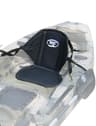 BKC UH-KS222Woven nylon on a four-way strap system that clips to almost any sit-on-top. The default replacement when the original seat is gone. BKC UH-KS222Woven nylon on a four-way strap system that clips to almost any sit-on-top. The default replacement when the original seat is gone. | A missing sit-on-top seat | 8.0 | $38.98View on Amazon |
| 2 |  GCI Outdoor SitBackerA 250 lb-rated folding seat that straps to a bench. The answer for a canoe-style bench or a sit-in with a flat pan and nothing behind it. GCI Outdoor SitBackerA 250 lb-rated folding seat that straps to a bench. The answer for a canoe-style bench or a sit-in with a flat pan and nothing behind it. | A bench seat with no back | 7.8 | $41.27View on Amazon |
| 3 | 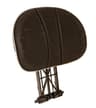 Wilderness Systems Phase 3 AirPro Seatback KitThe factory part. It converts a back band to a full seatback in about ten minutes, and it fits two model families and nothing else. Wilderness Systems Phase 3 AirPro Seatback KitThe factory part. It converts a back band to a full seatback in about ten minutes, and it fits two model families and nothing else. | A Tsunami or Zephyr with a tired back band | 6.5 | $104.99View on Amazon |
Replacement is a different problem from upgrading
If your seat is intact and you want to be more comfortable, that is an upgrade, and the seats worth buying for comfort are ranked on the kayak seat upgrade roundup.
This page is for the other situation, which is the common one on a second-hand boat: the seat is missing entirely, a strap has perished, a clip has snapped, or the previous owner left a foam pad and a shrug. The first question is not which seat is most comfortable. It is what your hull gives you to attach to.
Work out which of the four you have
Turn the boat around and look at the seat area before you shop.
- Four attachment points on a sit-on-top. D-rings, pad eyes or molded loops, two behind the seat well and two in front. This is the most common arrangement, and it takes a universal four-strap seat.
- A molded seat pan with no fittings. Common on cheap recreational sit-on-tops. You are choosing between a strap-on cushion and adding your own pad eyes, which means holes.
- A cockpit with a back band. Sit-ins usually have a strap-style back band anchored to the coaming or the seat hanger, rather than a seat you can lift out.
- A bench. Canoe-style, and some tandem sit-on-tops. A bench takes a clamp-on or strap-on seat designed for a flat surface.
Almost every bad replacement purchase comes from buying for the wrong one of those four.
How we ranked these
Four criteria, weighted equally and published on how we pick:
- Fit range. How many of those four situations the seat actually covers.
- Support. What the seat does for your back, honestly — most replacements are a comfort floor rather than an upgrade.
- Install. Whether it goes on with the fittings you have, or needs new ones.
- Value.
Four straps beat two
The single most useful thing to know in this category: a seat with only two rear straps will slide forward under you on every stroke.
You end up bracing with your feet to stay put, which is more tiring than the original problem and puts your back exactly where you did not want it. Front straps are what hold the seat base down and back. BKC publishes a four-way adjustable strap system for the KS222, and that is the spec to look for on anything universal.
The corollary: if your boat only has two attachment points, adding two more pad eyes is a better investment than buying a bigger seat. How to fit a pad eye to a hull you cannot reach inside is on the deck rigging guide.
Measure before you order
Three measurements save nearly every return in this category, and they take two minutes with a tape.
- The distance between the rear attachment points. This sets whether a universal seat sits square or pulls in at an angle.
- The distance from the rear points to the front ones. Front straps that are too short will not reach; too long and the seat slides before the strap comes tight.
- The width of the seat well or pan. A seat base wider than the well perches on the edges instead of sitting down in it, which raises you and makes the boat feel worse.
Photograph the fittings too. “D-ring” covers several shapes, and a seat with fixed clips needs a fitting the clip actually closes around.
If the boat has no fittings at all
Plenty of cheap sit-on-tops have a molded seat pan and nothing to clip to. You have three options, in ascending order of commitment.
A strap-on cushion. No fittings needed, no holes, and it addresses pressure rather than support. On a short paddle that is often enough, and the material choice is on gel versus foam.
Add pad eyes. Four stainless pad eyes turn a bare pan into a standard four-point mount, and they cost very little. It is four holes in a hull, which on this site is a decision rather than a detail — back every fitting properly, seal it, and follow the method on the deck rigging guide.
A bench-style seat. If the pan is flat enough, a strap-on canoe seat sidesteps the fitting problem entirely by wrapping the structure rather than clipping to it.
Fitting and tensioning it properly
A new seat that is badly tensioned feels worse than the old one, and the order matters.
- Clip all four straps loosely first, so the seat sits where it wants to before anything is tight.
- Tension the front straps. These hold the base down and stop the seat sliding forward. Snug, not bar-tight.
- Sit in the boat before tensioning the back. Back angle set with nobody in the seat is always wrong.
- Tension the back straps evenly, one side then the other, until the panel supports you without pushing you forward.
- Re-check after the first trip. Webbing seats and everything loosens slightly.
If you added a cushion under the seat, re-tension everything afterward: the seat now sits higher and the back angle has changed.
Height is the hidden cost
Every replacement seat raises you, and every inch of extra height makes a narrow boat feel less stable.
A thin nylon-and-foam seat like the BKC adds very little. A folding bench seat with a frame adds real height, which is fine on a wide fishing sit-on-top and noticeable on a narrow recreational hull. If the boat already felt tippy, buy the thinner option, and read the free fixes at the top of the stabilizer roundup before you conclude the hull is the problem.
Two seats, one boat: tandems
Tandem sit-on-tops are the case where replacement gets expensive quickly, because you are buying two of everything.
Two things are worth knowing. The front and rear seat wells on a tandem are often different sizes, so a matched pair is not guaranteed to fit both positions. And a tandem paddled solo usually wants the seat in the center position rather than either end, which may need attachment points that are not there.
If only one seat has failed, replacing one and living with a mismatched pair is perfectly reasonable on a second-hand boat.
The factory part is sometimes the right answer
On a sit-in with a proprietary seat system, a universal seat is a compromise and the manufacturer’s own part usually is not.
Wilderness Systems publishes a Phase 3 AirPro seatback kit that converts a back band to a full seatback in ten minutes or less, and states the fit list plainly: Tsunami 2013 or later, excluding the Tsunami SP, and Zephyr 2013 or later. That is a narrow list — and a published, checkable one, which is more than most aftermarket sellers offer.
If your boat is a current-ish model from a major brand, search the maker’s own parts catalog before anything else. Factory seat parts are often still sold years after the boat is discontinued, and they fit.
Sit-ins: back bands and why they are different
A sit-in usually does not have a seat you can lift out. It has a molded or padded seat pan bonded into the hull, and a back band — a strap-mounted pad that supports your lower back and nothing above it.
When that band fails, the failure is almost always the strap, the buckle or the anchor rather than the pad. Replacing the whole assembly is often unnecessary; replacing a strap or re-anchoring it usually is the fix.
A back band is also supposed to be low. It supports the lumbar and leaves your shoulders free to rotate, and a taller seatback in a sit-in can actually get in the way of a proper stroke and of exiting the boat in a capsize. If you want more back than a band gives you, the factory seatback kit for your model is the safer route than an aftermarket seat wedged into a cockpit.
What a replacement seat will not fix
Three complaints that look like seat problems and are not:
Numb backside. That is a pressure problem, and the cheap fix is a cushion rather than a seat — we compare the two materials on gel versus foam.
Lower back ache. That is a support problem, and it needs a seat with a genuinely tall back panel rather than any replacement. The two seats that publish a back height are on the best kayak seat for a bad back.
Sliding around in the boat. Often a footpeg problem. If your feet have nothing to brace against, no seat will hold you in place.
What a replacement seat weighs and where it goes
Two practical points that get missed when people shop on padding alone.
Weight adds up on a boat you carry. GCI publishes 3 lb for the SitBacker; a framed folding seat is heavier than a strap-and-foam one, and it is weight you carry to the water on top of the hull.
A seat that stays in the boat gets wet. Anything that unclips in seconds gets brought home and dries; anything that is a project to remove lives outside and ages. That is an argument for the quick-release strap systems both universal seats here use, and it is also why the folding option that comes out with a shoulder strap has a real advantage.
Check the rest of the seat area while it is empty
With the old seat out, spend five minutes on the things you will never see again once the new one is strapped in.
- Pad eyes and D-rings. Wiggle each one. A fitting that moves is one that will pull out with a seat strap on it.
- The seat pan itself. Look for stress cracks radiating from fittings, especially on a boat that lived on a roof rack.
- Drain holes and scuppers. Clear them. Anything that ends up under a new seat is out of sight for the next few years.
- The hull under the seat. This is where a sit-on-top touches down when it is dragged, and where wear shows first — the fix is on the keel guard roundup.
What we would buy
If your sit-on-top has four attachment points, the BKC KS222. Four-way straps, woven nylon, zinc-plated hardware, and it is on the boat in about a minute.
If you have a bench or a flat pan, the GCI SitBacker. A published 250 lb capacity, a published folded size, and a dual-buckle strap that suits a bench where a four-point kayak seat has nothing to clip to.
If you own a recent Tsunami or Zephyr, the factory Phase 3 kit, because the geometry and the mounting points are the ones the boat was designed around.
And if the seat you have is fine, do not replace it. Add a cushion, fix your footpegs, and spend the money on a paddle.
In full
Every pick, in detail
Specs below are the manufacturer's published figures, cited per product. Where a maker does not publish a number, the row says so rather than guessing at it.
#1 · A missing sit-on-top seat
BKC UH-KS222
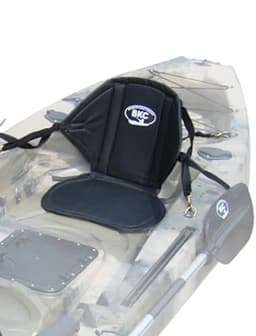
Woven nylon on a four-way strap system that clips to almost any sit-on-top. The default replacement when the original seat is gone.
Published specs
| Fits | Universal sit-on-top; 4-way adjustable straps |
|---|---|
| Fabric | Woven nylon, stated to resist sun fading and water damage |
| Hardware | Zinc-plated alloy |
| Install | About a minute, no tools |
| Back height | Manufacturer does not publish this |
Our score, broken out
- Fit range8.5
- Support6.0
- Install9.0
- Value8.5
What it gets right
- Four straps rather than two. The front pair stops the seat sliding forward under you, which is the failure that makes cheap replacements feel worse than no seat at all.
- It clips to the same D-rings or pad eyes the original used, so on most sit-on-tops there is nothing to drill and nothing to measure.
- Low profile, so it does not raise you the way a thick aftermarket seat does — which matters on a boat that already felt tippy.
What it gets wrong
- BKC publishes no back height, no seat width and no padding thickness, so you are buying on photographs and strap count rather than on numbers.
- Nylon over thin foam is a comfort floor, not a comfort upgrade. If your complaint is an aching lower back rather than a missing seat, this is the wrong product.
- Universal means universal-ish. It needs four attachment points roughly where the factory ones were.
Who should skip it
Skip it if the seat you have is fine and the problem is back support. That is a different purchase, and a taller back is the spec to shop on.
#2 · A bench seat with no back
GCI Outdoor SitBacker
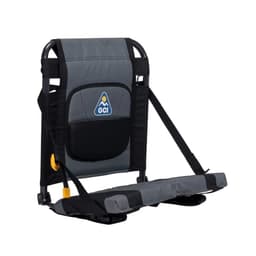
A 250 lb-rated folding seat that straps to a bench. The answer for a canoe-style bench or a sit-in with a flat pan and nothing behind it.
Published specs
| Capacity | 250 lb |
|---|---|
| Weight | 3 lb |
| Open size | 11" × 16.5" × 18" |
| Folded size | 16.5" × 16.5" × 5.5" |
| Attachment | Dual-buckle bench attachment; 17-inch seat strap |
| Extras | Lumbar pad, storage pocket, Auto-Fold with portage lock |
Our score, broken out
- Fit range6.5
- Support8.0
- Install8.5
- Value8.0
What it gets right
- A published 250 lb capacity and a published folded size, which is more than most seats in this price band tell you.
- It folds flat and carries on a shoulder strap, so it comes out of the boat for the drive home instead of soaking on the roof.
- The dual-buckle bench strap suits a flat bench or a molded pan, where a four-point kayak seat has nothing to clip to.
What it gets wrong
- It is a canoe seat. On a sit-on-top with molded seat wells and D-rings, a purpose-made kayak seat fits better and sits lower.
- It raises you. Extra height on a narrow hull costs stability, and this one is not the thin option.
- The strap length is fixed at 17 inches unless you buy GCI's extension straps separately.
Who should skip it
Skip it on a narrow sit-in where you need to sit low. This is for benches and flat pans, not for cockpits.
#3 · A Tsunami or Zephyr with a tired back band
Wilderness Systems Phase 3 AirPro Seatback Kit
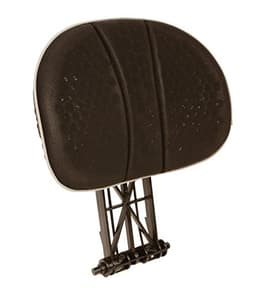
The factory part. It converts a back band to a full seatback in about ten minutes, and it fits two model families and nothing else.
Published specs
| Fits | Wilderness Systems Tsunami 2013 or later (excluding Tsunami SP) and Zephyr 2013 or later |
|---|---|
| Converts | Back band to full seatback in 10 minutes or less |
| Adjustment | Fully adjustable seatback |
| In the box | Seatback kit and installation instructions |
| Back height | Manufacturer does not publish this |
Our score, broken out
- Fit range3.0
- Support9.0
- Install8.0
- Value6.0
What it gets right
- It is the manufacturer's own part, so the mounting points, the geometry and the hardware are the ones the boat was designed around.
- A back band gives you lumbar contact and nothing above it. This turns that into a full seatback without replacing the whole seat.
- Wilderness Systems publishes the fit list plainly, which is rare in this category and saves a return.
What it gets wrong
- The fit list is the whole story: two model families, 2013 or later. On any other boat it is the wrong purchase.
- It is the most expensive seat fix on this page, and it is a part rather than a complete seat.
- Stock comes and goes on discontinued-adjacent factory parts, so if you need one, buying it when you see it is the safer move.
Who should skip it
Skip it unless your boat is on the published fit list. There is no universal version of this part.
FAQ
Questions people actually ask
Are kayak seats universal?
Universal seats exist, but they assume a specific arrangement: four attachment points around a sit-on-top seat well. On a boat with a molded pan and no fittings, or a sit-in with a proprietary back band, a universal seat is a compromise.
Check what your hull gives you to attach to before shopping. Four points takes a universal four-strap seat; a bench takes a strap-on bench seat; a proprietary cockpit usually wants the factory part.
How do you replace a kayak seat?
On most sit-on-tops it is strap work, not tools: clip the new seat to the existing D-rings or pad eyes, front straps first, then tension the back. BKC publishes about a minute for the KS222.
If the boat has only two attachment points, adding two more pad eyes is a better fix than buying a bigger seat — a two-strap seat slides forward under you on every stroke.
Will a new seat make my kayak less stable?
Slightly, and sometimes noticeably. Every replacement seat raises you, and height is what makes a narrow hull feel tippy.
A thin nylon-and-foam seat adds very little. A folding bench seat with a frame adds real height — fine on a wide fishing sit-on-top, noticeable on a narrow recreational boat.
Can I use a canoe seat in a kayak?
On a bench or a flat molded pan, yes — that is exactly what a strap-on canoe seat like GCI's SitBacker is designed for, and it publishes a 250 lb capacity and a dual-buckle bench attachment.
In a narrow sit-in cockpit, no. It sits too high and has nothing appropriate to clip to.
We have not paddled with any of this gear. Everything above comes from published specifications, cited manuals and live retailer prices. Here is exactly how we pick.
Sources
Read next
Related on Drift & Dime
Outfitting
The best kayak seat upgradesSeats and cushions matched to the actual complaint — pressure or support.
Outfitting
The best kayak seat for a bad backSeats ranked on published back height and independent lumbar adjustment.
Outfitting
Gel versus foam kayak seatsHow gel and foam behave over a long day, and which complaint each fixes.
Outfitting
What to fix on a used kayakWhat matters on a second-hand hull, what is cosmetic, and what to walk away from.