Outfitting
Can you paddle a tandem kayak alone?
Yes. Sit in the rear seat, put weight in the bow, and use a longer paddle than you think: a 240 cm like the Bending Branches Whisper rather than a 220. That is the whole fix, and the only thing most people need to buy is the paddle.
Disclosure: we earn a commission if you buy through the links on this page, at no extra cost to you. It does not change which products we pick or how we rank them. How this site is funded.
The short answer
Quick picks
Ranked for the person outfitting a used boat: what it costs, what it does, and who should skip it. 5 picks.
| # | Product | Best for | Our score | Price |
|---|---|---|---|---|
| 1 |  Bending Branches Whisper37 oz, 89 sq in blade, 0 or 60° feather. The honest entry paddle. | First real paddle | 7.6 | $79.95View on Amazon |
| 2 | Carlisle Magic PlusFiberglass shaft at an entry price. Heavy, and nearly unbreakable. | Rental-tough | 6.8 | Check price on Amazon |
| 3 |  Earth Pak Waterproof Dry Bag500D PVC, IPX6 published, and a phone case usually in the box. | First dry bag | 8.2 | $23.75View on Amazon |
| 4 | 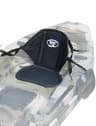 BKC UH-KS222Woven nylon on a four-way strap system that clips to almost any sit-on-top. The default replacement when the original seat is gone. | A missing sit-on-top seat | 8.0 | $38.98View on Amazon |
| 5 |  GCI Outdoor SitBackerA 250 lb-rated folding seat that straps to a bench. The answer for a canoe-style bench or a sit-in with a flat pan and nothing behind it. | A bench seat with no back | 7.8 | $41.12View on Amazon |
The short answer
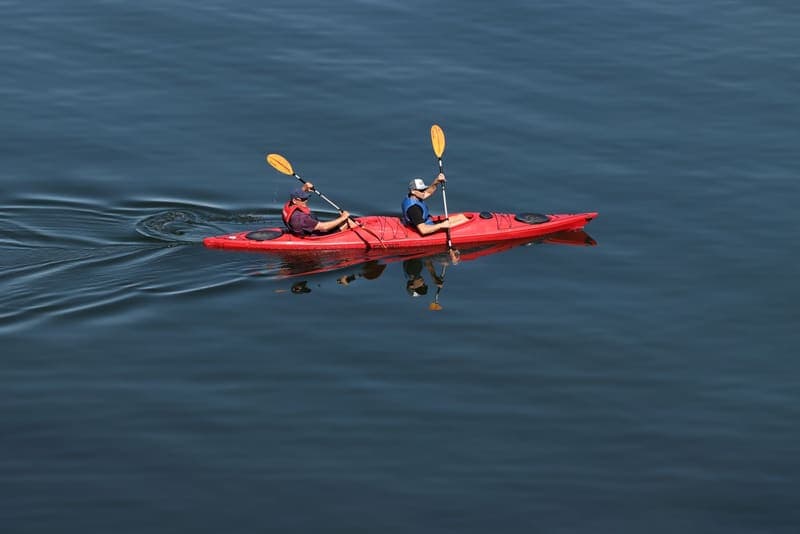
Yes, and it is mostly free. Sit in the rear seat, not the middle and not the front. Put something heavy in the bow. Use a longer paddle than you would in a solo boat — 240 cm rather than 220, because a tandem is wide and you are sitting further from the water than you think.
The one thing worth buying is the paddle. The Bending Branches Whisper in a 240 is the pick, because paddle length is the difference between this working and this being miserable, and a short paddle in a wide boat makes you bash your knuckles on the deck all day.
Everything else you probably already own. A loaded dry bag is the ballast. If the boat has no usable rear seat, a strap-in seat solves it for the price of a tank of fuel.
Why a tandem behaves badly with one person in it
A two-seat kayak is designed around two people’s weight distributed over most of its length. Take one of them out and three things change at once.
The bow comes up. With a single paddler in the back, the front of the boat sits high and light. A high bow is a sail: it catches every bit of wind and the boat weathervanes, constantly trying to turn its nose downwind. On a breezy day that is genuinely tiring to correct.
The waterline shortens. Less of the hull is actually in the water, so the boat tracks worse and feels twitchier than it does with two aboard, which is the opposite of what people expect from a big boat.
The reach gets longer. Tandems are wide — usually wider than a comparable solo boat — and the seats are often set higher. Both of those mean the paddle has further to go to reach clean water.
All three have simple answers, and none of them involves buying a different boat.
Where to sit
The rear seat, in almost every case. Steering a kayak comes from the back: sitting aft puts you where your corrective strokes have leverage, and it keeps the long light end of the boat in front of you where you can see it.
Some tandems — particularly sit-on-tops sold as “2+1” — have a third center position molded in or a center seat pad. If yours does, use it. A centered paddler trims the boat level, which fixes the high-bow problem without any ballast at all, and it is the single best solution when the boat offers it.
Never the front seat alone. It is the one arrangement that is actively bad: the stern lifts clear, the boat pivots around you, and it will not hold a line.
How much weight goes in the bow
Enough to get the nose down, and the honest answer is that you find it by trying rather than by arithmetic.
Start with 20 to 30 lb in the front footwell or bow hatch on a flat-water day and see how the boat behaves. What you are looking for is the bow sitting at roughly the depth it does with a light passenger in it — nose down enough to bite, not so deep that it ploughs.
What to use, in order of how sensible it is:
- Gear you were taking anyway. A loaded dry bag, the cooler, the day’s water. Free, and it is in the right place.
- A dry bag filled with water at the launch. Weighs nothing in the car, weighs plenty on the water, and you tip it out at the end. This is the trick worth knowing.
- Nothing, on a dead calm day. With no wind, a light bow is tolerable. It is the wind that makes ballast matter.
Two warnings. Strap it in — loose ballast that slides forward in a wave is worse than no ballast, and loose ballast in a capsize is a hazard. And do not use rocks, however convenient they look: a hard point load in a thin polyethylene bow is how you make a hole in a boat you have just bought.
The paddle is the purchase
This is the part people get wrong, and it is the part that decides whether solo-paddling a tandem is pleasant or exhausting.
Paddle length is set by boat width and seat height, not by how tall you are. A tandem is typically 30 to 36 inches wide. A comparable solo recreational kayak is 28 to 32. Add a seat that often sits higher and the paddle has to reach noticeably further to get the blade into clean water on each side.
In practice that means 240 cm where you might use 220 or 230 in a solo boat, and on a very wide sit-on-top tandem, 250 is not unreasonable. The full sizing logic, including what to do when you fall between two lengths, is on what size kayak paddle do I need.
The symptom of a paddle that is too short is unmistakable and people blame themselves for it: knuckles clipping the deck, a cramped high-angle stroke, and shoulders that ache after an hour. That is not technique. That is 20 cm of missing shaft.
If the rear seat is missing or broken
Common on a used tandem, because the seats are the first thing to go and the first thing a previous owner loses.
On a sit-on-top, a strap-in seat solves it outright. Four straps to the molded D-rings, a proper back support, and you are sitting at a sensible height. On a sit-inside tandem with a molded seat well, a padded seat with a back works the same way provided there are fittings to clip to.
The one thing to check before ordering is fittings and spacing, which we go through properly on kayak seat replacement. Four attachment points beat two, and a seat that moves around under load is worse than the bare plastic it replaced.
The empty seat, and what to do with it
A front seat with nobody in it is not harmless, and this is the detail that separates a tidy solo setup from an annoying one.
On a sit-on-top, a strap-in front seat left in place flaps, slides forward under braking, and catches wind on exactly the end of the boat you are trying to keep down. Unclip it and leave it at home, or unclip it and use it as part of the ballast — a seat plus a loaded dry bag in the front footwell is a perfectly good 25 lb.
On a sit-inside, the forward cockpit is an open hole, and that matters more than the seat does. Water that comes over the bow goes straight into it, and a flooded forward compartment in a boat you are paddling alone is a genuine stability problem rather than an inconvenience. Two answers: a cockpit cover over the empty seat, which is the proper fix, or stay on water where you are not taking waves over the deck.
Either way, the rule is the same as everywhere else on a kayak — anything loose either gets strapped down or gets left in the car.
Getting a tandem to the water on your own
The honest hard part of solo-paddling a tandem is not the paddling. It is everything either side of it.
A two-seat kayak is long and heavy — frequently 70 to 100 lb empty, and sometimes well past that. One person cannot comfortably carry that any distance, and one person lifting it onto a car roof is the point at which this whole plan quietly dies in a garage.
The two things that fix it: a cart with enough published capacity for the boat, which turns the carry into a wheel; and a loading method that does not require a clean overhead lift. Both are covered on the kayak cart roundup and kayak racks for an SUV, and on a tandem they matter more than on any other boat.
What it is like on the water
Realistic expectations, because “yes you can” is not the same as “it is just as good”.
Flat water, no wind: genuinely fine. Slightly slower to accelerate than a solo boat and slightly harder to turn, but a pleasant paddle.
Wind over about 10 knots: this is where ballast stops being optional. An unballasted tandem with one paddler in the back will try to turn downwind continuously, and you will spend the day correcting.
Chop and open water: a tandem is a big stable platform and handles it, but a long boat with a light end slaps rather than slices. It is wet and noisy more than it is dangerous.
Current and tight rivers: the least suited. A long boat turns slowly and a solo paddler in the stern has less control over the bow than two paddlers do. Pick straighter water.
When to stop trying
Three situations where the answer is honestly no.
A tandem you cannot move alone. If the boat cannot get from the car to the water without a second person, nothing on this page helps. That is a transport problem and it has a transport answer.
A fixed-seat tandem with only a bow and a stern position. Some older sit-insides will not take ballast forward in any useful way and have no center option. These are genuinely awkward solo.
Wind, on a boat you have not ballasted. Not a permanent no, just a no for today. Put water in a dry bag in the bow and try again.
Who each of these is for
The paddle: the Bending Branches Whisper. Get it in 240. Length is the whole problem and this is the fix.
The cheaper paddle: the Carlisle Magic Plus. A fiberglass shaft at close to aluminum-paddle money, and the right call if the tandem is a borrowed or shared boat. Check the length on the listing before ordering — Carlisle does not publish its size range on a spec page, and the long sizes are the ones that go out of stock.
The ballast: the Earth Pak dry bag. Fill it with gear, or fill it with lake water at the launch and tip it out at the end.
A missing rear seat on a sit-on-top: the BKC KS222. Four-strap mounting and a real back, which is what sitting aft all day needs.
A canoe-style or bench tandem: the GCI SitBacker. It publishes a capacity and a strap system, and it turns a bench into a seat with a back.
What we would buy
A 240 cm paddle, and nothing else until you have been out twice.
Paddle first because it is the thing you cannot work around, ballast second because it is free, and a seat third only if the boat actually needs one. The most common mistake here is buying a seat and a cart before discovering that the real problem was 20 cm of paddle.
In full
Every pick, in detail
Specs below are the manufacturer's published figures, cited per product. Where a maker does not publish a number, the row says so rather than guessing at it.
#1 · First real paddle
Bending Branches Whisper
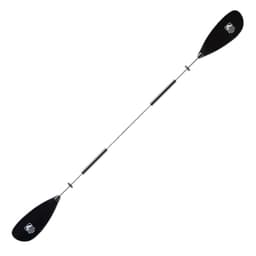
37 oz, 89 sq in blade, 0 or 60° feather. The honest entry paddle.
Published specs
| Weight | 37 oz |
|---|---|
| Blade | 6.75" × 18" (17 × 46 cm), 89 sq in surface area |
| Blade material | Polypropylene |
| Shaft | Aluminum |
| Lengths | 210, 220, 230, 240 cm |
| Ferrule | Two-piece, 0° or 60° feather |
| Blade shape | Asymmetrical with dihedral |
Our score, broken out
- Weight5.5
- Blade8.0
- Adjustability7.0
- Value9.5
What it gets right
- A genuine asymmetrical dihedral blade at the bottom of the market — that shape is what stops the paddle fluttering through the stroke.
- Four published lengths, so you can actually size it rather than buying one-size-fits-nobody.
- 89 sq in is a modest blade, which is the right call for a beginner's shoulders.
What it gets wrong
- 37 oz is heavy. Over a three-hour paddle you lift that difference thousands of times.
- An aluminum shaft is cold in spring and hot in August.
Who should skip it
Skip it if you already know you paddle more than a few times a month. The weight is the one thing you cannot fix later, and the Sting Ray Hybrid is 7 oz lighter for real money but not silly money.
#2 · Rental-tough
Carlisle Magic Plus
Fiberglass shaft at an entry price. Heavy, and nearly unbreakable.
Published specs
| Weight | 2 lb 7.8 oz (about 39.8 oz) |
|---|---|
| Shaft | Wrapped fiberglass |
| Blade material | Fiberglass-reinforced polypropylene |
Our score, broken out
- Weight4.5
- Blade7.0
- Adjustability6.5
- Value8.5
What it gets right
- A fiberglass shaft at close to aluminum-paddle money — warmer to hold and it does not dent.
- The paddle liveries and rental fleets buy, which tells you what it survives.
What it gets wrong
- The heaviest paddle here at roughly 39.8 oz.
- Polypropylene blades flex more than the nylon blades on the Angler Classic.
Who should skip it
Skip it if weight is your complaint. It is heavier than the Whisper, so it solves the shaft-material problem and makes the weight problem slightly worse.
#3 · First dry bag
Earth Pak Waterproof Dry Bag
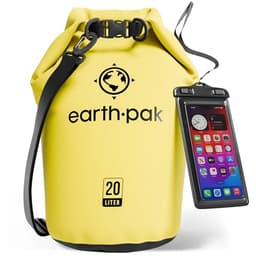
500D PVC, IPX6 published, and a phone case usually in the box.
Published specs
| Sizes | 10 L to 40 L (some listings to 55 L) |
|---|---|
| Material | 500D PVC |
| Closure | Roll-top |
| Rating | IPX6 |
Our score, broken out
- Waterproofing7.5
- Durability8.0
- Carry8.0
- Value9.5
What it gets right
- Publishes an IPX6 rating, which is more than most budget bags will commit to in writing.
- Usually bundled with a waterproof phone case, which is the thing you actually need dry.
What it gets wrong
- IPX6 is a splash and jet rating, not a submersion rating. A roll-top keeps water out when it is rolled properly and closed, not when it is upside down in a swamped cockpit.
- PVC is heavier than coated nylon for the same volume.
Who should skip it
Skip it if you need your phone to survive a capsize rather than a splash. Read the rating: IPX6 is jets of water, not immersion, and the difference is the whole point of the number.
#4 · A missing sit-on-top seat
BKC UH-KS222
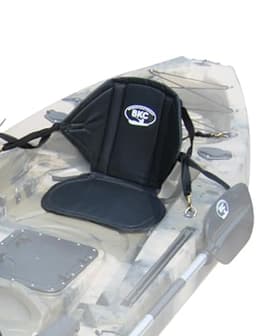
Woven nylon on a four-way strap system that clips to almost any sit-on-top. The default replacement when the original seat is gone.
Published specs
| Fits | Universal sit-on-top; 4-way adjustable straps |
|---|---|
| Fabric | Woven nylon, stated to resist sun fading and water damage |
| Hardware | Zinc-plated alloy |
| Install | About a minute, no tools |
| Back height | Manufacturer does not publish this |
Our score, broken out
- Fit range8.5
- Support6.0
- Install9.0
- Value8.5
What it gets right
- Four straps rather than two. The front pair stops the seat sliding forward under you, which is the failure that makes cheap replacements feel worse than no seat at all.
- It clips to the same D-rings or pad eyes the original used, so on most sit-on-tops there is nothing to drill and nothing to measure.
- Low profile, so it does not raise you the way a thick aftermarket seat does — which matters on a boat that already felt tippy.
What it gets wrong
- BKC publishes no back height, no seat width and no padding thickness, so you are buying on photographs and strap count rather than on numbers.
- Nylon over thin foam is a comfort floor, not a comfort upgrade. If your complaint is an aching lower back rather than a missing seat, this is the wrong product.
- Universal means universal-ish. It needs four attachment points roughly where the factory ones were.
Who should skip it
Skip it if the seat you have is fine and the problem is back support. That is a different purchase, and a taller back is the spec to shop on.
#5 · A bench seat with no back
GCI Outdoor SitBacker
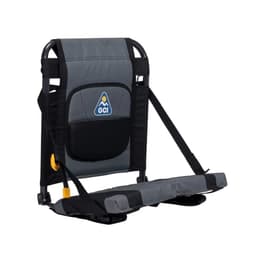
A 250 lb-rated folding seat that straps to a bench. The answer for a canoe-style bench or a sit-in with a flat pan and nothing behind it.
Published specs
| Capacity | 250 lb |
|---|---|
| Weight | 3 lb |
| Open size | 11" × 16.5" × 18" |
| Folded size | 16.5" × 16.5" × 5.5" |
| Attachment | Dual-buckle bench attachment; 17-inch seat strap |
| Extras | Lumbar pad, storage pocket, Auto-Fold with portage lock |
Our score, broken out
- Fit range6.5
- Support8.0
- Install8.5
- Value8.0
What it gets right
- A published 250 lb capacity and a published folded size, which is more than most seats in this price band tell you.
- It folds flat and carries on a shoulder strap, so it comes out of the boat for the drive home instead of soaking on the roof.
- The dual-buckle bench strap suits a flat bench or a molded pan, where a four-point kayak seat has nothing to clip to.
What it gets wrong
- It is a canoe seat. On a sit-on-top with molded seat wells and D-rings, a purpose-made kayak seat fits better and sits lower.
- It raises you. Extra height on a narrow hull costs stability, and this one is not the thin option.
- The strap length is fixed at 17 inches unless you buy GCI's extension straps separately.
Who should skip it
Skip it on a narrow sit-in where you need to sit low. This is for benches and flat pans, not for cockpits.
FAQ
Questions people actually ask
Can you use a tandem kayak by yourself?
Yes. Sit in the rear seat, add weight to the bow, and use a longer paddle than you would in a solo boat — 240 cm rather than 220 on most tandems, because the boat is wider and the seat is often higher.
If the boat has a center seating position, use that instead. A centered paddler trims the hull level, which removes the need for ballast altogether and is the best solution when the boat offers it.
Where should you sit when paddling a tandem kayak alone?
The rear seat. Steering leverage comes from the back of a kayak, and sitting aft keeps the long light end of the boat in front of you.
The front seat alone is the one arrangement to avoid: the stern lifts clear of the water, the boat pivots around you, and it will not hold a line. A center position, where the boat has one, is better than either.
How much weight do you put in the bow of a tandem kayak when solo?
Start with 20 to 30 lb and adjust by feel. You want the bow sitting about as deep as it would with a light passenger — down enough to bite, not so deep that it ploughs.
Use gear you were bringing anyway, or fill a dry bag with water at the launch and empty it at the end. Strap it down, and never use rocks: a hard point load in a thin polyethylene bow can hole the boat.
What size paddle do you need for a tandem kayak?
Usually 240 cm, and on a very wide sit-on-top tandem 250 is reasonable. Paddle length is set by boat width and seat height rather than your own height, and a tandem is typically 30 to 36 inches wide against 28 to 32 for a comparable solo boat.
The giveaway that a paddle is too short is knuckles clipping the deck and aching shoulders after an hour. That is missing shaft length, not bad technique.
Is a tandem kayak harder to paddle alone in wind?
Yes, and it is the main reason to bother with ballast. A single paddler in the stern leaves the bow high and light, and a high bow acts as a sail — the boat weathervanes and keeps turning its nose downwind.
Above about 10 knots an unballasted tandem is genuinely tiring to keep on a line. Weight in the bow fixes it. So does a center seating position, if the boat has one.
We have not paddled with any of this gear. Everything above comes from published specifications, cited manuals and live retailer prices. Here is exactly how we pick.
Sources
- Bending Branches — Whisper published lengths (210, 220, 230, 240 cm), 37 oz weight, 89 sq in blade area and 0/60 degree ferrule
- Brooklyn Kayak Company — KS222 published materials, hardware and adjustment
- GCI Outdoor — SitBacker published capacity, dimensions and attachment
- Earth Pak — published dry bag material and IP rating
Read next
Related on Drift & Dime
Paddles
What size kayak paddle do I need?Height crossed with boat width — the sizing table, in inches and centimeters.
Outfitting
Kayak seat replacementReplacing a missing seat: attachment types first, then three that fit.
Outfitting
The best budget kayak dry bagsDry bags compared on published ratings and construction, not adjectives.
Racks & Transport
The best budget kayak cartsCarts ranked by wheel type, folded size and published capacity — pick for your launch.
Kits
What a used kayak is worthValuing a second-hand hull, and using what is missing to negotiate.