Paddles
Bending Branches Whisper review
Buy it as a first real paddle, in the length your boat width calls for. The 89 square inch asymmetrical dihedral blade is better than anything else at this price, and the 37 oz aluminum shaft is the compromise you are accepting to get it.
Disclosure: we earn a commission if you buy through the links on this page, at no extra cost to you. It does not change which products we pick or how we rank them. How this site is funded.
The short answer
Quick picks
Ranked for the person outfitting a used boat: what it costs, what it does, and who should skip it. 3 picks.
| # | Product | Best for | Our score | Price |
|---|---|---|---|---|
| 1 |  Bending Branches Whisper37 oz, 89 sq in blade, 0 or 60° feather. The honest entry paddle. | First real paddle | 7.6 | $79.95View on Amazon |
| 2 | Carlisle Magic PlusFiberglass shaft at an entry price. Heavy, and nearly unbreakable. | Rental-tough | 6.8 | Check price on Amazon |
| 3 |  Bending Branches Angler ClassicFiberglass shaft, 102.5 sq in blade, and a hook retrieval notch. | Fishing | 7.7 | $174.95View on Amazon |
The verdict, first
Buy the Whisper if this is your first paddle that is not the one that came with a rental. Bending Branches publishes a 6.75 by 18 inch asymmetrical dihedral blade with 89 square inches of surface area, and that shape — not the price, not the brand — is the reason to own it. It is genuinely better than the flat symmetrical blades sold at the same money.
Do not buy it if you already paddle several times a month. The published weight is 37 oz on an aluminum shaft, and weight is the one thing about a paddle you cannot fix later. Over a three-hour session you lift that difference thousands of times.
Get the length right before anything else. It is published in 210, 220, 230 and 240 cm, and buying the wrong one wastes the whole purchase.
What it is
A two-piece recreational kayak paddle with an aluminum shaft and polypropylene blades, snap-button ferrule with published 0 and 60 degree feather options (left or right), and a published weight of 37 oz. Four lengths: 210, 220, 230 and 240 cm.
It sits at the point in the market where the paddle stops being an afterthought thrown in with a boat and starts being a piece of equipment chosen on purpose, which is exactly where most used-kayak buyers are standing.
The blade is the reason to buy it
Three things are going on in that blade, and together they are the entire argument.
Asymmetrical. The blade is not a symmetrical oval. One edge is longer than the other, which matches the angle the blade actually enters the water at. A symmetrical blade presents more area to one side of the shaft than the other through the stroke, and the paddle tries to twist in your hands.
Dihedral. There is a raised spine down the power face, so water hitting the blade is split and flows evenly off both sides. Without it, water piles up unevenly and the blade flutters — a side-to-side wobble through the pull that you feel as a vague, unsteady stroke and which most people blame on their technique.
89 square inches. A modest blade area, and that is deliberately good news. A big blade grabs more water per stroke, which sounds desirable and means more load on your shoulders every single stroke. For a beginner, or anyone paddling for hours rather than sprinting, a smaller blade is the right call.
Finding all three of those at the bottom of the market is unusual. It is why this paddle is the top pick on the budget paddle roundup and on the beginner paddle page.
37 oz is the honest problem
Now the part a review has to say plainly.
Thirty-seven ounces is heavy. A mid-range fiberglass paddle is around 30, and a carbon one is in the mid-twenties. That gap sounds small on a shop floor and is the single biggest determinant of whether a long paddle is pleasant.
The arithmetic that makes it real: a relaxed cruising cadence is roughly 40 to 50 strokes a minute, so a two-hour paddle is somewhere around 5,000 to 6,000 strokes. Every one of them lifts the paddle. Seven ounces multiplied across that is not a rounding error, and it is felt in the shoulders rather than the arms.
That is the trade, stated clearly: a very good blade on a shaft that is heavier than you would choose if money were no object. For somebody going out a few times a month on a lake, it is the right trade. For somebody paddling every weekend, it is the wrong one, and the step up is covered on fiberglass versus carbon and the lightest paddles page.
Published figures, side by side
| Spec | BB Whisper | Carlisle Magic Plus | BB Angler Classic |
|---|---|---|---|
| Published weight | 37 oz | About 39.8 oz | Published by Bending Branches |
| Shaft | Aluminum | Wrapped fiberglass | Fiberglass |
| Blade material | Polypropylene | Fiberglass-reinforced polypropylene | Nylon |
| Blade area | 89 sq in | Not published | Larger, for fishing |
| Published lengths | 210, 220, 230, 240 cm | Not published on a spec page | Published per model |
| Ferrule | Two-piece, 0 or 60 degree feather | Two-piece | Two-piece |
The useful comparison here is the Carlisle: it fixes the shaft material — fiberglass is warmer to hold and does not dent — and makes the weight problem slightly worse at about 39.8 oz. If your complaint is cold aluminum in April, it is the answer. If your complaint is weight, neither of these is.
Length is the decision that matters most
More than material, more than blade shape, more than brand. A correctly sized heavy paddle beats a badly sized light one every time.
Length is set by boat width and seat height, not by how tall you are — which is the opposite of what most people assume. A wide recreational sit-on-top needs a longer paddle than a narrow touring boat, because the blade has further to reach to get into clean water past the gunwale.
Rough orientation, with the full table on what size kayak paddle: a narrow boat under about 24 inches wide suits 210 to 220; a typical recreational kayak in the high twenties suits 230; a wide sit-on-top or a tandem wants 240. That last case is why the 240 exists and is the reason this paddle shows up on paddling a tandem alone.
The symptom of a paddle that is too short is knuckles clipping the deck and a cramped, high-angle stroke. The symptom of too long is a slow, heavy cadence and a paddle that feels like a pole. Both are fixable only by buying again, so spend two minutes on the table first.
The ferrule, and the feather setting
The snap-button ferrule gives published options at 0 and 60 degrees, left or right, and here is the only advice a new paddler needs: set it to 0 and leave it there.
Feather is the angle offset between the two blades. At 60 degrees the upper blade slices through wind rather than catching it, which experienced paddlers like, and it requires a wrist rotation on every stroke that is one more thing to think about while you are still learning to go straight.
The reason the two-piece design matters more than the feather setting is storage and transport. A paddle that splits fits inside a car, fits in a hatch as a spare, and does not get left strapped to a roof — which is how paddles are actually lost.
The two parts a second-hand paddle is missing
If you are looking at a used Whisper, this is where they turn up incomplete, and both parts are cheap.
Drip rings. The rubber rings that stop water running down the shaft into your lap. They perish, they get pulled off and lost, and a paddle without them puts a cold trickle on your legs for the whole trip. We cover the replacements and how to get them onto an assembled paddle on drip rings and paddle grips.
The snap button and its spring. The ferrule mechanism is the one moving part. Check it clicks positively and holds both feather positions; a sticky or sprung button is the one fault on a used paddle worth walking away from, because a ferrule that releases mid-stroke is genuinely unpleasant.
Otherwise, a used aluminum-shaft paddle is a safe second-hand purchase. Dents in the shaft are cosmetic, scrapes on polypropylene blade edges are normal and harmless, and there is nothing in it to go soft with age.
Living with an aluminum shaft
Two practical consequences that no spec sheet mentions.
It is cold in spring and hot in August. Aluminum takes the temperature of whatever it is in. In April that means a shaft your hands do not want to hold, and the fix is either gloves or a pair of shaft grips — which are a few dollars and solve it completely.
It does not float well on its own. No paddle really does, but a heavy one is less forgiving about it. A leash is a three-dollar answer to the problem of a paddle drifting away from a boat you are no longer in, and the case for and against leashing is on the paddle leash guide.
Who should not buy it
Frequent paddlers. If you are out every weekend, buy the lighter paddle now rather than buying this one and replacing it next year. The weight is the thing you cannot upgrade in place.
Anglers. A fishing paddle wants a bigger blade for the short repositioning strokes you actually make from a stationary boat, and often a measuring scale on the shaft. The Angler Classic exists for that, and the reasoning is on the fishing paddle roundup.
Anyone who finds aluminum unpleasant. The Carlisle Magic Plus is a fiberglass shaft at close to the same money, and it is the right answer if temperature is your objection rather than weight.
What we would buy
The Whisper, in the correct length, as the first paddle on a used boat. It is the cheapest way to get a blade shape that does not fight you, and on a boat that cost a couple of hundred dollars it is a proportionate purchase.
Then spend nothing else on paddling for a season. If after that the thing you keep noticing is the weight, you have learned exactly what to buy next and why — which is a better way to arrive at a carbon paddle than guessing at the start.
In full
Every pick, in detail
Specs below are the manufacturer's published figures, cited per product. Where a maker does not publish a number, the row says so rather than guessing at it.
#1 · First real paddle
Bending Branches Whisper
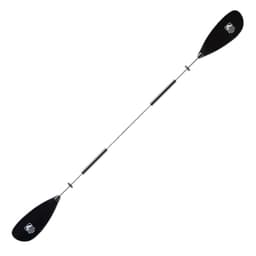
37 oz, 89 sq in blade, 0 or 60° feather. The honest entry paddle.
Published specs
| Weight | 37 oz |
|---|---|
| Blade | 6.75" × 18" (17 × 46 cm), 89 sq in surface area |
| Blade material | Polypropylene |
| Shaft | Aluminum |
| Lengths | 210, 220, 230, 240 cm |
| Ferrule | Two-piece, 0° or 60° feather |
| Blade shape | Asymmetrical with dihedral |
Our score, broken out
- Weight5.5
- Blade8.0
- Adjustability7.0
- Value9.5
What it gets right
- A genuine asymmetrical dihedral blade at the bottom of the market — that shape is what stops the paddle fluttering through the stroke.
- Four published lengths, so you can actually size it rather than buying one-size-fits-nobody.
- 89 sq in is a modest blade, which is the right call for a beginner's shoulders.
What it gets wrong
- 37 oz is heavy. Over a three-hour paddle you lift that difference thousands of times.
- An aluminum shaft is cold in spring and hot in August.
Who should skip it
Skip it if you already know you paddle more than a few times a month. The weight is the one thing you cannot fix later, and the Sting Ray Hybrid is 7 oz lighter for real money but not silly money.
#2 · Rental-tough
Carlisle Magic Plus
Fiberglass shaft at an entry price. Heavy, and nearly unbreakable.
Published specs
| Weight | 2 lb 7.8 oz (about 39.8 oz) |
|---|---|
| Shaft | Wrapped fiberglass |
| Blade material | Fiberglass-reinforced polypropylene |
Our score, broken out
- Weight4.5
- Blade7.0
- Adjustability6.5
- Value8.5
What it gets right
- A fiberglass shaft at close to aluminum-paddle money — warmer to hold and it does not dent.
- The paddle liveries and rental fleets buy, which tells you what it survives.
What it gets wrong
- The heaviest paddle here at roughly 39.8 oz.
- Polypropylene blades flex more than the nylon blades on the Angler Classic.
Who should skip it
Skip it if weight is your complaint. It is heavier than the Whisper, so it solves the shaft-material problem and makes the weight problem slightly worse.
#3 · Fishing
Bending Branches Angler Classic
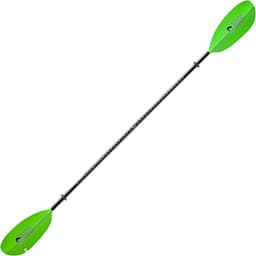
Fiberglass shaft, 102.5 sq in blade, and a hook retrieval notch.
Published specs
| Weight | 35.5 oz (snap-button); 37 oz (Versa-Lok) |
|---|---|
| Blade | 7.5" × 18", 102.5 sq in |
| Blade material | Fiberglass-reinforced nylon |
| Shaft | Fiberglass |
| Lengths | 220–260 cm in 10 cm increments (snap-button) |
| Feature | Grooved blade for retrieving a snagged lure |
Our score, broken out
- Weight6.0
- Blade8.5
- Adjustability8.0
- Value8.0
What it gets right
- Fiberglass shaft rather than aluminum: warmer in the hand, and it does not conduct the cold out of your fingers in April.
- Lengths up to 260 cm, which is what a wide fishing sit-on-top actually needs and what most budget paddles do not offer.
- The lure groove sounds like marketing until the first time it saves a crankbait.
What it gets wrong
- 102.5 sq in is a big blade — more bite, more shoulder load.
- Only 1.5 oz lighter than the Whisper in the snap-button version, despite costing considerably more.
Who should skip it
Skip it if you do not fish and your boat is under 30 inches wide. You are buying blade area and length you will not use, and paying for a groove that retrieves lures you are not casting.
FAQ
Questions people actually ask
Is the Bending Branches Whisper a good kayak paddle?
Yes, as a first paddle. Bending Branches publishes a 6.75 by 18 inch asymmetrical blade with a dihedral spine and 89 square inches of area, and that combination is better than the flat symmetrical blades usually sold at the same price — it stops the paddle fluttering and twisting through the stroke.
The weakness is weight: 37 oz on an aluminum shaft, against about 30 for a mid-range fiberglass paddle. For a few outings a month that is the right trade. For weekly paddling it is not, because weight is the one thing you cannot change later.
What length Bending Branches Whisper should I get?
It is published in 210, 220, 230 and 240 cm, and the right one is set by your boat's width and seat height rather than your own height.
Roughly: a narrow boat under about 24 inches suits 210 to 220, a typical recreational kayak in the high twenties suits 230, and a wide sit-on-top or a tandem wants 240. Knuckles clipping the deck means the paddle is too short; a slow heavy cadence means it is too long.
How much does the Bending Branches Whisper weigh?
Bending Branches publishes 37 oz (1,049 g). That is heavy for a paddle — a mid-range fiberglass shaft is around 30 oz and carbon is in the mid-twenties.
It matters because a relaxed cadence is 40 to 50 strokes a minute, so a two-hour paddle is 5,000 to 6,000 lifts. The difference shows up in your shoulders rather than your arms, and it is the main reason to spend more if you paddle often.
What feather angle should I use on the Whisper?
Zero, until you have real hours in the boat. The snap-button ferrule publishes 0 and 60 degree options, left or right, and 60 degrees asks for a wrist rotation on every stroke.
Feathering genuinely helps in a headwind by slicing the upper blade through the air rather than catching it. It is just one more thing to coordinate while you are still learning to hold a line, so leave it flat to begin with.
Is a used Bending Branches Whisper worth buying?
Usually yes — an aluminum-shaft paddle has nothing in it that goes soft with age, shaft dents are cosmetic, and scrapes on polypropylene blade edges are normal.
Check two things. Drip rings are frequently missing and are cheap to replace, but without them you get a cold trickle down the shaft all day. And test the snap button: it should click positively and hold both feather positions. A sticky or sprung ferrule is the one fault worth walking away from.
We have not paddled with any of this gear. Everything above comes from published specifications, cited manuals and live retailer prices. Here is exactly how we pick.
Sources
Read next
Related on Drift & Dime
Paddles
The best budget kayak paddlesPaddles ranked on published weight and blade area — a 10 oz spread.
Paddles
What size kayak paddle do I need?Height crossed with boat width — the sizing table, in inches and centimeters.
Paddles
The best kayak paddle for beginnersFirst paddles chosen on length and blade size, with the spec sheet decoded.
Paddles
Fiberglass versus carbon kayak paddlesSeven ounces, several times the price — when the carbon upgrade pays off.
Paddles
The lightest kayak paddles, and whether the weight is worth paying forLight paddles on published weight, with the ounce-per-dollar arithmetic.