Kits
Gifts for kayakers
The problem with kayak gifts is fit: seats, skirts and clothing all depend on a measurement you do not have. These do not.
Disclosure: we earn a commission if you buy through the links on this page, at no extra cost to you. It does not change which products we pick or how we rank them. How this site is funded.
The short answer
Quick picks
Ranked for the person outfitting a used boat: what it costs, what it does, and who should skip it. 5 picks.
| # | Product | Best for | Our score | Price |
|---|---|---|---|---|
| 1 |  YakGear Paddle LeashThe cheapest insurance on the boat, and the most often skipped. YakGear Paddle LeashThe cheapest insurance on the boat, and the most often skipped. | Not losing the paddle | 8.0 | $14.39View on Amazon |
| 2 |  RAILBLAZA DrinkHoldA friction-fit holder for the RAILBLAZA system, in UV-stable polymer, that takes tumblers as well as cans. RAILBLAZA DrinkHoldA friction-fit holder for the RAILBLAZA system, in UV-stable polymer, that takes tumblers as well as cans. | StarPort and track boats | 8.0 | $17.26View on Amazon |
| 3 |  Earth Pak Waterproof Dry Bag500D PVC, IPX6 published, and a phone case usually in the box. Earth Pak Waterproof Dry Bag500D PVC, IPX6 published, and a phone case usually in the box. | First dry bag | 8.2 | $23.99View on Amazon |
| 4 | 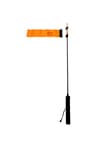 YakAttack VISIPole IIAn LED on a fiberglass mast with a flag, 100 hours on batteries that come in the box. The sensible default for a boat with a track. YakAttack VISIPole IIAn LED on a fiberglass mast with a flag, 100 hours on batteries that come in the box. The sensible default for a boat with a track. | A light up on a mast, for less | 8.0 | $76.95View on Amazon |
| 5 |  Garmin STRIKER CastCastable sonar on your phone. No holes, no bracket, no battery box. Garmin STRIKER CastCastable sonar on your phone. No holes, no bracket, no battery box. | No installation at all | 7.6 | $149.99View on Amazon |
The fit problem, and how to avoid it
Most kayak gear is sized. A life jacket is sized to a chest. A spray skirt is sized to a cockpit rim you would have to measure with a tape. A seat is sized to attachment points that vary by boat. A paddle is sized to the paddler’s height and the boat’s width together.
That is why so many kayak gifts end up unused: they are thoughtful and they do not fit. Everything on this page is deliberately chosen to avoid that trap — either it fits every boat, or it fits every person, or it needs no fitting at all.
If you do know the boat and the paddler well, the sized things are better gifts, and the pages for those are linked throughout. This page is for the far more common situation where you know someone kayaks and not much else.
How we chose these
Four rules, applied before anything went on the list:
- No sizing required. Nothing that depends on a chest measurement, a cockpit rim, or the paddler’s height.
- Solves a problem they actually have. Not an ornament. Every item here addresses something that goes wrong on a real trip.
- Works on a used boat. Most people who paddle bought their kayak second-hand, and half the gear on the market assumes a factory track that is not there.
- Published specs. Same standard as everything else on this site: each pick's figures come from the maker, and each one is ranked in full on its own page.
Under about twenty dollars
A paddle leash. The cheapest genuinely useful thing you can buy a paddler. A kayak blows downwind faster than anyone can swim, so a dropped paddle is not a minor inconvenience — and almost nobody buys one for themselves. The case for it, and the conditions where it is a hazard rather than a help, is on the paddle leash guide.
Drip rings, if they paddle a second-hand paddle. Nearly every used paddle has lost them, which is why water runs down the shaft into their lap on every stroke. A few dollars, and it changes how a cold day feels — covered on drip rings and paddle grips.
Twenty to fifty
A cup holder that fits their mounting system. This one needs thirty seconds of reconnaissance — look at a photo of their boat, or ask what brand of rod holder they run. Get it right and it is used every single trip.
A proper dry bag. The single most reliable gift on this page, because everybody needs one and almost everybody is using a supermarket bag. Sizing here is forgiving: a 10 to 20 liter bag suits nearly everyone, and the material and roll-top details that matter are on the budget dry bag roundup.
Fifty to a hundred
A visibility light on a mast. If they paddle at dawn or dusk — and every angler does — this is the gift that addresses the genuinely dangerous gap. Most paddlers rely on a headlamp, which meets the legal minimum and does nothing until they have already seen the other boat. The full argument is on the kayak light roundup.
A cart, if they carry the boat any distance. Carrying a 60-pound boat from the car park is the thing that quietly stops people going out. It is a bulky gift and it is the one most likely to change how often they paddle — sizing is by the ground at their launch rather than the boat, which is on the budget cart roundup.
The bigger gift
Castable sonar. For an angler, this is the gift that gets talked about. It needs no holes, no battery box, no transducer arm and no permanent change to the boat — it is a sonar ball on a line that streams to a phone, which sidesteps every compatibility question a fixed fish finder raises.
That last point is what makes it a good gift specifically. A traditional fish finder is a project: a mount, a battery, a fuse and a decision about drilling someone else’s boat. We compare the two approaches on the budget fish finder roundup.
The one question that makes this easy
If you can ask exactly one thing without spoiling the surprise, ask this: what do you always mean to bring and forget?
Paddlers answer that question instantly and specifically, and the answer is almost always something cheap: a light, a leash, a dry bag, a spare strap, a bilge sponge. The reason it never gets bought is that it is boring, not that it is expensive — which is exactly what makes it a good gift rather than a good self-purchase.
The second-best question is what annoyed them most last season. That one surfaces the cart, the seat pad and the drink holder.
By the kind of paddler they are
If you know a little more than “they kayak,” this narrows fast.
The angler. They have rods and tackle and almost certainly no light. Dawn and dusk are when fish feed and when nobody can see a kayak, so a visibility light is the gift that addresses the real gap. After that, a drink holder that matches their existing mounts, or castable sonar if you are spending properly.
The recreational paddler. Short trips, warm days, probably a second-hand sit-on-top. A dry bag and a paddle leash cover the two things most likely missing, and a cart transforms a launch that involves any walking.
The touring paddler. Longer distances in a sit-in. They have the basics; what they may not have is flotation in an open hull, which is the least glamorous and most useful gift on this page — covered on the float bag roundup.
The person who has everything. Consumables. Drip rings perish, deck bungee dies in UV, drain plugs vanish, and nobody buys these for themselves until the day they need them.
If they do not have a boat yet
Gear for a boat that does not exist is a gamble, because almost everything on this site is chosen around a specific hull.
Two things are safe. A dry bag, which works on any boat and off the water too. And a paddle leash, which fits any shaft.
The better move, honestly, is to help with the boat itself: what a used kayak is worth, what to check before handing over money, and what the real total cost of getting on the water looks like. Those are on what a used kayak is worth and the first season kit.
If you insist on buying something sized
Sometimes the sized thing is exactly what they need. If you are going to do it anyway, here is the minimum you need to know for each.
- Life jacket: chest measurement, and whether they want a fishing cut with pockets or a mesh back for a high seat.
- Paddle: their height and the boat's width in inches. Both, not one.
- Spray skirt: the cockpit rim measured lengthwise and across, plus their waist.
- Seat: how many attachment points the boat has and how far apart they are.
A photograph of the boat plus one text message answers most of those. If asking would spoil the surprise, buy from the unsized list instead — a returned gift spoils it more.
What not to buy
Five categories that look like good gifts and usually are not.
A life jacket. Sized to the chest, and the fit decides whether it works. A PFD that does not fit is worse than none because it rides up over the face in the water. Let them choose it — our sizing guidance is on how to fit a kayak PFD.
A paddle. Sized to the paddler’s height and the boat’s width, and a paddle of the wrong length is a daily annoyance.
A spray skirt. Sized to a cockpit rim in inches. You need the tape measure and the boat.
A seat. Depends on attachment points that vary by hull.
Anything branded with a fish on it. If it is not solving a problem on the water, it is an ornament, and paddlers have enough of those.
Gift cards, and why they are not a cop-out here
In most categories a gift card reads as giving up. In kayaking it is often the better gift, and there is a specific reason.
The three things that would most improve a typical paddler's day — a life jacket that fits, a paddle the right length, and a seat that suits their hull — are all sized, and all three are ruined by a guess. Handing over the means to buy the right one, with a note about which page to read first, is more useful than a nearly-right object.
If that feels impersonal, pair it with something small and physical from the list above. A leash or a set of drip rings plus the means to buy the sized thing properly is a better gift than either alone.
Timing, if it is a seasonal gift
Two practical notes for anyone buying in winter for a spring paddler.
Kayak gear stock is seasonal. Safety and rack items in particular thin out over winter and refill in spring, so if you find the specific thing you want, buying it when you see it is the safer move.
Anything inflatable or rubber ages on a shelf. Float bags, drip rings and bungee are consumables with a clock on them. Buying those months early is fine; buying them years early is not.
If you want to spend nothing
Two of the best gifts on this list are free.
Go with them. The single biggest safety improvement available to a solo paddler is a second boat, and nobody has ever regretted being asked.
A printed checklist. Unromantic and genuinely used. The federally required kit is short, most paddlers cannot name all of it, and the priced version is on the legal minimum kit.
If you know the boat
A photograph of their kayak answers most of the questions that make kayak gifts hard. From one picture you can usually tell whether it is a sit-on-top or a sit-in, whether it has an accessory track, what brand of fittings it already carries, and whether the deck bungees have gone slack.
That last one is worth mentioning because perished bungee is nearly universal on a used boat and replacing it costs almost nothing. It is not a gift anyone would ask for and it is the upgrade they will notice every trip — the method is on the deck rigging guide.
And if they are new to it entirely, the sequence of what to buy first is the most useful thing you can give them alongside anything physical: what kayak accessories you actually need.
In full
Every pick, in detail
Specs below are the manufacturer's published figures, cited per product. Where a maker does not publish a number, the row says so rather than guessing at it.
#1 · Not losing the paddle
YakGear Paddle Leash
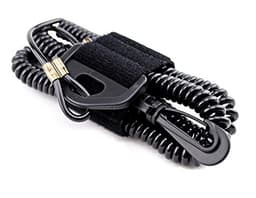
The cheapest insurance on the boat, and the most often skipped.
Published specs
| Type | Coiled leash with clips at both ends |
|---|---|
| Attachment | Carabiner to deck rigging, velcro or clip to shaft |
| Length | Manufacturer does not publish a consistent figure across variants |
Our score, broken out
- Security8.0
- Hardware6.5
- Stowage8.5
- Value9.0
What it gets right
- A drifting paddle is a genuinely bad afternoon, and this costs less than a tank of fuel.
- Coiled construction keeps the slack off the deck where it would otherwise snag.
What it gets wrong
- A leash is one more line in the cockpit, which is a real consideration in moving water.
- Cheap clips corrode. Rinse them or replace them.
Who should skip it
Skip a paddle leash entirely on whitewater or in surf. A line attached to you and to a floating object is an entanglement risk, and that risk outweighs losing a paddle.
#2 · StarPort and track boats
RAILBLAZA DrinkHold
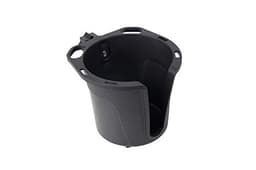
A friction-fit holder for the RAILBLAZA system, in UV-stable polymer, that takes tumblers as well as cans.
Published specs
| Mounting | RAILBLAZA StarPort and TrackMount systems; mount sold separately |
|---|---|
| Holds | Standard cans, bottles and tumblers, by friction fit |
| Material | UV-stable polymer with corrosion-resistant hardware |
| Install | Tool-free once a port is fitted |
| Cup diameter range | Manufacturer does not publish this |
Our score, broken out
- Grip8.0
- Mounting8.0
- Versatility8.5
- Value7.5
What it gets right
- It explicitly accommodates tumblers, which is what most paddlers actually carry now and what a can-sized holder fails at.
- Tool-free in and out of a StarPort, so it shares a port with a rod holder or a light rather than needing its own real estate.
- UV-stable polymer is the right claim for a part that lives on a deck in the sun all season.
What it gets wrong
- The mount is sold separately. On a boat with no RAILBLAZA fittings, budget a StarPort and its holes on top of this.
- Friction fit means it holds by grip rather than by capture — a hard chop can still launch a light empty can.
- No published diameter range, so an oversized insulated mug is a gamble.
Who should skip it
Skip it if your boat has Scotty mounts instead. Matching the fitting you already own is the whole game in this category.
#3 · First dry bag
Earth Pak Waterproof Dry Bag
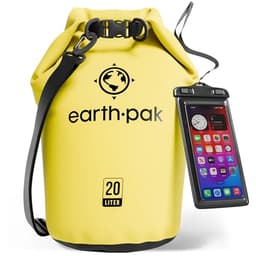
500D PVC, IPX6 published, and a phone case usually in the box.
Published specs
| Sizes | 10 L to 40 L (some listings to 55 L) |
|---|---|
| Material | 500D PVC |
| Closure | Roll-top |
| Rating | IPX6 |
Our score, broken out
- Waterproofing7.5
- Durability8.0
- Carry8.0
- Value9.5
What it gets right
- Publishes an IPX6 rating, which is more than most budget bags will commit to in writing.
- Usually bundled with a waterproof phone case, which is the thing you actually need dry.
What it gets wrong
- IPX6 is a splash and jet rating, not a submersion rating. A roll-top keeps water out when it is rolled properly and closed, not when it is upside down in a swamped cockpit.
- PVC is heavier than coated nylon for the same volume.
Who should skip it
Skip it if you need your phone to survive a capsize rather than a splash. Read the rating: IPX6 is jets of water, not immersion, and the difference is the whole point of the number.
#4 · A light up on a mast, for less
YakAttack VISIPole II
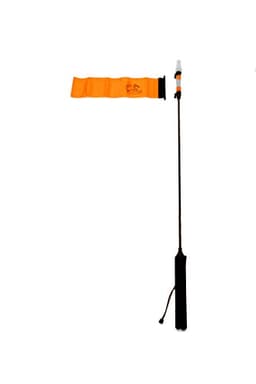
An LED on a fiberglass mast with a flag, 100 hours on batteries that come in the box. The sensible default for a boat with a track.
Published specs
| Mast | 3/8" fiberglass |
|---|---|
| Runtime | LEDs burn 100 hours on 3 AA batteries (included) |
| Lamp life | 10,000+ hours |
| Waterproof | To a depth of 1000 feet |
| Flag | Orange flag included |
| Mounting | MightyMount and GearTrac compatible; mount not included in this version |
| Visibility range | Manufacturer does not publish this |
Our score, broken out
- Height8.0
- Runtime9.0
- Mounting7.0
- Value8.0
What it gets right
- It puts the light on a mast rather than on the deck, which is the whole point: above the paddler, where it can be seen from ahead as well as behind.
- Batteries are in the box, and YakAttack publishes 100 hours on one set of three AAs.
- The orange flag does the daytime half of the job, which on a low sit-on-top in a busy channel matters as much as the light.
What it gets wrong
- No published visibility range. The rule sets 2 miles for an all-round light on a boat this size, and YakAttack does not print a distance, so keep a flashlight within reach as well.
- This version does not include a mount. On a boat with no track, that means buying a MightyMount and drilling for it.
- YakAttack publishes no mast height and no collapsed length for it, unlike the VISICarbon Pro, so you cannot check how it stows before you buy.
Who should skip it
Skip it if the light has to live inside a hatch between trips. The VISICarbon Pro publishes a 14-inch collapsed length; this one publishes nothing.
#5 · No installation at all
Garmin STRIKER Cast
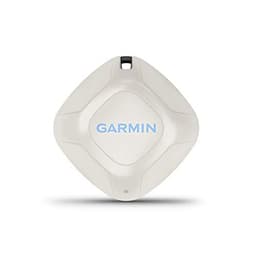
Castable sonar on your phone. No holes, no bracket, no battery box.
Published specs
| Weight | 75 g (2.64 oz) |
|---|---|
| Water rating | Floatable, IEC 60529 IPX7 |
| Wireless | 2.4 GHz; range 60 m (200 ft) |
| Sonar | 260/455 kHz |
| Depth | Less than 0.6 m to 45 m (less than 2 ft to 150 ft) |
| Beamwidth | 22° × 63° at 260 kHz; 9° × 14° at 455 kHz |
| Battery | Built-in lithium-ion; 10 hr typical, about 1.5 hr to charge |
| Tether | 5 m (16 ft) |
| Display | Your phone or tablet — no screen included |
Our score, broken out
- Sonar7.0
- Screen6.0
- Install cost9.5
- Value8.0
What it gets right
- Zero installation. No hole, no bracket, no battery box and nothing to un-rig before you sell the boat, which on a second-hand hull is most of the argument by itself.
- Garmin publishes beamwidths at both frequencies, which is a level of detail almost nothing else at this price gives you and the only way to know what the cone is actually covering.
- It floats and carries an IPX7 rating, so the obvious way to lose it — dropping it over the side — is the one thing it is designed to survive.
What it gets wrong
- Your phone is the screen. A flat phone is a dead sonar, and a phone out on deck in reach of spray is a more expensive problem than the sonar it is displaying.
- 150 feet of depth capability against the STRIKER 4's published 1,600 in freshwater. For a lake that is irrelevant; for anything deep it is the whole story.
- It is sold in versions with and without GPS at meaningfully different prices, and the listings do not always make it obvious which one is in the cart.
Who should skip it
Skip it if you want a display you can leave running all day at a glance. This one lives behind a phone screen lock, and unlocking a phone with wet hands in the sun is its own small misery.
FAQ
Questions people actually ask
What is a good gift for someone who kayaks?
Something that does not depend on a measurement you do not have. A paddle leash, a dry bag, a cup holder that matches their mounting system, or a visibility light all fit any paddler and any boat.
Avoid life jackets, paddles, spray skirts and seats as gifts: all four are sized to the person or the hull, and the wrong size turns a thoughtful gift into an unused one.
What do kayakers actually need?
Most paddlers are missing the same few things: a way to keep a dropped paddle attached, dry storage that actually seals, a light for dawn and dusk, and a cart if they carry the boat any distance.
On a second-hand boat, perished deck bungee and missing drip rings are nearly universal and cost almost nothing to fix.
Is a fish finder a good gift for a kayak angler?
A castable one is, because it avoids every compatibility problem. It streams to a phone, needs no holes, no battery box, no transducer mount and no permanent change to someone else's boat.
A traditional fish finder is a project rather than a gift: it needs a mount, a 12V battery, a fuse and usually a decision about drilling the hull.
What size dry bag should I buy as a gift?
Something in the 10 to 20 liter range suits nearly everyone — big enough for a phone, keys, a layer and lunch, small enough to stow.
Sizing is forgiving compared with the rest of kayak gear, which is exactly why a dry bag is one of the safest gifts on this list. What matters more is the roll-top closure and the fabric.
We have not paddled with any of this gear. Everything above comes from published specifications, cited manuals and live retailer prices. Here is exactly how we pick.
Sources
Read next
Related on Drift & Dime
Kits
What kayak accessories do I need?The required three and the useful five, each with a live price beside it.
Kits
The first season kayak kitLegal minimum plus what keeps you paddling — eight lines, priced.
PFDs & Safety
The kayak safety kit checklistThe required items, the genuinely useful ones, and the padding to skip.
Paddles
Kayak drip rings and paddle gripsDrip rings and grips for a used paddle: what fits and what to check first.